
- Home
- Semiconductor History | Japan | From Nihonbashi to Chitose
- Semiconductor History | Yamaha Toyooka — YM2151 Turns FM Synthesis Into a Merchant Chip
Semiconductor History | Yamaha Toyooka — YM2151 Turns FM Synthesis Into a Merchant Chip
· 1983
Personal memoryBy kevin · · updated · Report an issue

Find memories left by people near you.
Distribute Bounty
This will distribute the bounty equally among all qualifying memories. This action cannot be undone.
Cancel Bounty
Are you sure you want to cancel this bounty? The remaining amount will be refunded to your account.
Success!
Operation completed successfully.
Error
Something went wrong.
Semiconductor History | Yamaha Toyooka — YM2151 Turns FM Synthesis Into a Merchant Chip
kevin
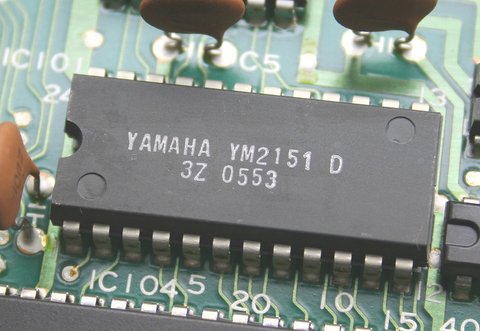
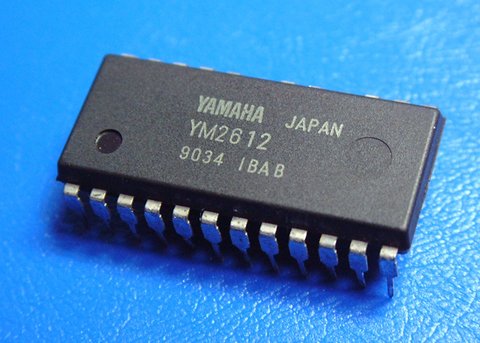
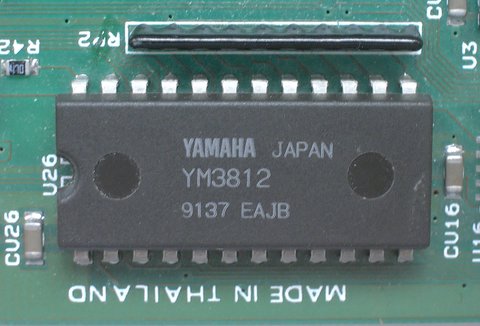
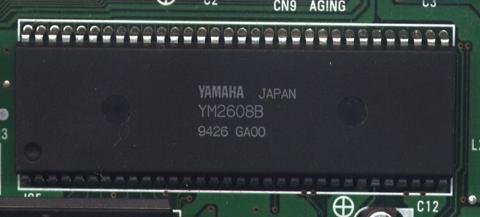
Yamaha began selling LSIs outside the company in 1983, carrying frequency-modulation synthesis from its instruments into a merchant semiconductor business. The YM2151, an eight-voice FM Operator Type-M sound chip, coupled an 8-bit control bus and programmable operators to an external YM3012 digital-to-analog converter.

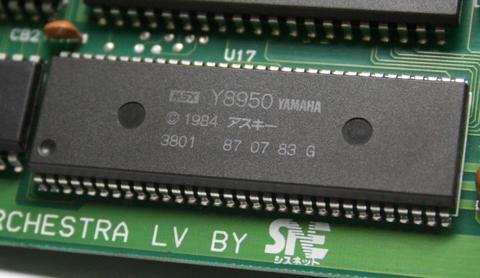
Yamaha’s own computer history records YM2151-family OPM devices in MSX sound cartridges and four-operator DX-family synthesizers, while closely related Yamaha FM chips spread through arcade machines, home computers, and game systems. Instead of recording every note as audio, software could shape it through operator frequency ratios, envelopes, modulation, vibrato, noise, and timers.
The good was reuse of hard-won musical knowledge. A single programmable chip gave unrelated hardware makers a compact, repeatable sound engine, and external sales let Yamaha earn from FM synthesis beyond the lifespan of any one keyboard; the recognizable palette also helped programmers build elaborate music within limited memory and processor budgets.
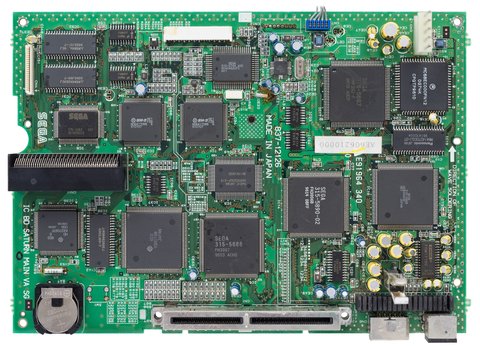
The bad was that a fixed hardware model made both a signature and a ceiling. Eight voices, four operators, register timing, and an external converter constrained composition and board design, while rivals could compare cost and features directly; as sampled audio and more flexible digital processing advanced, the same instantly recognizable character could sound like a period limitation rather than realism.
This memory uses 1983, Yamaha’s documented start of outside LSI sales, rather than asserting an unsupported day for the YM2151’s introduction. The product matters as part of that merchant turn: internal musical research became a component that other manufacturers could program into their own machines.
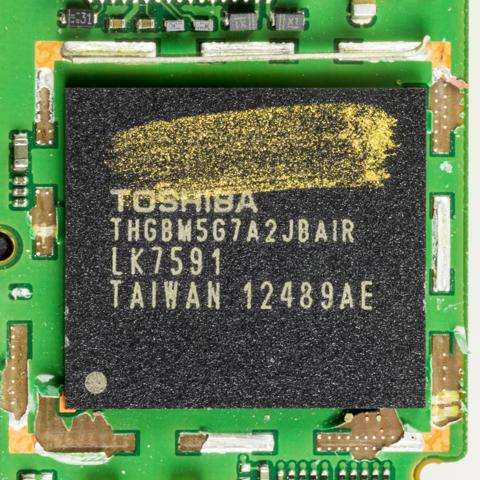
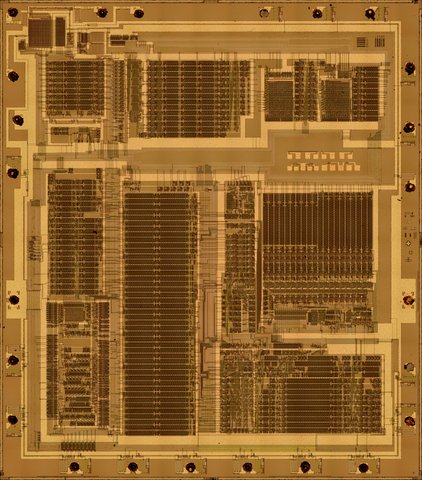
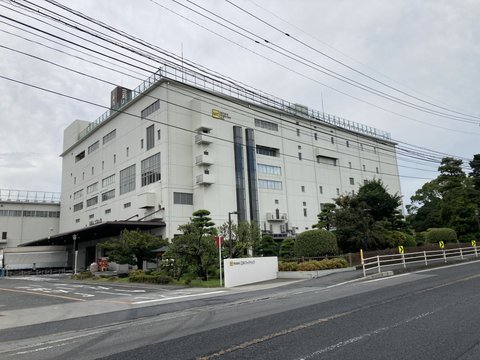
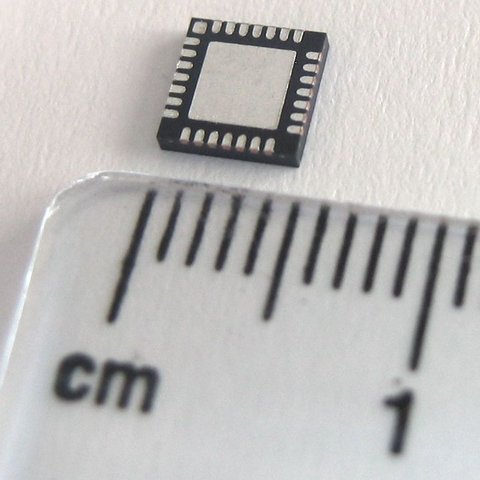
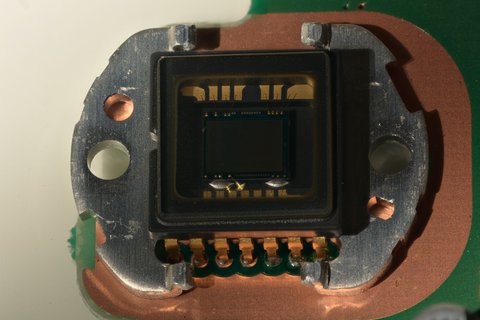
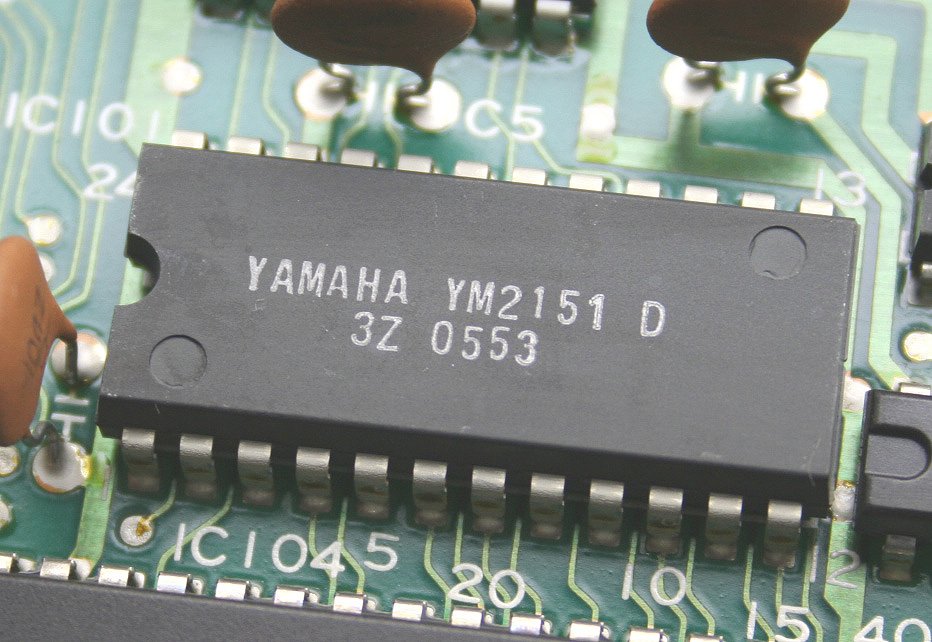
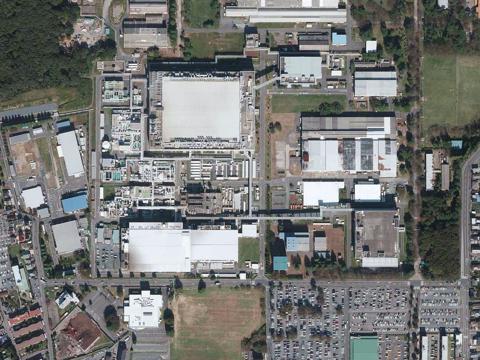
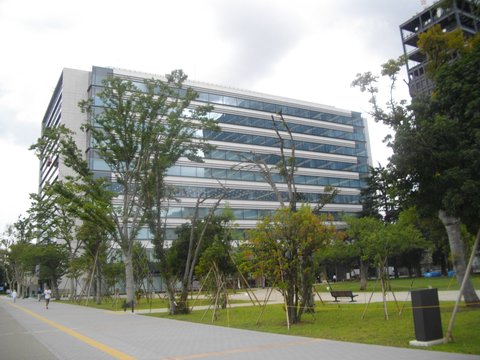
The pin intentionally reuses Yamaha’s verified Toyooka semiconductor anchor for a distinct product chapter; it does not identify the exact YM2151 design room. The cover shows a genuine YM2151 mounted on an SFG-01 board, matching one of Yamaha’s documented MSX uses rather than a loose first-production sample.
Sources: Yamaha 2025 semiconductor-business history, “History of Yamaha Computer Music,” FM-synthesis history, and the original YM2151 data sheet; Yamaha Toyooka location and Semiconductor Division records.
Photo: “YM2151 02,” Yaca2671, CC BY-SA 3.0. https://commons.wikimedia.org/wiki/File:YM2151_02.jpg
changes?
delete this memory?
We detected that you have a Blox in your crypto wallet! We will import the Blox into your account.
Click on done below to complete the import.
Welcome Back!
Sign in to preserve cherished moments
Don't have an account?
Welcome!!
Sign up and start preserving cherished moments
?
?

Choose your payment method
Buy with Metablox Credit
Do you want to mint Blox with Metablox Credit?
Which Crypto would you like to use?
Purchase Confirmed!
Your Blox is being minted on-chain and will appear in your profile shortly.
Log in or sign up to claim your Blox.
How many credits do you want to buy?
$100 USD = 1 Metablox Credit = 1 Blox.
Use Metablox Credit to mint any Blox you want on the map.
expand_more