
- Home
- Semiconductor History | Japan | From Nihonbashi to Chitose
- Semiconductor History | Fuji Electric Matsumoto — The IGBT Makes Power Electronic
Semiconductor History | Fuji Electric Matsumoto — The IGBT Makes Power Electronic
· 1988
Personal memoryBy kevin · · Report an issue

Find memories left by people near you.
Distribute Bounty
This will distribute the bounty equally among all qualifying memories. This action cannot be undone.
Cancel Bounty
Are you sure you want to cancel this bounty? The remaining amount will be refunded to your account.
Success!
Operation completed successfully.
Error
Something went wrong.
Semiconductor History | Fuji Electric Matsumoto — The IGBT Makes Power Electronic
kevin
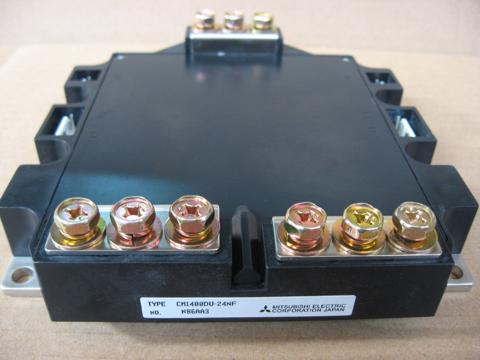
Fuji Electric developed insulated-gate bipolar-transistor modules in 1987 and began manufacturing its first generation in 1988. The IGBT joined the easy voltage control and fast switching of a MOSFET with the high-voltage, high-current capability of a bipolar transistor, making it a practical electronic valve for large flows of power.


Packaged into modules, IGBTs allowed inverters, factory drives, elevators, trains, uninterruptible power supplies, and later electric vehicles to switch energy more efficiently. Fuji Electric could test its own devices inside the power-conversion systems it also sold, creating a feedback loop between chip structure, packaging, cooling, protection circuits, and the customer’s machine.
The good was compounding improvement. From planar punch-through devices, the company advanced through trench gates, thinner wafers, field-stop structures, integrated protection, and reverse-conducting designs, shrinking converters and reducing losses while keeping a Japanese power-semiconductor lineage at the Matsumoto production and development base. Module engineering mattered as much as the transistor: terminals, insulation, heat spreading, bonding, and protection had to survive repeated heating and cooling.
The bad is that every improvement moves a trade-off rather than abolishing it. Lower conduction loss can worsen switching behavior or short-circuit endurance, higher power density raises heat and package-fatigue risk, and automotive qualification makes failures exceptionally costly; at the business level, long factory investments can meet a demand downturn just as silicon carbide begins competing with silicon IGBTs in premium applications.
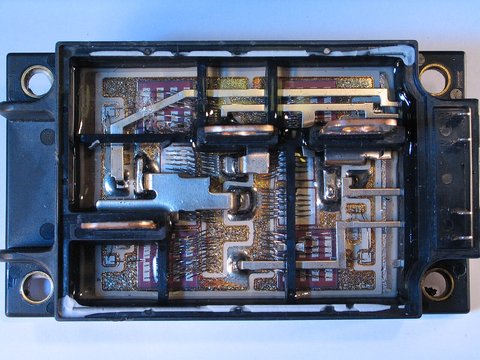
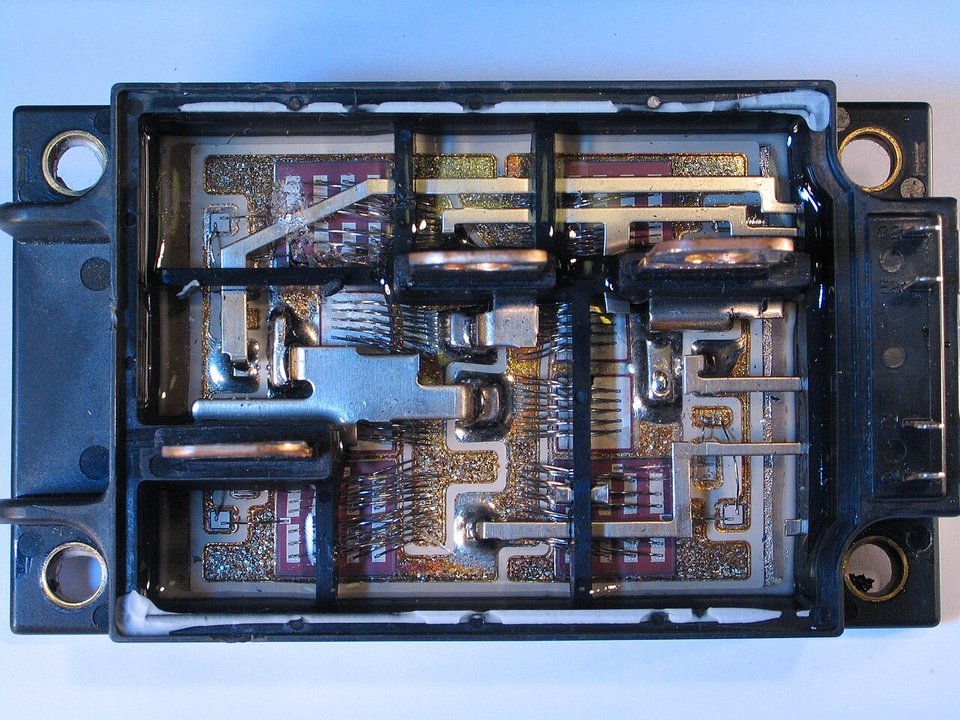
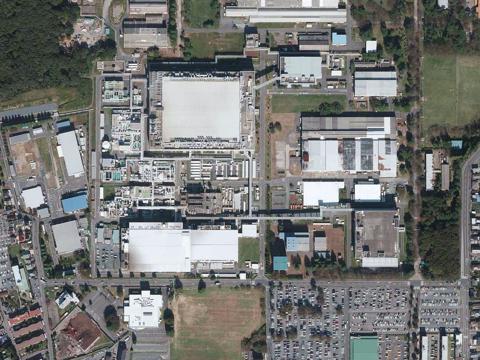
The pin marks the verified Matsumoto Factory, which began operating in 1942 and is now a major power-semiconductor base with an integrated development center. The cover exposes the interior of a generic 400-ampere, 600-volt IGBT module; it is not a Fuji Electric product or a first-generation 1988 device.
Sources: Fuji Electric company history; Fuji Electric IGBT application manual and technical reviews; Fuji Electric Matsumoto Semiconductor Development Center and annual-report pages.
Photo: “IGBT 2441,” Daniel*D, CC BY-SA 3.0. https://commons.wikimedia.org/wiki/File:IGBT_2441.JPG
changes?
delete this memory?
We detected that you have a Blox in your crypto wallet! We will import the Blox into your account.
Click on done below to complete the import.
Welcome Back!
Sign in to preserve cherished moments
Don't have an account?
Welcome!!
Sign up and start preserving cherished moments
?
?

Choose your payment method
Buy with Metablox Credit
Do you want to mint Blox with Metablox Credit?
Which Crypto would you like to use?
Purchase Confirmed!
Your Blox is being minted on-chain and will appear in your profile shortly.
Log in or sign up to claim your Blox.
How many credits do you want to buy?
$100 USD = 1 Metablox Credit = 1 Blox.
Use Metablox Credit to mint any Blox you want on the map.
expand_more