Semiconductor History | Sega Haneda — Two Video Processors Make the Saturn Powerful and Difficult
volume_up
Listen
directions
Directions
On 22 November 1994, Sega released the Saturn in Japan from its Haneda headquarters. Its graphics architecture divided the screen between two custom video processors: VDP1 drew sprites, textured quadrilaterals, polygons, polylines, and lines into a framebuffer, while VDP2 generated scroll and rotation backgrounds and combined them with VDP1's output.
The good was specialization. VDP1 could treat the same four-vertex primitive as a scaled sprite, a distorted texture, or an untextured polygon, with Gouraud shading and clipping available through its command tables.
That made arcade-style sprites and the textured surfaces of early 3D games natural jobs for one chip.
VDP2 handled a different visual world. It supplied normal and rotating scroll screens, windows, priorities, colour calculations, shadows, and offsets, then accepted VDP1's framebuffer as an external sprite screen.
The arrangement let a game place polygonal characters over deep tiled scenery, or build elaborate 2D scenes without asking one general-purpose renderer to do everything.
Together the processors helped the Saturn excel at the mixed visual language of the mid-1990s. Sega's own specification advertised up to five scrolling planes, transformed sprites, dedicated polygon hardware, and 16.77 million simultaneous colours.
The closely related ST-V arcade board also made some arcade-to-home conversions practical.
The bad was coordination. VDP1 and VDP2 had separate memories, registers, display modes, and programming rules; developers had to make their resolutions agree and manage the handoff from one processor's framebuffer to the other's compositor.
More chips also meant more board complexity than a simpler unified graphics path.
VDP1 processed drawing commands in an ordered list, so visibility depended on how objects were submitted rather than on an automatic depth buffer. Its textured primitives were quadrilaterals, and strongly distorted or concave shapes could warp in ways that triangle-oriented art tools did not expect.
Transparency exposed the boundary between the processors. VDP2 could blend the VDP1 sprite screen with backgrounds, while half-transparency among VDP1 objects worked only under particular colour conditions.
The available mesh mode—an every-other-pixel grid—became a practical but visibly stippled alternative.
The result was neither simply a triumph nor a mistake. Sega built a graphics system with remarkable 2D layering and flexible early 3D, but its strengths emerged only when programmers understood which processor owned each part of the picture and how the two would meet at the final scanout.
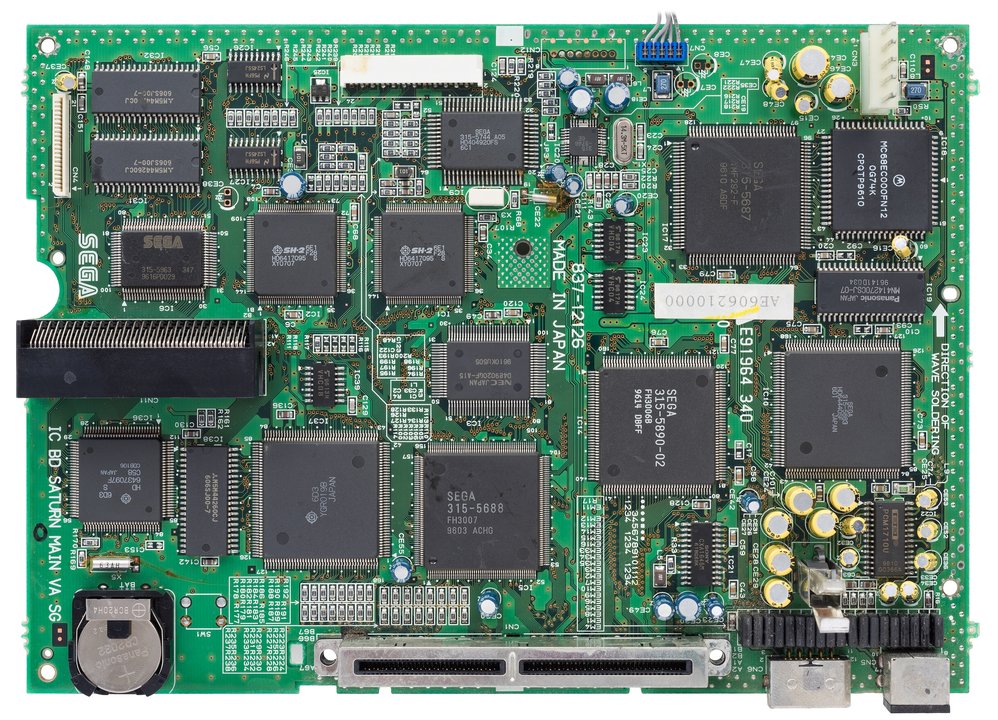
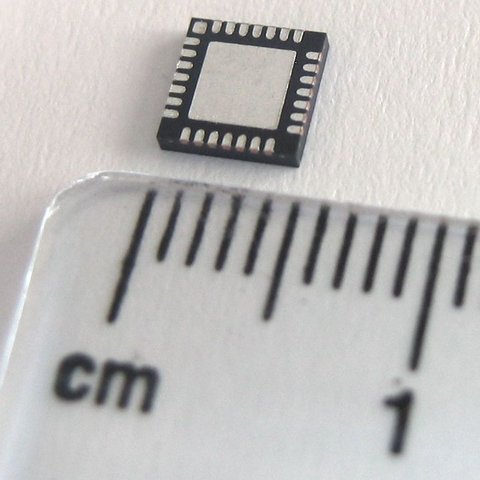
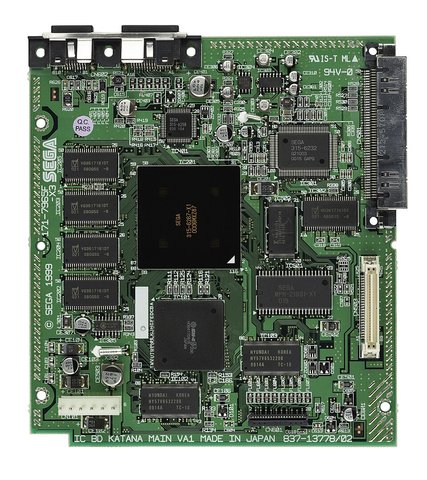
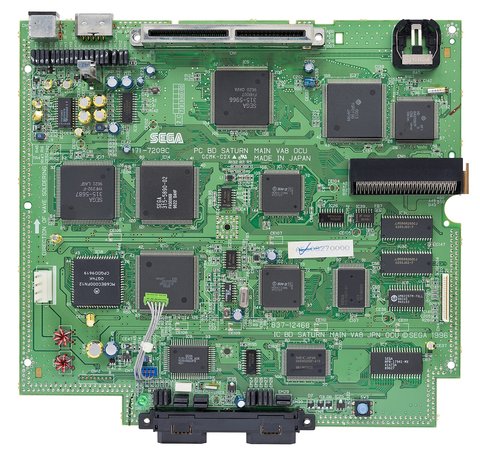
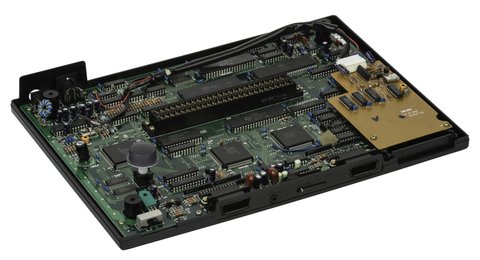
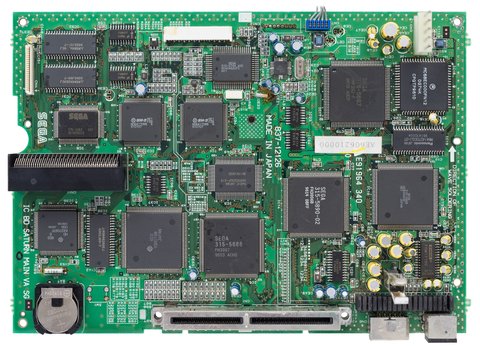
The cover shows an American VA SG motherboard revision, not a Japanese launch board. Its markings identify the Hitachi HD64440F VDP1 and Sega 315-5890-02/FH3006 VDP2; they provide physical context without claiming that every Saturn revision used the same package numbers.
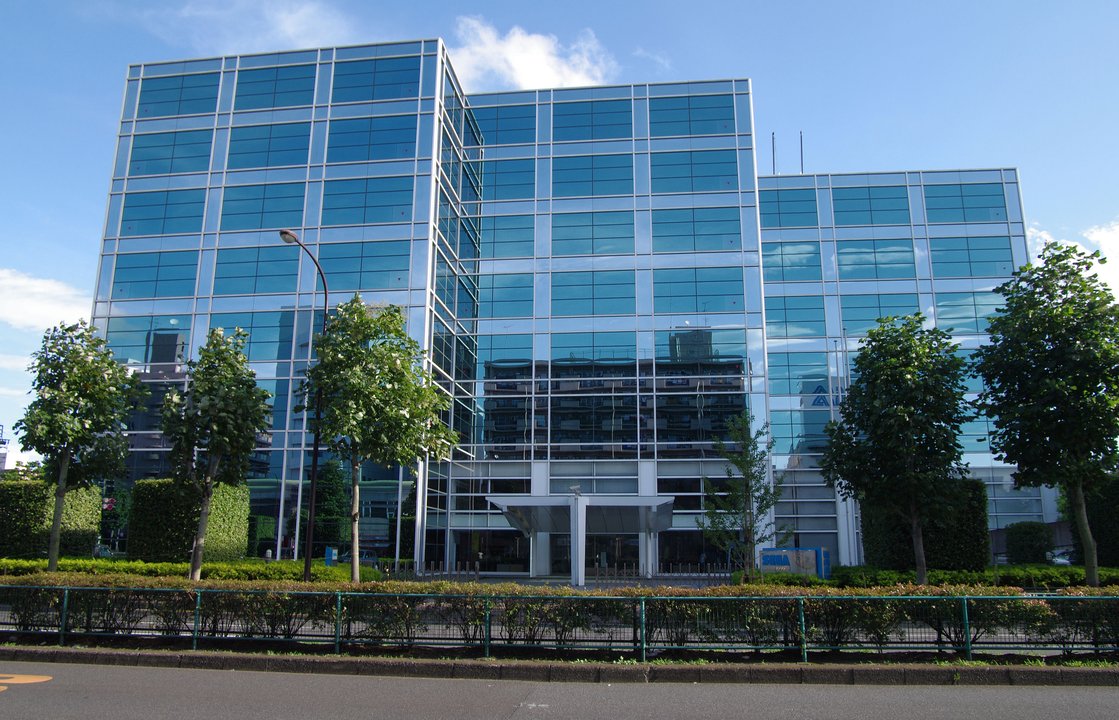
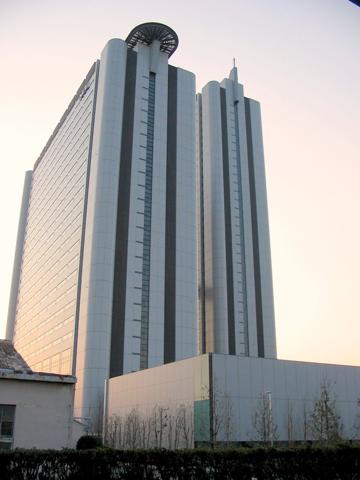
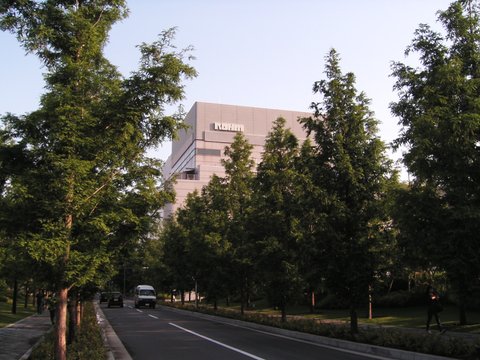
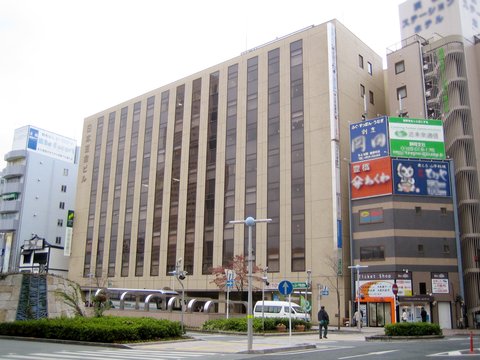
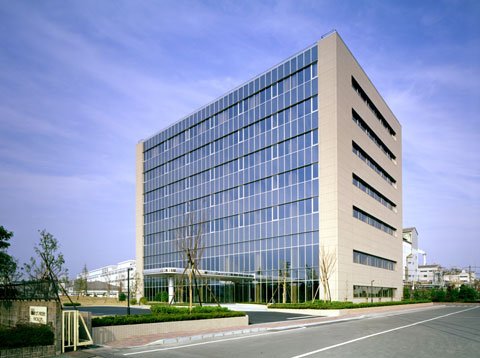
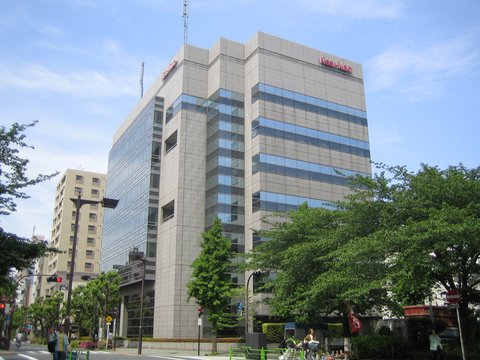
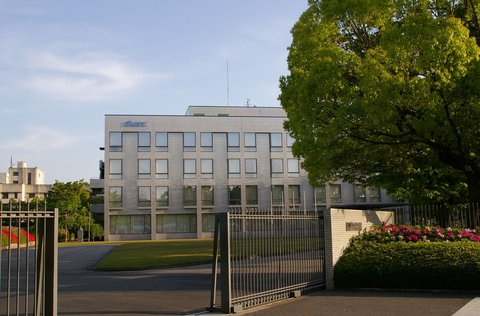
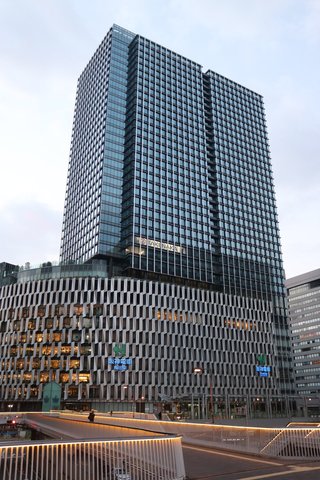
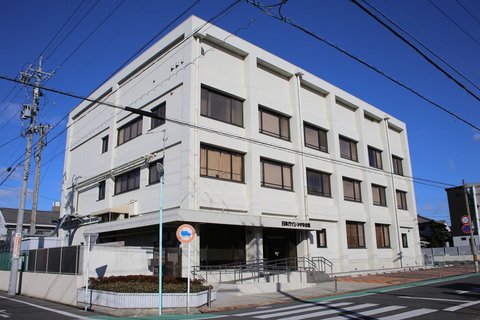
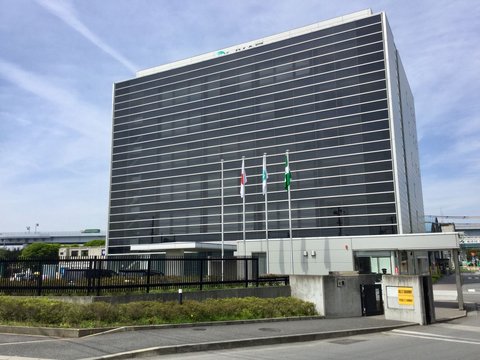
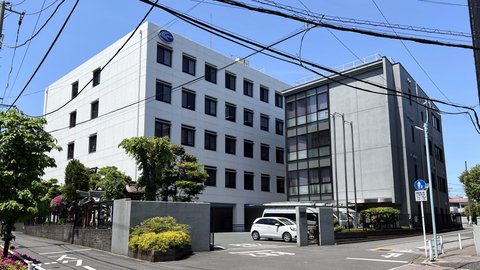
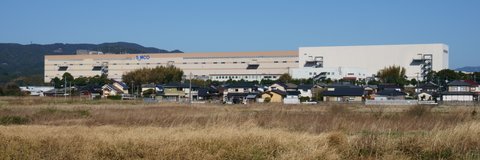
The second photograph shows Sega's former Building 1 in Haneda. The pin marks that historic headquarters site; the building was later demolished, and the present hotel occupies the former headquarters parcel area rather than preserving the 1994 offices.
Sources:
Sega, “Sega Saturn,” Sega Hardware Encyclopedia: https://www.sega.jp/history/hard/segasaturn/index.html
Sega Enterprises, VDP1 User's Manual: https://www.infochunk.com/saturn/segahtml_en/hard/vdp1/index.htm
Sega Enterprises, VDP2 User's Manual: https://www.infochunk.com/saturn/segahtml_en/hard/vdp2/index.htm
Sega Enterprises, Sega Saturn Overview Manual, VDP1: https://www.infochunk.com/saturn/segahtml_en/hard/intr/hon/p03_30.htm
Sega Enterprises, Sega Saturn Overview Manual, VDP2: https://www.infochunk.com/saturn/segahtml_en/hard/intr/hon/p03_40.htm
Sega Sammy Holdings, Annual Report 2015: https://segaretro.org/images/8/86/AnnualReport2015_English.pdf
Sega, “History 1960–2020”: https://www.sega.jp/history/companyTimeline/en/
Photos:
Evan-Amos, “Sega-Saturn-Motherboard-Model-VASG-Top.jpg,” public domain: https://commons.wikimedia.org/wiki/File:Sega-Saturn-Motherboard-Model-VASG-Top.jpg
ほしけん, “Sega Office2.jpg,” public domain: https://commons.wikimedia.org/wiki/File:Sega_Office2.jpg




 expand_more