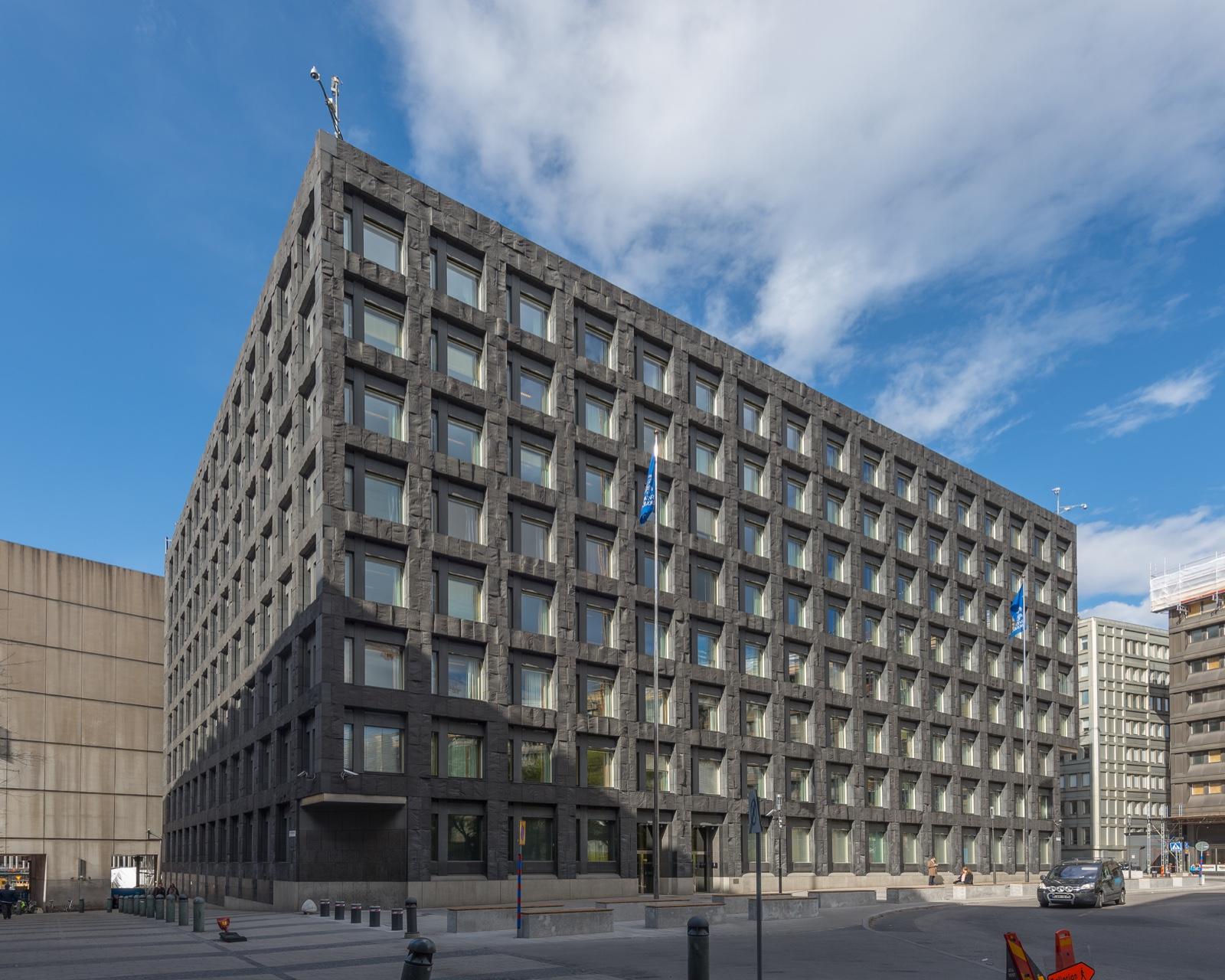
Finance History | Riksbankshuset, 12 February 2015 — Sweden Paired a Negative Repo Rate With Bond Purchases
volume_up
Listen
directions
Directions
On 12 February 2015, Sveriges Riksbank announced that Sweden's repo rate would fall from zero to negative 0.10 percent. It was the first negative repo rate in the Bank's history and took effect on 18 February.
The decision was paired with purchases of SEK 10 billion in Swedish government bonds. A negative policy rate and a larger central-bank securities portfolio were now working together to push down financing costs and raise inflation.
Swedish consumer-price growth had been weak for an extended period, and measures of inflation expectations were declining. The Riksbank was concerned that expectations drifting away from its 2 percent target could influence wage setting and price decisions, making low inflation harder to reverse.
The repo rate sat near the center of the Riksbank's operating framework. Moving it below zero lowered the rates around which banks borrowed and deposited overnight, influencing short market rates even though the public did not usually transact at the policy rate itself.
The bond purchases worked through a different channel. By bidding for government securities, the Bank raised their prices and lowered their yields, encouraging investors to rebalance toward other assets and signaling that policy would remain expansionary.
Cash placed a limit on how far rates could fall, but the limit was not exactly zero. Holding large amounts of banknotes involved storage, security, insurance, and payment costs, allowing electronic wholesale rates to become modestly negative without an immediate system-wide move into currency.
The initial step did not end the experiment. The repo rate was reduced further during 2015 and reached negative 0.50 percent in February 2016, while government-bond purchases expanded.
Later assessments found that negative rates continued to pass through to money-market and lending rates, although household deposit rates were much less willing to cross below zero. That difference supported transmission to borrowers while compressing some bank margins.
The Riksbank returned the repo rate to zero in December 2019. Its experience showed both the capacity and the limits of the instrument: a policy rate could operate below zero for years, yet institutional design and public resistance made the effects uneven across the financial system.
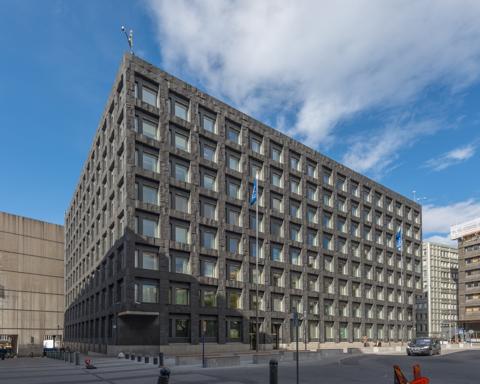
At Brunkebergstorg 11, monetary easing acquired two unconventional forms at once. Sweden's central bank changed the price of overnight money and the supply of government bonds held by private investors.
The accompanying photograph is by Arild Vågen, licensed CC BY-SA 4.0 via Wikimedia Commons.




























 expand_more