Finance History | 日本銀行本店 Bank of Japan, 19 March 2001 — Monetary Policy Changed Its Target from a Price to a Quantity
volume_up
Listen
directions
Directions
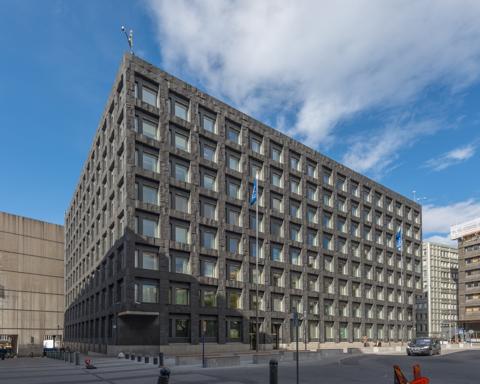
On 19 March 2001, the Bank of Japan's Policy Board met at its Nihonbashi head office and adopted a new framework that became known as quantitative easing. The operating target for money-market operations changed from an overnight interest rate to the quantity of current-account balances held at the central bank.
Japan's recovery had stalled after slowing in late 2000, and prices were weakening under deficient demand. Conventional easing had little room left because the uncollateralized overnight call rate was already targeted at 0.15 percent and expected to remain near zero.
The Board directed the Bank to raise current-account balances to around ¥5 trillion, about ¥1 trillion above their February average. Supplying more settlement balances was intended to keep overnight rates close to zero while demonstrating that the central bank could continue easing after its policy rate approached the lower boundary.
The decision also attached a condition to the policy's duration. The new procedures would remain until Japan's nationwide consumer price index, excluding perishables, registered zero or a year-on-year increase on a stable basis.
That commitment mattered alongside the reserves themselves. By describing the condition for exit, the Bank attempted to influence expectations about future short-term rates, not merely the amount of liquidity available on the announcement date.
The Bank also said it could increase outright purchases of long-term Japanese government bonds when needed to supply liquidity smoothly, subject at the time to a ceiling linked to banknotes outstanding. Asset purchases and reserve creation thus became supporting parts of one operating framework.
Quantitative easing did not mean that banks were required to lend each additional yen of reserves, nor did it guarantee rising prices. It changed the instrument the central bank controlled directly, then relied on interest rates, portfolio choices, expectations, and financial stability to transmit the effect through the economy.
The target for current-account balances was increased repeatedly after the initial decision. The framework remained in place until March 2006, when the Bank judged that its price condition had been met and returned to targeting the overnight call rate.
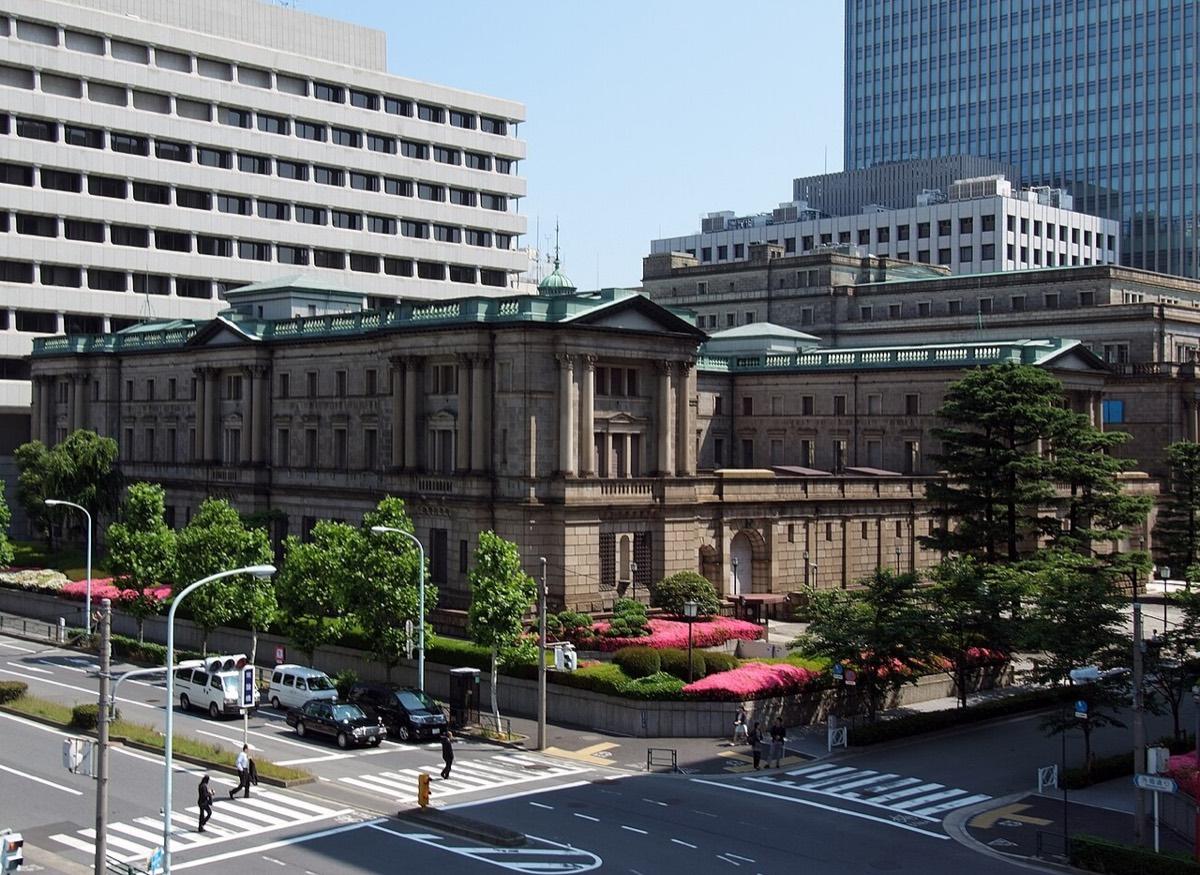
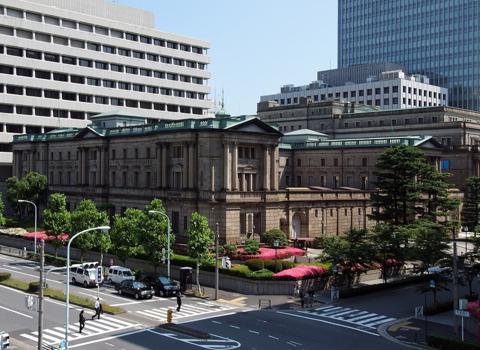
The head-office pin marks the moment a central bank confronting persistent deflation moved beyond a near-zero policy rate and made the size of reserve balances central to day-to-day monetary policy.
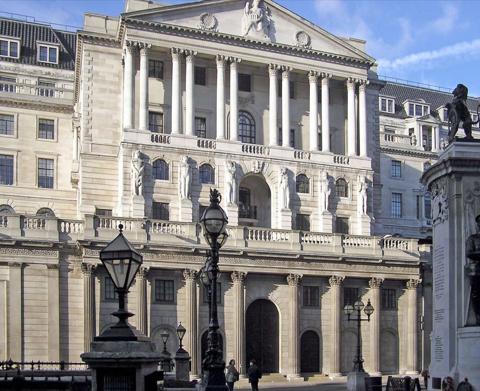
The accompanying photograph of the Bank of Japan head office is by Wiiii, licensed CC BY-SA 3.0 via Wikimedia Commons.
**Sources:**
- Bank of Japan, New Procedures for Money Market Operations and Monetary Easing, 19 March 2001: https://www.boj.or.jp/en/mopo/mpmdeci/mpr_2001/k010319a.htm
- Bank of Japan, 2001 monetary-policy decision archive: https://www.boj.or.jp/en/mopo/mpmdeci/state_2001/index.htm
- Bank of Japan, retrospective description of the quantitative-easing framework: https://www2.boj.or.jp/archive/en/announcements/press/koen_2003/ko0306a.htm
**Image:** Bank of Japan head office by Wiiii; CC BY-SA 3.0. https://commons.wikimedia.org/wiki/File:Bank_of_Japan_2010.jpg





























 expand_more