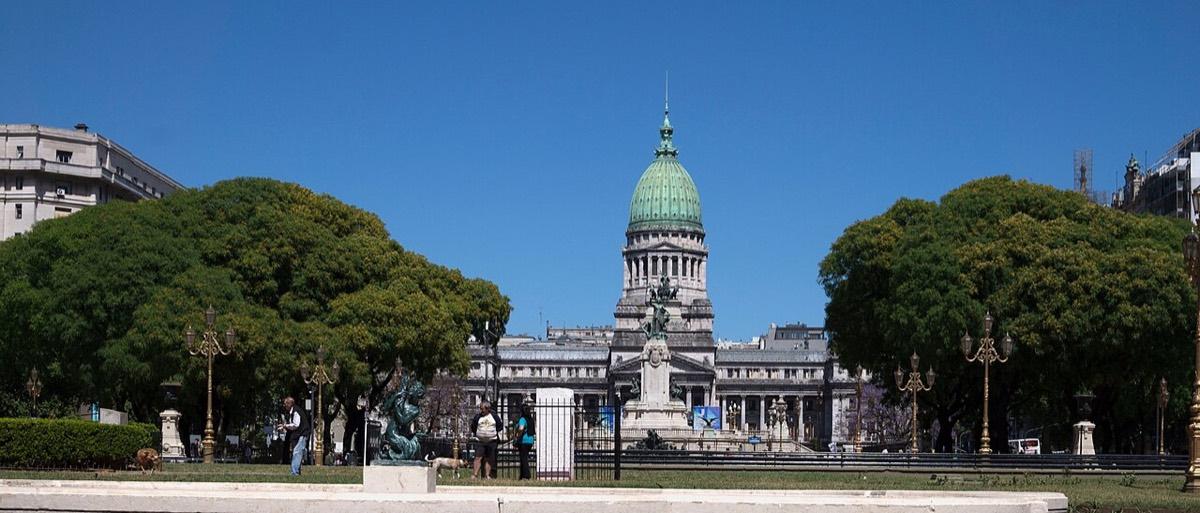
Finance History | Argentine National Congress, 23 December 2001 — A Debt Moratorium Was Announced from the Legislative Chamber
volume_up
Listen
directions
Directions
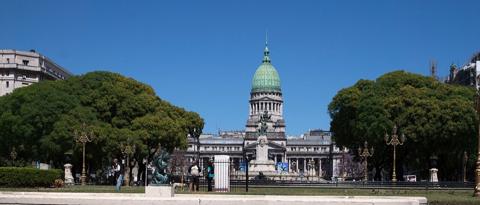
On 23 December 2001, Adolfo Rodríguez Saá addressed Argentina's Legislative Assembly inside the Palace of Congress and announced that the state would suspend payment on its external debt. He had just been chosen interim president during a rapid collapse of political and financial authority.
Argentina had fixed the peso at parity with the United States dollar since 1991. The arrangement crushed hyperinflation, but it also limited exchange-rate adjustment as the dollar strengthened, Brazil devalued, recession deepened, and much of the public debt remained denominated in foreign currency.
By 2001, tax revenue was falling and investors demanded interest rates that made refinancing increasingly difficult. Debt exchanges delayed some payments but added expensive obligations, while declining confidence produced capital flight and withdrawals from the banking system.
On 1 December, the government imposed the corralito, sharply limiting cash withdrawals from bank accounts. The restriction slowed the run on deposits but also trapped savings, disrupted payments, and intensified the social and political crisis that forced President Fernando de la Rúa from office.
Rodríguez Saá's announcement did not make every Argentine obligation stop at once. The moratorium applied to bonds held by private creditors and most official bilateral debt, while debt already exchanged into the domestic Phase I restructuring continued to be serviced.
The distinction matters because a sovereign default is a change in particular payment promises, not the disappearance of all public liabilities. Missed payments alter the legal position of bondholders, trigger negotiations and litigation, and force the government to seek a restructuring that distributes losses across creditors.
The announcement also did not end convertibility that day. Argentina abandoned the peso-dollar parity in early January 2002 under the next administration, followed by devaluation, asymmetric conversion of contracts into pesos, and a deeper banking crisis.
Congress is therefore the correct pin for the moratorium itself: the decision was declared during a presidential address to the assembled legislature. It separated recognition that the existing debt schedule could not be honored from the later choices about the currency regime, banks, and restructuring terms.
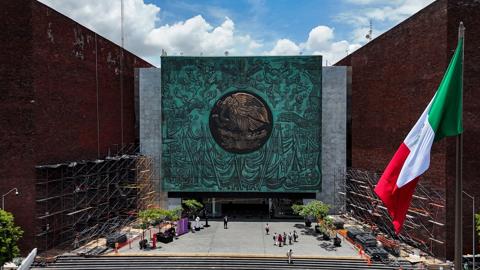
The accompanying photograph of the Palace of Congress is by Ezarate, licensed CC BY-SA 4.0 via Wikimedia Commons.
**Sources:**
- Argentine government, official study of Congress and the December 2001 default announcement: https://www.argentina.gob.ar/sites/default/files/2023/11/libro_concurso_de_ensayos.pdf
- International Monetary Fund, evaluation of the role of the IMF in Argentina, 1991–2001: https://www.imf.org/external/np/ieo/2004/arg/eng/index.htm
- International Monetary Fund, description of the moratorium's scope and the Phase I exchange: https://www.elibrary.imf.org/view/journals/002/2003/392/article-A003-en.xml
- Argentine government, Legislative Assembly record dated 23 December 2001: https://www.argentina.gob.ar/normativa/nacional/decreto-989-2001-71061
**Image:** Palace of the Argentine National Congress by Ezarate; CC BY-SA 4.0. https://commons.wikimedia.org/wiki/File:CongresodelaNacionArgentina-nov2017.jpg










 expand_more