Finance History | New York Stock Exchange, 15 July 1947 — World Bank Bonds Entered the Private Market
volume_up
Listen
directions
Directions
At 10:02 a.m. on 15 July 1947, the first New York Stock Exchange quotation for a World Bank bond appeared on the trading screen. Five minutes later the first quotation for the institution’s second maturity followed, placing a new postwar international organization inside the private capital market.
The International Bank for Reconstruction and Development had begun operations only the previous year. Loan requests quickly exceeded the capital that member governments had made freely available, so reconstruction lending required the Bank to borrow from investors rather than rely only on paid-in subscriptions.
The inaugural offering totaled $250 million. It combined $100 million of ten-year bonds paying 2.25 percent with $150 million of twenty-five-year bonds paying 3 percent, and Morgan Stanley led a nationwide selling effort involving more than 1,700 dealers.
World Bank staff had opened a small marketing office inside the Federal Reserve Bank of New York and held meetings in eighteen American cities. They had to explain an unfamiliar issuer whose borrowers were sovereign states recovering from war and whose financial structure depended on commitments from member governments.
Demand reportedly reached six times the amount offered, and the bonds began trading above their public offering price. The result demonstrated that investors would fund a multilateral institution designed to channel long-term capital across national borders.
The NYSE ceremony made the transition visible. Exchange president Emil Schram hosted World Bank president John J. McCloy and other officials on the floor, while the tape showed that the bonds were not merely diplomatic agreements: they were securities with prices, maturities, coupons, and a secondary market.
The issue also established a financing model. The Bank could combine shareholder backing with repeated bond-market borrowing, then lend the proceeds for reconstruction and development; future offerings would extend into other currencies and investor bases.
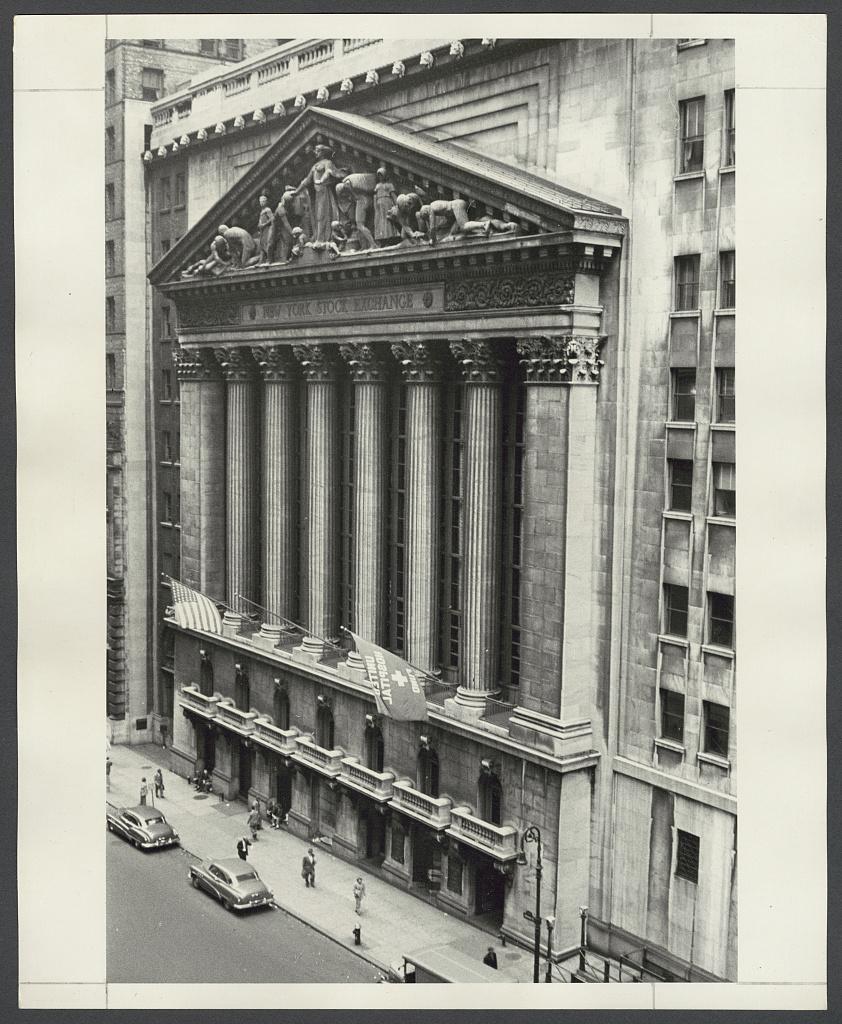
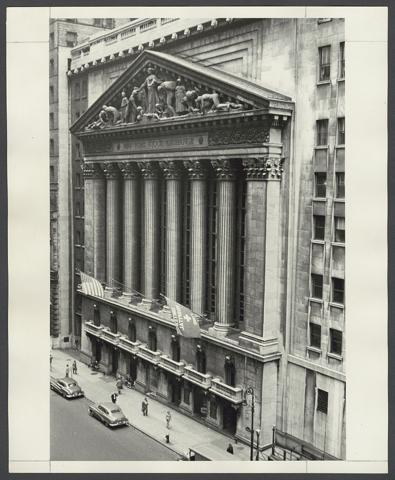
The New York Stock Exchange building in the image is the same venue, photographed five years later. On the 1947 floor, private savings became a source of international public finance, linking Wall Street’s trading machinery to the postwar project of rebuilding economies.
Image: “[New York Stock Exchange]” by Angelo Rizzuto, October 1952, Library of Congress, no known restrictions on publication.







 expand_more