Finance History | Eurotower, 1 June 1998 — The European Central Bank Replaced the EMI
volume_up
Listen
directions
Directions
On 1 June 1998, the European Central Bank came into legal existence in Frankfurt. It replaced the European Monetary Institute and became the institution responsible for completing the move from coordinated national policies to a single monetary policy for the coming euro area.
The date preceded the euro itself. Europe’s new currency would not begin as a unit for monetary policy and financial accounts until 1 January 1999, and notes and coins would not reach the public until 2002. The ECB therefore started as an operating institution before it had a circulating currency.
It did not begin from an empty office. The European Monetary Institute had spent four years preparing legal instruments, payment systems, statistical standards, banknote designs, and the framework for foreign-reserve operations. The ECB inherited that work, its infrastructure, and its staff.
Willem F. Duisenberg, the EMI’s final president, became the ECB’s first president. He joined five other Executive Board members appointed by participating governments. Together with the governors of national central banks, they formed the decision-making structure of the European System of Central Banks.
The remaining seven months of 1998 were a live systems test. The ECB and national central banks had to connect payment networks, prepare common market operations, specify eligible collateral, assemble comparable data, and establish how policy decisions would be implemented across different banking systems.
This institutional sequence reduced the risk of attempting political, monetary, and technical change on the same morning. When conversion rates were irrevocably fixed and the euro began on 1 January 1999, the machinery for supplying liquidity and transmitting one policy rate was already in place.
The arrangement also created a new division of authority. National central banks continued to carry out many operations and remained owners of the ECB, but decisions affecting the shared currency were made through a supranational institution with price stability as its primary objective.
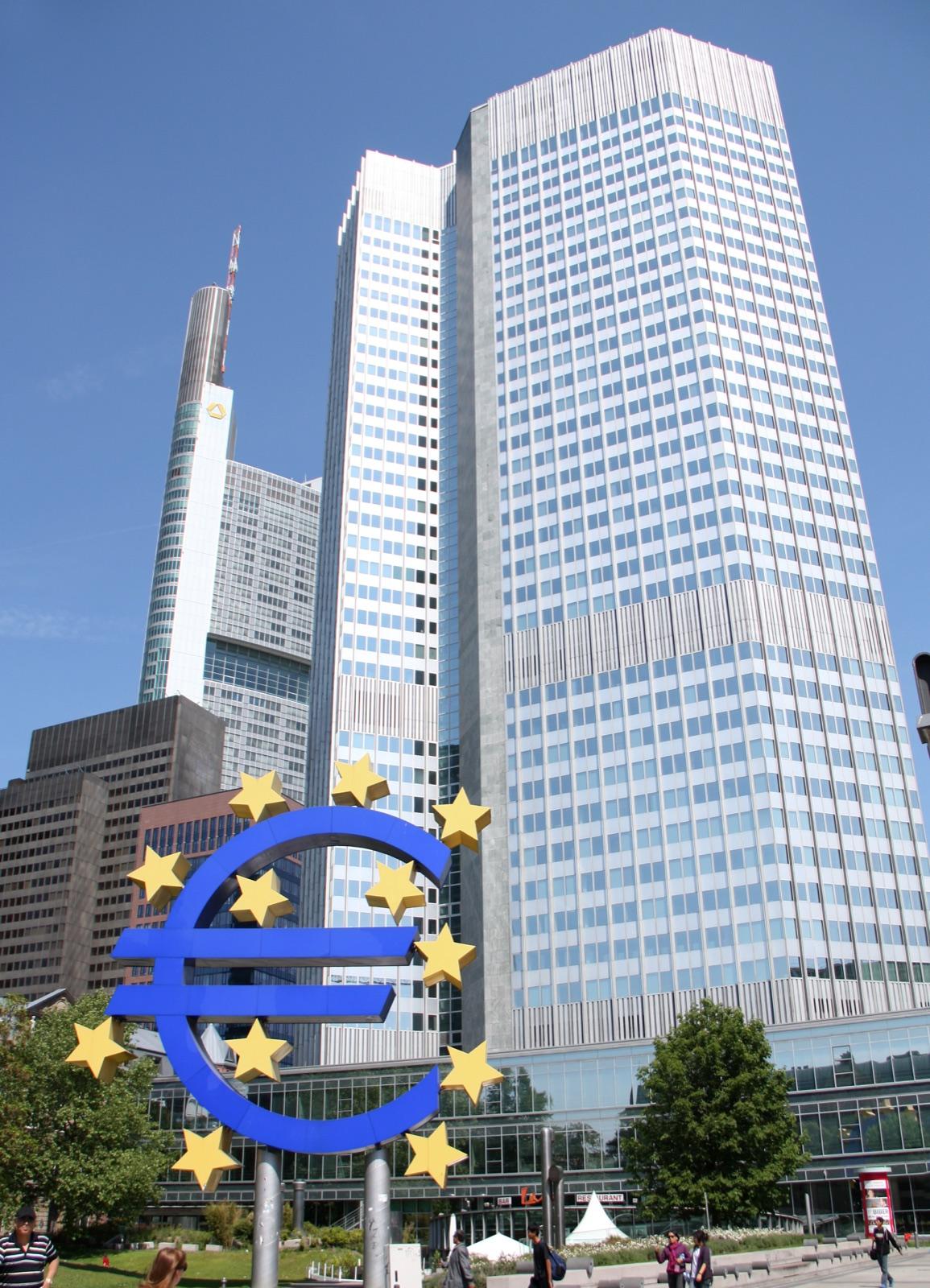
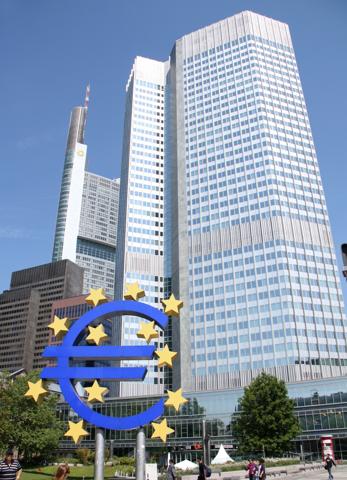
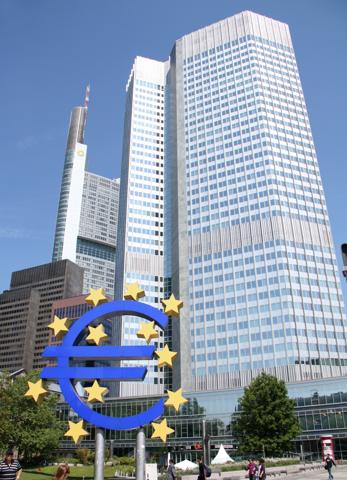
The ECB occupied the Eurotower on Kaiserstraße from its creation until moving to a purpose-built headquarters in Frankfurt’s Ostend in 2014. The tower’s blue euro sculpture became the public image of a currency that, in mid-1998, existed mainly in treaties, software, and institutional preparation.
At Eurotower, monetary union became an organization before it became money in anyone’s pocket.
Image: “Frankfurt Eurotower EZB” by Tilman AB, dedicated to the public domain under CC0, via Wikimedia Commons.









 expand_more