


Biography | Wilberforce Eaves — a 1903 book calls him the English and Victorian player, and his war grave at Greenwich is dated fifteen months after the Armistice
· 1920-2
Personal memoryBy kevin · · Report an issue

































Find memories left by people near you.
Distribute Bounty
This will distribute the bounty equally among all qualifying memories. This action cannot be undone.
Cancel Bounty
Are you sure you want to cancel this bounty? The remaining amount will be refunded to your account.
Success!
Operation completed successfully.
Error
Something went wrong.
Biography | Wilberforce Eaves — a 1903 book calls him the English and Victorian player, and his war grave at Greenwich is dated fifteen months after the Armistice
kevin
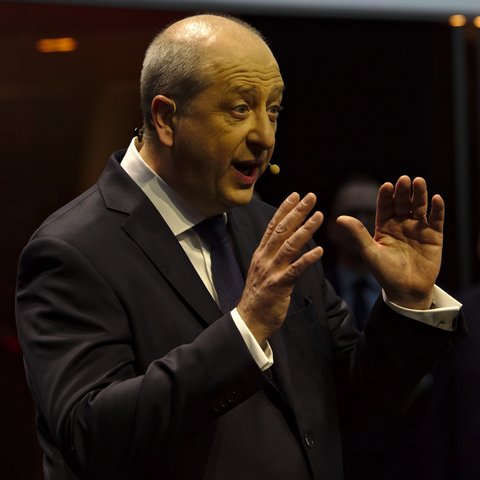
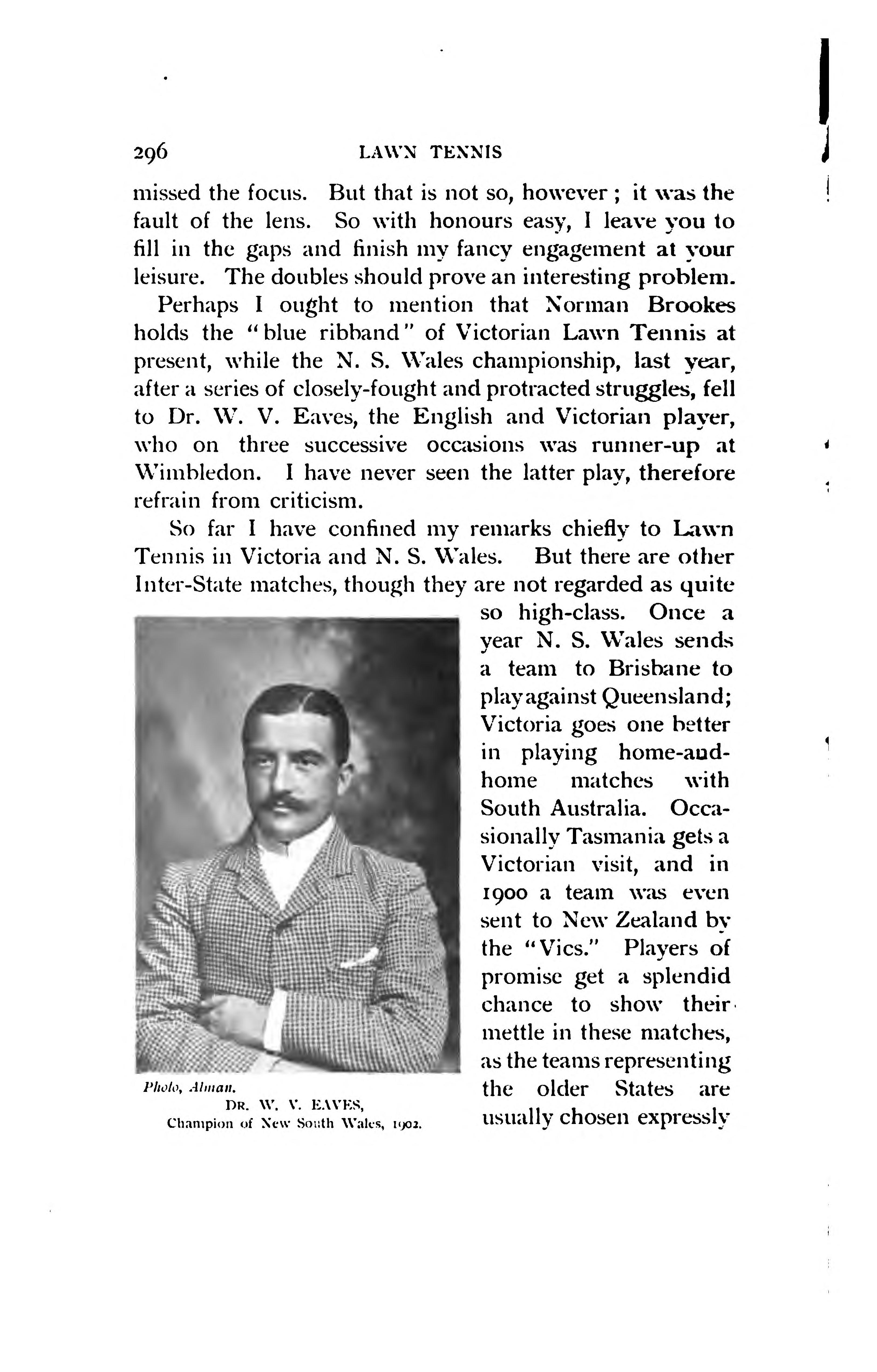
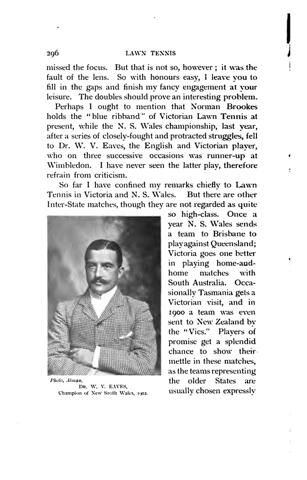
The cover of this entry is a studio portrait printed in a London and New York book of 1903, on a page whose text is the argument this entry makes. The photograph and the sentence are six lines and a paragraph break apart, and neither can be read honestly without the other.
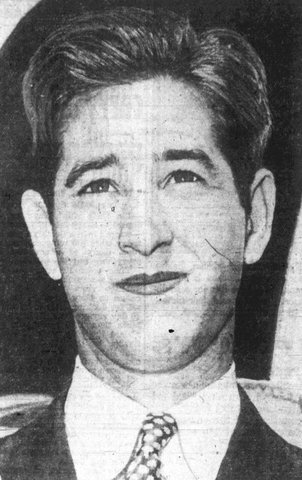
A half-length studio photograph of a man in early middle age, turned slightly to the viewer's left with his head close to square on. Dark hair cut short and parted. A full moustache, the ends turned very slightly up, no beard. He wears a single-breasted lounge jacket in a small even check, notch lapels, one button fastened at the waist, the same check running through the sleeves; a white shirt with a stand collar and a pale tie or cravat at the throat; the point of a white handkerchief in the breast pocket; a white cuff showing at one wrist. His forearms are folded low across the front of the frame and one hand is visible with the fingers loosely closed. Behind him a plain studio ground, shading darker toward the upper right. There is no racket in the picture and nothing in it is tennis clothing. Set in letterpress below: Photo, Alman. DR. W. V. EAVES, Champion of New South Wales, 1902.
Six lines above that photograph, on the same leaf and in the same column of type, the book prints this: that the New South Wales championship the previous year, after a series of closely-fought and protracted struggles, fell to Dr. W. V. Eaves, the English and Victorian player, who on three successive occasions was runner-up at Wimbledon.
**What this entry argues.**
Two things, and they are the same thing seen from two sides.
The first is that runner-up at Wimbledon three successive times is not one fact repeated three times. It is three structurally different results, and the structure that made them different was abolished in 1922. In one of the three years Eaves played for the championship and lost it from two sets up. In the other two he lost a qualifying tournament and never met the champion at all, and in one of those two he did not finish the match. A modern reference work, compressing all this, has printed that he was the reigning Wimbledon champion, which he never was in any year.
The second is that no single country owns him. In the space of six years the same man is described in print as English, as Victorian, as champion of New South Wales, and as a British Olympic medallist; he was born in Melbourne; and the country that commemorates his death is the one he did not represent in sport. That is not a puzzle to be solved. It is what a nationality looked like in a sport organised by clubs and colonies before it was organised by states, and this platform's guardrail on the point is that a player is described by what he represented at the time of the thing being described.
He is pinned here, at a cemetery in south-east London, because that is where the record ends. The alternative anchor was the Sydney Cricket Ground, where the championship on his portrait's caption was played, and it was deliberately not taken: a New South Wales state championship is a separate arc, this series does not open one without being asked, and the scope decision is recorded here rather than made silently. Of the other grounds in his life, Dinard, the Queen's Club, Chiswick Park, Moffat and Worple Road are all already pinned on this platform, four of them in entries that name him.
**Three times runner-up, and three different things.**
The challenge round was a rule about who had to play. Under it the tournament proper — the all-comers' — decided a challenger, and the previous year's champion sat out and played only that one match at the end. Everything below happened while it was in force at Wimbledon, which the three encyclopaedia articles read for this entry establish for 1895, 1896 and 1897 directly. No source read this session gives the year the rule ended there, and none is stated here. It is why the phrase runner-up needs unpacking every single time it appears in this period.
In 1895 the reigning champion, Joshua Pim, did not defend. With no holder to challenge, the all-comers' final was the championship match. Wilfred Baddeley beat Eaves in it 4-6, 2-6, 8-6, 6-2, 6-3, and so won the title. Eaves had taken the first two sets. The encyclopaedia article on him adds that he had a match point in the third; the article on the 1895 event does not print that detail, and the score it prints, 8-6 to Baddeley in that set, is consistent with it without confirming it. This is the one year in which Eaves was runner-up for the championship of Wimbledon in the ordinary sense of the words.
In 1896 Harold Mahony beat Eaves in the all-comers' final 6-2, 6-2, 11-9, and then beat the holder, Wilfred Baddeley, in the challenge round 6-2, 6-8, 5-7, 8-6, 6-3 to take the title. Eaves was not one match from the championship that year. He was two.
In 1897 Reginald Doherty beat Eaves in the all-comers' final 6-3, 7-5, 2-0, at which point Eaves retired, and Doherty then beat the holder Mahony 6-4, 6-4, 6-3 in the challenge round. So the third of the three runner-up finishes was a retirement in a match Eaves was losing in the third set of a tournament that would not by itself have made him champion.
Three years, three different distances from the trophy, and one phrase covering all of them.
**The error that phrase produced.**
Later in that same 1897 season a party of British players crossed to the United States National Championships, and Eaves came through the all-comers' there. On the encyclopaedia's account the defending champion, Robert Wrenn, then beat him in the challenge round 4-6, 8-6, 6-3, 2-6, 6-2. Written from Eaves's side of the net that is 6-4, 6-8, 3-6, 6-2, 2-6, which is exactly what the table in the article on Eaves himself prints; the two presentations agree once the sides are aligned, and that was checked for this entry rather than assumed.
In the sentence that reports it, the article on the 1897 American event calls Eaves the reigning Wimbledon champion.
He was not. The same encyclopaedia's article on the 1897 Championships says Reginald Doherty won them, having beaten Eaves in the all-comers' final on the way. Eaves never won Wimbledon in any year. The error is not corrected here, because correcting other people's reference works is not what this platform does; it is set down, with both articles named below, because it is the clearest available demonstration of the thing this entry is about. A record that says runner-up three times, in a structure that no longer exists, compresses easily into champion once, and somebody did the compressing.
The article on Eaves also says he was the first non-American to reach the final of the United States championship. That is reported here as the article's claim and is not adopted, for two reasons. The word final in it is doing the same work this entry has just spent four paragraphs taking apart, since what he reached was the challenge round. And no source read this session establishes the priority: nobody's earlier appearance was checked, in either the challenge round or the all-comers'. A first claim that has not been tested against the field it is first in is a claim about how far somebody looked.
**Six entries, no page.**
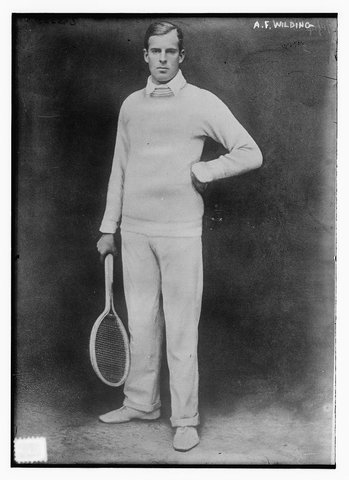
Before the argument, the reason this entry exists. Wilberforce Eaves is named in six of this platform's published entries and has had none of his own: the Dublin women's championship ground, Norman Brookes, Herbert Roper Barrett, Arthur Gore, Ernest Wool Lewis and Beechgrove at Moffat. That count was taken by querying the stored text of every published entry this run rather than recalled, and the query needed guarding, because the surname is also an ordinary English word for the overhang of a roof and a search for it returns entries about Korean and Japanese architecture, and because one tennis entry that matches contains it as the surname of a present-day historian and not of this man.
**The English and Victorian player.**
The chapter the cover comes from is Chapter IX of Arthur Wallis Myers's Lawn Tennis at Home and Abroad, published by Charles Scribner's Sons in New York in 1903. The chapter is titled Lawn Tennis in Australia and is signed by L. O. S. Poidevin, whose own portrait is printed thirteen pages before the Eaves plate.
Poidevin's sentence gives Eaves three identities in a dozen words: English, Victorian, and holder of the New South Wales championship. He is writing about a man who had been born in Melbourne, who was by then living and practising medicine in England, and who had just taken a title in a colony that was not the one he came from. Poidevin adds, of Eaves's play, only that he has never seen him play and therefore refrains from criticism, which is a more scrupulous line than most of the book contains.
In the same chapter Poidevin describes the New South Wales meeting: it is held in May, between the close of the cricket season and the start of the football season, at the Sydney Cricket Ground enclosure, which he calls beautiful. He adds that Dr. Eaves is reported to have said, the previous year, that they were the best courts he had ever played on. That is a remark at second hand in a book of opinion. It is not quoted here and no quotation marks are used for it anywhere in this entry, because a thing somebody is reported to have said is not a text.
**What the same chapter says about Australian tennis in 1903, which is the part nobody expects.**
Poidevin, writing about the country whose championship is now one of the four majors, records two absences.
The first: that lawn tennis in Australia had never yet had a representative at Wimbledon.
The second, in his own framing, is that the absence of any mention of all-Australian championships cannot have failed to attract notice, and that the explanation is easy, since such competitions do not exist. He calls it a pity, says the reasons are outside the scope of his chapter, and hopes the subject will materialise in the immediate future.
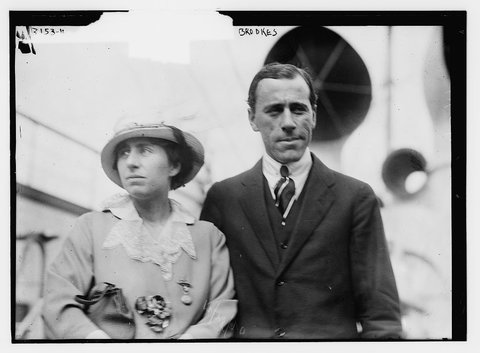
Two years after he wrote that, it did. This platform's entry on Norman Brookes records that Brookes first went to Wimbledon in 1905, won the all-comers' event there, and lost the challenge round to the holder, Laurence Doherty; that he returned in 1907 and won the singles, the doubles and the mixed; and that he won at Wimbledon again in 1914.
And the same entry records who taught him. It says that Brookes was coached by Wilberforce Eaves, a doctor.
So the man who lost the all-comers' final at Wimbledon in three consecutive years coached the man who won it at the first attempt, for the country in which the coach had been born and which he did not represent. Nothing read for this entry says when or where the coaching happened, how long it lasted, or how much of it there was, and no claim is made here that it explains anything about Brookes's play. What is set down is that this platform's own record of Brookes contains the sentence, that Poidevin's chapter contains the two absences, and that all three men are in the same book.
**1908, and a bronze medal that had never been available before.**
At the Games of 1908 in London the outdoor lawn tennis was played on grass at the All England Lawn Tennis and Croquet Club. In 1908 that still meant the ground at Worple Road, which this platform pins separately; this platform's own entry for the Church Road ground dates the club's move there to June 1922. The encyclopaedia article on the event records thirty-one competitors from nine nations, and that the Games began three days after the 1908 Championships ended, a collision the organisers' own report afterwards recommended avoiding.
It also records that for the first time at the Olympics, a bronze medal match was played. That sentence sits in an article about one tennis event and does not say whether it means the first such match in this event, in the tennis programme, or at the Games as a whole. This entry reports it in the article's own scope and does not settle which was meant.
Eaves won it. On its account he beat Rolf Kinzl of Austria 6-3, 6-1, 6-0; received a walkover from Kurt von Wessely of Austria; beat Moritz von Bissing of Germany 8-6, 7-5, 7-5; beat Charles Dixon of Great Britain 6-3, 7-5, 6-3; lost the semi-final to Major Ritchie 2-6, 6-1, 6-4, 6-1, having taken the first set; and then, on Saturday 11 July 1908, beat John Richardson of South Africa 6-2, 6-2, 6-3 for third place. Ritchie beat Otto Froitzheim of Germany for the gold.
Eaves was forty years old that month, on the birth date the encyclopaedia gives him. He competed for Great Britain.
Two joins to this platform's existing entries sit inside that week and are named rather than left implicit. The article on the outdoor singles says the leading players stayed away and that Arthur Gore, whose life is pinned here at Dinard, played only in the indoor event. That indoor event, at the Queen's Club, is the subject of this platform's entry on Herbert Roper Barrett, and that entry records the one first-round match of the indoor doubles: Caridia and Simond beat Eaves and Hillyard. So in the same fortnight Eaves lost his only match at Queen's and won a medal at Worple Road.
**The doctor.**
The encyclopaedia article says he qualified in medicine, served as a civil surgeon in the South African War, took a temporary commission in the Royal Army Medical Corps on 10 August 1914, in the first week of the war, and was promoted captain after a year's service; that he was appointed MBE for his services; and that he died in London on 10 February 1920 and is buried in Greenwich Cemetery. It cites a casualty record of the Commonwealth War Graves Commission for the birth and burial details and for his parents, William and Eunice Eaves of St Kilda, Victoria; a commemorative roll held by the Australian War Memorial for the commission and promotion; and an obituary in the British Medical Journal of 21 February 1920 for the run of covered court titles.
None of those three documents was read for this entry, and that is a real limitation rather than a formality. The Commission's website refused an automated request outright. The British Medical Journal obituary is freely available through the United States National Library of Medicine's article archive, which confirms it exists, that it is at page 276 of volume 1, issue 3086, dated 21 February 1920, and that it is headed Captain Wilberforce Vaughan Eaves, M.B.E.; the page itself is a scan without machine-readable text and was not transcribed here. The commemorative roll was not opened.
**Why a death in 1920 is a war grave, and why that is not a technicality.**
He died fifteen months after the Armistice, and he is a Commonwealth war casualty.
That is not an anomaly. The Commission's periods of consideration for the First World War run from 4 August 1914 to 31 August 1921, and it commemorates those who died within them in Commonwealth military service or of causes attributable to service, which expressly includes causes other than combat. The end date is the war's official end rather than the date of the Armistice. Read on 7 September 2026 in the encyclopaedia article on the Commission, which cites the Commission's own published figures for the dates.
Nothing read for this entry states a cause of death, and none is suggested here. What the dates establish is only the institutional fact: that a man who last played a Wimbledon all-comers' final in the previous century, and who was a medical officer rather than a combatant, is counted among the war dead and lies under the Commission's care.
The record therefore ends like this. The Australian War Memorial commemorates him. The Commonwealth War Graves Commission maintains his grave. The tennis record gives him to Great Britain. A book of 1903 calls him English and Victorian in one breath and prints his photograph over the caption Champion of New South Wales. He is one man, and four registers hold him differently.
**Amateur-era note, and the phrase.**
Every title and every finish named above belongs to competitions closed to anyone who had ever been paid to play, and no figure here is set against anything after 1968, when that rule ended at the four major championships. It bears on this life in a specific way. On the titles the encyclopaedia article lists, Eaves was a qualified physician who won championship tennis in England, Wales, Scotland, Ireland, France and New South Wales across roughly fifteen years, from the first Dinard title it dates to 1894 to the last it dates to 1909. He could do that because a profession paid for it. The amateur rule was a rule about who could afford to travel, and a doctor could. Nothing read here establishes that he ever won a title in Victoria, the colony Poidevin attaches to him, and none is claimed.
The phrase Grand Slam is used nowhere else in this entry and is worth one line of disambiguation because readers arrive with it. It carries two ordinary senses — the four major tournaments taken as a set, and all four won inside one calendar year — and neither was available in the years described here, since this platform's own entries record that the four were designated as majors only from the middle of the 1920s. It is also worth saying that the set of four was not there to be entered. On Poidevin's account there was no Australian championship of any kind in 1903, and this platform's entries date the Australasian Championships from 1905 — after every Wimbledon appearance described above.
**Naming discipline.**
The Championships, Wimbledon is named repeatedly above and is never the Wimbledon Open; the event has no Open in its name and never has had. The American event is called the United States National Championships, which is its name for the period described; it became the US Open in 1968. The all-comers' and the challenge round are named separately throughout and are never collapsed into the word final, which is the whole point of the first half of this entry.
One more thing about the source's own words is worth recording, because it is checkable and it is the naming problem in miniature. Poidevin is writing in 1903, two years after the Australian colonies federated, and inside one chapter he calls the same places the colonies, the Colonies and the older States. This entry does not tidy that up and does not attach either word to New South Wales in 1902 on its own authority.
Nationality is given as the sources give it at the time. Eaves competed for Great Britain at the 1908 Games; the encyclopaedia's tables give Richardson under South Africa, Froitzheim under Germany, Kinzl and von Wessely under Austria; Poidevin calls Eaves English and Victorian in 1903; the Commission's record, as cited, names his parents at St Kilda in Victoria. No modern state is substituted for any of these.
**Status, dated.**
Read on 7 September 2026. Greenwich Cemetery is a cemetery in the Royal Borough of Greenwich, in the address the geocoder returns off Well Hall Road. OpenStreetMap tags it as a cemetery and its record carries a link to a directory entry on the borough council's website; that page was not fetched for this entry, and nothing here states whether the ground is still open for burials. The mapped outline used for this entry's pin encloses 91,040 square metres, or 9.10 hectares, or 22.50 acres, and measures about 465 m north to south by about 514 m east to west.
The location of Eaves's grave within it is not established here. This entry pins the cemetery, not the grave.
**Gaps this entry declares.**
Nothing in this entry is inside quotation marks. The condition this series applies is that machine-read text earns quotation marks only where the same copy was set by two independent printers, and nothing used here satisfies it: one book of 1903 in a single typesetting, and a set of encyclopaedia articles. The remark about the Sydney courts is doubly excluded, being second hand inside that single typesetting.
The grave reference is the largest gap. The Commission publishes a plot, row and grave reference for every casualty in its care, and that reference would place the stone within the cemetery to a few metres and turn this pin from a 350 m enclosure into a point. The Commission's site returned a refusal to an automated request for the casualty record, and no alternative route to the reference was attempted. Anyone with the record in front of them can close this in one edit.
The British Medical Journal obituary of 21 February 1920 was located but not read, for the reason given above. It is the only near-contemporaneous account of his life identified in this session, it was written by his own profession rather than by the sporting press, and it is the obvious next work. So is Baily's Magazine of Sports and Pastimes for 1920, page 139, which the encyclopaedia cites for the ten Dinard titles and which was not consulted.
No newspaper report of any match described above was sought or read. Every score in this entry comes from an encyclopaedia article, and several of those articles cite a commercial tennis statistics database that was not consulted at source. The career totals that database supplies — 341 wins and 96 losses, thirty-nine singles titles — are set down here once, in the gaps, and are used nowhere in the body above, because a total computed from an undisclosed set of tournaments measures that database's coverage before it measures a career. That is the finding this platform's entry on Arthur Gore was built on, and it applies to Eaves with more force, since a man who played in six countries is exactly the case a coverage gap distorts most.
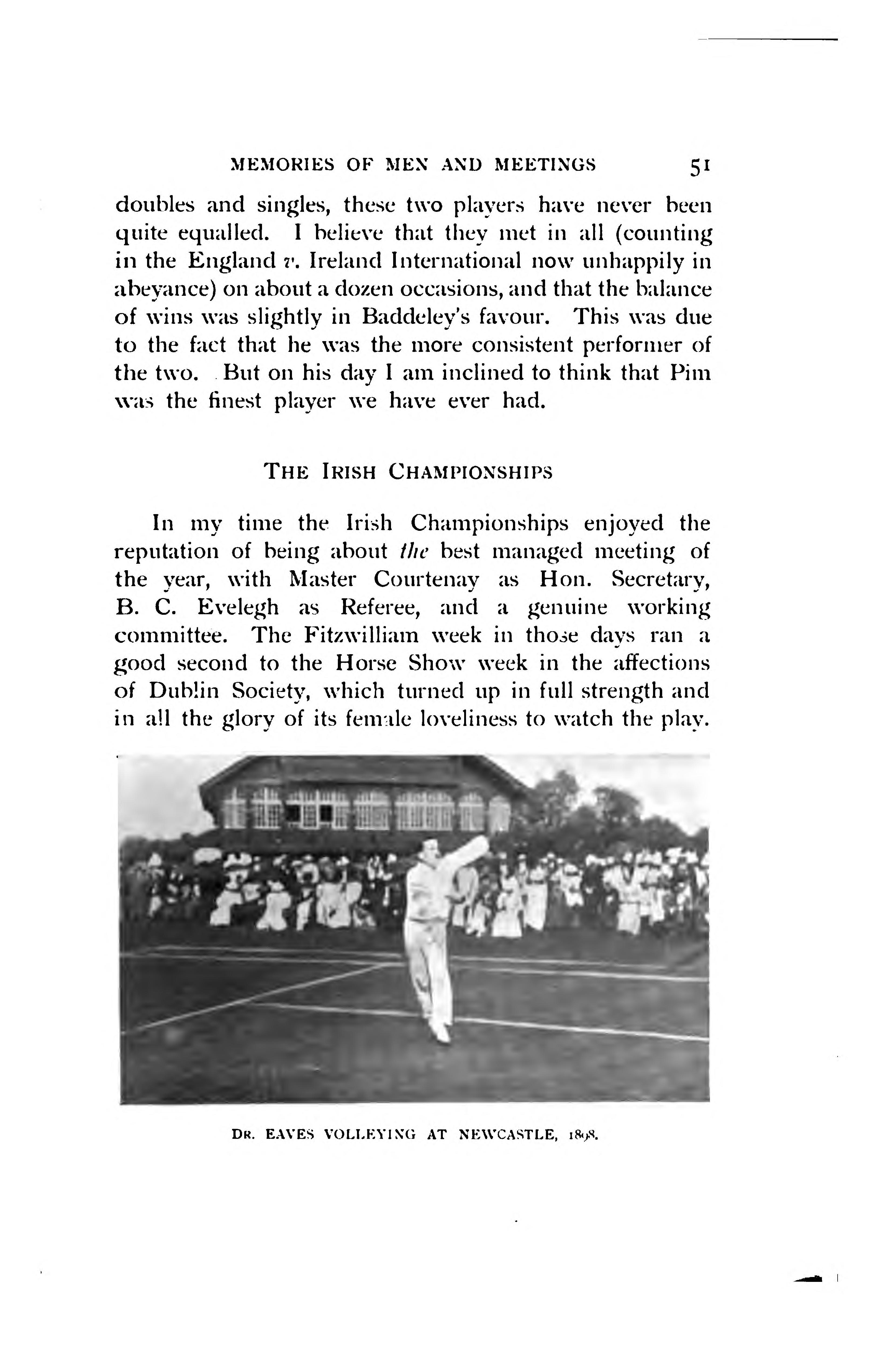
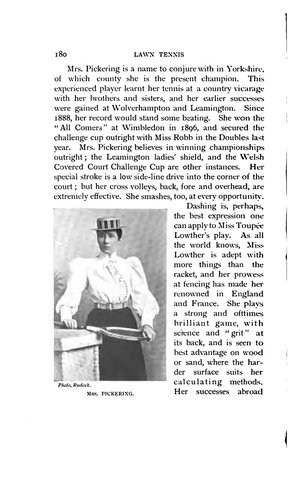
Newcastle, in the caption of the second image, is not identified. The book prints the place name and nothing else, and there is more than one candidate; the leaf's own text is about Irish tennis, which makes the question live rather than settling it. No claim is made here about which Newcastle it is.
Nothing was read from the records of any club Eaves played for, from the Royal Army Medical Corps, from the General Medical Register, or from the cemetery's own burial registers. His medical career, beyond the bare facts of qualification and service that the encyclopaedia states, is not described here at all, and no claim is made about his health, his family beyond his parents' names as cited, or the circumstances of his death.
**Coordinate.** 51.466792, 0.048712, precision radius 350 m. The anchor is Greenwich Cemetery, off Well Hall Road, in the Royal Borough of Greenwich in south-east London.
Two independent kinds of reading were obtained, and a third was found and is reported as an unresolved divergence rather than averaged in.
The first kind is a mapped object. OpenStreetMap way 10484612 is tagged as a cemetery, named Greenwich Cemetery, carries the borough council's directory link and a Wikidata identifier, and its outline was fetched through an Overpass mirror. The outline has only fifteen nodes and is therefore coarse. Its polygon centroid, computed for this entry, is the pin, and the furthest vertex of the outline lies 306.3 m from it.
The second kind is an address point. The Esri world geocoder returns Greenwich Cemetery, Well Hall Road as a point address with a score of 100 at 51.467902, 0.052501, and the Office for National Statistics postcode centroid for the postcode it returns, SE9 6TZ, served through a public postcode interface, is at 51.467881, 0.052515 with an Ordnance Survey grid reference of 542663 east, 176321 north. Those two lie 2.6 m apart, and this entry counts them as one reading rather than two: a commercial geocoder returning a postcode alongside its coordinate, landing within three metres of that postcode's own statistical centroid, is very probably reading the same postcode unit and not making an independent determination. Both lie 290 m from the pin, and both fall inside the mapped outline, toward its north-east. That is the ordinary mailing-address-versus-footprint offset — an address point sits at a gate, a centroid sits in the middle of the ground — and it is reported rather than split.
The third reading is Wikidata's coordinate for the same cemetery, 51.4697, 0.0541. It lies 493.8 m from the pin and about 230 m from the address pair, and it falls outside the bounding box of the mapped outline altogether. This entry does not resolve that. Either the Wikidata point is placed loosely, or the fifteen-node outline understates the cemetery to the north-east; nothing read here decides between them, and a query intended to test it by looking for adjacent cemetery polygons timed out twice on two different Overpass endpoints and was not retried. The radius below does not reach the Wikidata point, and this entry does not claim the ground under it.
The radius is 350 m by measurement. Covering the whole of the mapped outline from this pin requires 306.3 m; the address pair lies at 290 m; 350 m clears both with a margin and, because this entry pins a cemetery rather than a grave, that margin is doing honest work rather than decoration.
Wikidata also records a Commonwealth War Graves Commission burial-ground identifier of 42100 for this cemetery, and a date of 1856. The identifier is set down as a route for anyone continuing this work. The date is not adopted; it is recorded there as an earliest-written-record claim and no source for it was read here.
The nearest pin of any kind on this platform is 2,190 m away, at Eltham Palace, and it belongs to another vertical. The nearest tennis pin is 17,379 m north-west, the vanished Bayswater covered court. The Queen's Club is 18,232 m away, and Worple Road — where the bronze medal above was won — is 18,846 m. Every distance in this entry was computed in-session from stored coordinates.
**Cover.** Arthur Wallis Myers, Lawn Tennis at Home and Abroad, Charles Scribner's Sons, New York, 1903; digitised from a Google-sponsored scan held by the Internet Archive. The in-text halftone on the leaf the archive numbers n317, the full leaf 3250 by 5084 px, mean brightness 228.0 of 255, standard deviation 66.0. Opened at full size, examined, then cropped to the photograph and enlarged before anything was written about it.
The leaf carries the printed page number 296 in its running head, under the book title, so the offset between the archive's leaf numbers and the book's printed pages is twenty-one here — the same offset this series has now established on four separate leaves of this scan. The neighbouring leaves were measured before anything was concluded from this one, because scans of this kind sometimes carry whole runs of failed halftones: n314 returns a mean of 236.0, n315 235.7, n316 241.5, n318 229.6, n319 225.0 and n320 243.0. Nothing in the run is blank.
This is a leaf on which the picture and the text belong together, which is uncommon and is why it is the cover: the sentence calling Eaves the English and Victorian player stands six lines above the top of the photograph, on the same page, in the same author's chapter.
Two things about the plate are recorded rather than passed over. The credit line reads Alman; the machine-read text of this scan renders it Aiman, and the reading here is from the enlarged image rather than from the transcription. And the plate is captioned as a champion but shows a man in a checked suit against a studio backdrop, with no racket and no tennis clothing in the frame; it is a portrait, not a photograph of anything he did.
Printed matter in the frame, recorded as a negative: nothing legible inside the photograph. The credit and the caption are set on the page below it.
**Second image.** The same book, the in-text halftone on the leaf the archive numbers n72, which carries the printed page number 51, the full leaf 3250 by 5084 px, mean brightness 222.9 of 255. Opened at full size, then cropped and contrast-stretched and read again. Neighbouring leaves: n70 194.3, n71 228.9, n73 237.7, n74 206.7.
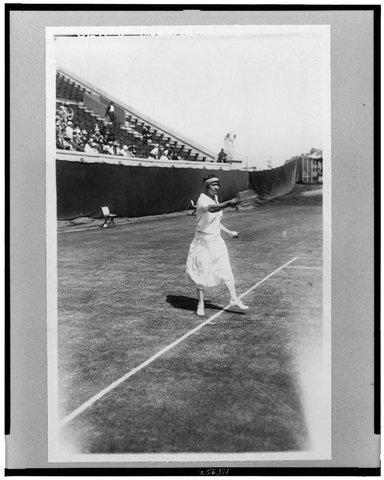
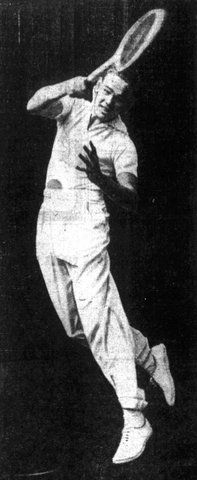
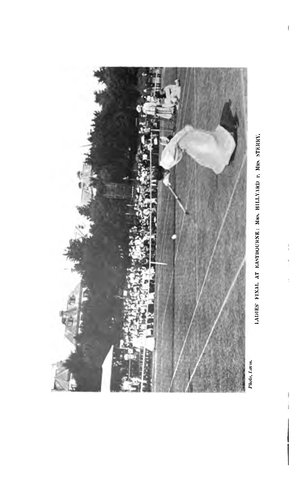
It shows a grass court in play. One man in white, alone in the frame, seen from in front and slightly to one side: light shirt with full sleeves, light trousers, no hat, weight forward, one arm raised high with the elbow bent and the forearm carried across above the head. A rounded pale shape at about shoulder height on the other side of his body reads as the head of a racket. This entry does not say which hand holds it. At halftone resolution the two pale shapes cannot be told apart with confidence, and a reversed negative cannot be excluded, so no statement about his handedness is made from this picture. Bright court lines run across the lower part of the frame and away in perspective; no net post is visible and no net can be distinguished from the lines at this size. Behind the court a crowd stands several deep, women in pale dresses and wide pale hats among men in darker clothes, several dozen figures, not counted. Behind the crowd a long low building with a broad, steeply pitched dark roof and wide overhanging eaves, and a range of tall windows with glazing bars, two of them standing open as dark rectangles. Trees to the right. Set in letterpress below: DR. EAVES VOLLEYING AT NEWCASTLE, 1898.
The trap on this leaf is declared. The text above and below the photograph is about the Irish Championships at Fitzwilliam and about Pim and Baddeley. It is not about Eaves, it is not about Newcastle, and nothing has been taken from it. A photograph placed under unrelated text is the ordinary condition of illustrated books of this period and is not evidence of anything about the picture.
Printed matter in the frame, recorded as a negative: nothing legible inside the photograph.
**A third image was found, opened, and rejected.** Wikidata's image for Greenwich Cemetery is a freely licensed photograph taken there on 15 February 2020 and correctly described as Greenwich Cemetery, London. Opened at full size for this entry, it turns out to be a close view of one particular headstone — the family grave of William and Ann Crush of Glasgow, late of Blackheath and Poplar. It is not a general view of the cemetery and it has nothing to do with Eaves. Published on an entry about a man buried in that cemetery it would imply, in any thumbnail where the caption is not visible, that it is his grave. It was rejected on that ground, and the rejection is recorded here so that the next person to reach for it knows why.
**Sourcing note.** No passage in this entry is inside quotation marks, for the reason given under gaps. Every attribution above is paraphrase. Where a caption, a running head or a credit line is set out in the capitals and abbreviations printed on the object, that is a description of what is on the page rather than a quotation of a text, and it follows the convention this series has used for the plates in this same book.
**Sources.** Arthur Wallis Myers, Lawn Tennis at Home and Abroad, Charles Scribner's Sons, New York, 1903, for L. O. S. Poidevin's Chapter IX and its authorship, the sentence on the English and Victorian player at printed page 296, the Sydney Cricket Ground passage and the reported remark at printed page 285 and the two absences at printed page 302, both page numbers taken from the running heads in the machine-read text rather than from leaves opened for this entry, the table of contents, and both plates: https://archive.org/details/lawntennisathom00myergoog , read as text at https://archive.org/download/lawntennisathom00myergoog/lawntennisathom00myergoog_djvu.txt , with the cover at https://archive.org/download/lawntennisathom00myergoog/page/n317.jpg and the second image at https://archive.org/download/lawntennisathom00myergoog/page/n72.jpg . Encyclopaedia article on Wilberforce Eaves, read in its own source text, for his dates and birthplace, his parents, the Melbourne birth, the medical qualification and war service, the MBE, the burial at Greenwich Cemetery, the Dinard, Welsh, Irish, Scottish and British Covered Court titles, and the citations to the Commonwealth War Graves Commission, the Australian War Memorial and the British Medical Journal: https://en.wikipedia.org/wiki/Wilberforce_Eaves . Encyclopaedia articles on the 1895, 1896 and 1897 Wimbledon men's singles, read in their own source text, for the all-comers' finals, the challenge rounds and the scores: https://en.wikipedia.org/wiki/1895_Wimbledon_Championships_%E2%80%93_Men%27s_singles , https://en.wikipedia.org/wiki/1896_Wimbledon_Championships_%E2%80%93_Men%27s_singles and https://en.wikipedia.org/wiki/1897_Wimbledon_Championships_%E2%80%93_Men%27s_singles . Encyclopaedia article on the 1897 United States National Championships men's singles, read in its own source text, for the challenge round, the score and the reigning-Wimbledon-champion sentence discussed above: https://en.wikipedia.org/wiki/1897_U.S._National_Championships_%E2%80%93_Men%27s_singles . Encyclopaedia article on the tennis men's outdoor singles at the 1908 Summer Olympics, read in its own source text, for the venue and surface, the thirty-one competitors from nine nations, the first Olympic bronze medal match, the date of 11 July 1908, every score in that section, the absence of the leading players and Arthur Gore's indoor-only entry: https://en.wikipedia.org/wiki/Tennis_at_the_1908_Summer_Olympics_%E2%80%93_Men%27s_outdoor_singles . Encyclopaedia article on the Commonwealth War Graves Commission, read in its own source text, for the periods of consideration of 4 August 1914 to 31 August 1921, the inclusion of deaths from causes other than combat, and the Commission's foundation as the Imperial War Graves Commission in 1917: https://en.wikipedia.org/wiki/Commonwealth_War_Graves_Commission . The existence, date, page and heading of the British Medical Journal obituary, from the United States National Library of Medicine's article archive record: https://www.ncbi.nlm.nih.gov/pmc/articles/PMC2337269/ . OpenStreetMap way geometry through an Overpass mirror, the Esri world geocoding service, Office for National Statistics postcode data served through https://api.postcodes.io/ , and the Wikidata item for Greenwich Cemetery at https://www.wikidata.org/wiki/Q23073284 , for the coordinate, the area, the burial-ground identifier and the rejected image. Every cross-reference to this platform's own entries, and every neighbouring-pin distance, was queried against its stored records this run, and every arithmetic figure was recomputed in-session.
changes?
delete this memory?
We detected that you have a Blox in your crypto wallet! We will import the Blox into your account.
Click on done below to complete the import.
Welcome Back!
Sign in to preserve cherished moments
Don't have an account?
Welcome!!
Sign up and start preserving cherished moments
?
?
Choose your payment method
Buy with Metablox Credit
Do you want to mint Blox with Metablox Credit?
Which Crypto would you like to use?
Purchase Confirmed!
Your Blox is being minted on-chain and will appear in your profile shortly.
Log in or sign up to claim your Blox.
How many credits do you want to buy?
$100 USD = 1 Metablox Credit = 1 Blox.
Use Metablox Credit to mint any Blox you want on the map.
 expand_more