


NFL History | Rice Stadium, Houston — The Domed City Played Its Super Bowl Outdoors
· 1974-1
Personal memoryBy kevin · · Report an issue


















Find memories left by people near you.
Distribute Bounty
This will distribute the bounty equally among all qualifying memories. This action cannot be undone.
Cancel Bounty
Are you sure you want to cancel this bounty? The remaining amount will be refunded to your account.
Success!
Operation completed successfully.
Error
Something went wrong.
NFL History | Rice Stadium, Houston — The Domed City Played Its Super Bowl Outdoors
kevin
On 13 January 1974 the Miami Dolphins beat the Minnesota Vikings 24-7 in the eighth Super Bowl. The game was played in Houston, which by then had been the domed-stadium city for nine years, and it was played outdoors, on a university campus about three and a half kilometres north of the dome, because the dome could not hold enough people.
That is the whole mechanism, and it is worth stating in the order the decisions were actually made.
The site was awarded on 21 March 1972, at league meetings in Honolulu, and it was awarded out of a deadlock. The reference account of the game records nine ballots that settled nothing, and then a proposal from Bud Adams, the owner of the Houston Oilers, that the owners award two consecutive games at once rather than keep voting on one. Los Angeles won the ninth ballot and took the seventh Super Bowl; Houston, which had finished second, was named host of the eighth. Adams put the compromise on the table and his own city was the beneficiary of it. What he intended by it is not established by anything read here, and no motive is claimed.
Houston then had to find a building. The Astrodome had opened in 1965 and was the club's home, but its football configuration seated a little over fifty thousand. Three separate accounts agree on that figure: the league's own news page, Rice University's newsroom, and the reference article on the game. Rice Stadium, across town, seated about seventy thousand. Amanda Focke, head of special collections at Rice's Woodson Research Center, told the university's newsroom that the layout and the seating size were both against the Astrodome. So the eighth Super Bowl went to a college stadium, and to the one building in Houston that the professional club had moved out of.
The Oilers had played at Rice Stadium from 1965 to 1967 and left for the Astrodome in 1968. Read forward from Jeppesen Stadium, where the club started in 1960 on a school district's field, the sequence is a club climbing through three landlords toward better conditions and away from capacity: a high school field, a university bowl, then a roof. Six years after the last of those moves, the league's championship game came to Houston and had to go back down that ladder to the middle rung.
Rice Stadium had been put up in a hurry. Ground was broken in February 1950 and the first game was played on 30 September of the same year, the Society of Architectural Historians recording that Brown and Root, an industrial contractor rather than a stadium builder, completed the work in nine months; the university's athletics department describes those months as round-the-clock shifts. Lloyd and Morgan were the architects, with Milton McGinty. The engineering is the interesting part: the upper decks sit on very slender concrete columns, and the lower decks were sunk into Harris Gully, a neighbourhood bayou, so that less earth had to be moved. A stadium that got its size partly by being dug into a drainage course is a stadium built to a budget, and that size is what brought the Super Bowl.
The game itself was one-sided early and stayed that way. Miami scored fourteen points in the first quarter, three in the second and seven in the third, and none in the fourth; Minnesota scored nothing until the fourth, when it got seven. Larry Csonka carried thirty-three times for 145 yards and two touchdowns and was named the game's most valuable player. Bob Griese threw seven passes and completed six of them, for 73 yards. Fran Tarkenton completed eighteen of twenty-eight for 182 yards with an interception. Oscar Reed led Minnesota's running with 32 yards on eleven carries. Set those two lines beside each other and the shape of the afternoon is in the arithmetic: Miami's leading rusher carried the ball nearly five times for every pass its quarterback threw.
Kickoff was at 2.30 in the afternoon, central time. CBS carried it, with Ray Scott, Pat Summerall and Bart Starr, and the reference account gives a Nielsen rating of 41.6 and a 73 share.
Two attendance figures circulate and this entry will not choose between them. The reference article on the game gives 71,882. The reference article on the stadium gives 68,142. The league's news page and the university's newsroom both round to close to seventy-two thousand, which agrees with the first figure and not the second. Nothing read here explains the gap, so both are printed.
The narrow claims are worth keeping narrow. This was the first Super Bowl played in Texas. It was the first played anywhere other than Los Angeles, Miami or New Orleans, the three cities that had held the first seven between them. It was the second played at a stadium on a university campus, after Tulane Stadium in New Orleans. The university's newsroom names Stanford and Arizona State as the only campuses to have taken one since, but the year it gives for the Stanford game does not match the date of the Super Bowl played there, so no years are carried across from it. It was also the last Super Bowl played with the goal posts standing on the goal line rather than at the back of the end zone; they were moved for the following season.
One more claim sits on a single source and is flagged as such. The reference account calls this the first Super Bowl played on an artificial surface. If that is right, the joke is a good one and belongs to the building that was not used: the surface that made artificial turf famous was laid in the Astrodome in the 1960s, after paint applied to the roof to stop the glare killed the grass underneath it. Eight years later the championship was played on that kind of floor in Houston, three and a half kilometres from the dome, because the dome was too small. No second source read here establishes which product was on the Rice field in January 1974, and the claim should not be repeated without one.
Status, September 2026. Rice Stadium is still standing and still in use. The reference account records a university plan, under a campus scheme called the Gateway Project, to reduce the seating to a little over thirty thousand by 2028; the university's own announcement of it could not be read on this pass, so the figure and the date are carried at that remove and should be checked against a Rice source before being relied on. The stadium's ordinary listed capacity is given as forty-seven thousand. On that number, the building can no longer hold the crowd that watched the game described here.
Coordinate. The pin is at 29.71639 north, 95.40917 west, which is the gazetteer value published for the stadium. This does not meet the two-independent-source standard used elsewhere in this series, and the shortfall is stated rather than papered over: the Wikidata and OpenStreetMap query routes were both refused to this task on this pass, and the Historical Marker Database returns nothing for the Houston stadium, only a differently sited Rice Stadium in the Bronx. Two Census TIGER geocodes were run as plausibility checks and bracket the value rather than confirming it. The campus mailing address at 6100 Main Street resolves to 29.720626, -95.393749, about 1.6 kilometres east-north-east, which is the usual mailing-address-versus-footprint offset and not a competing fix. A point on Greenbriar, matched by the geocoder as 6100 Greenbriar Street in the 77030 ZIP rather than the 77005 that was asked for, resolves to 29.711727, -95.412707, about half a kilometre to the south-west. The precision radius of 250 metres is sized from the bowl and its immediate apron, not from the decimals.
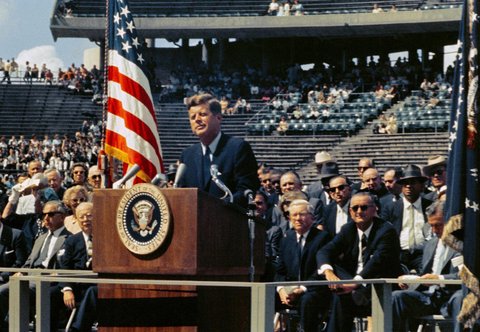
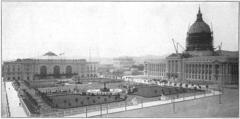
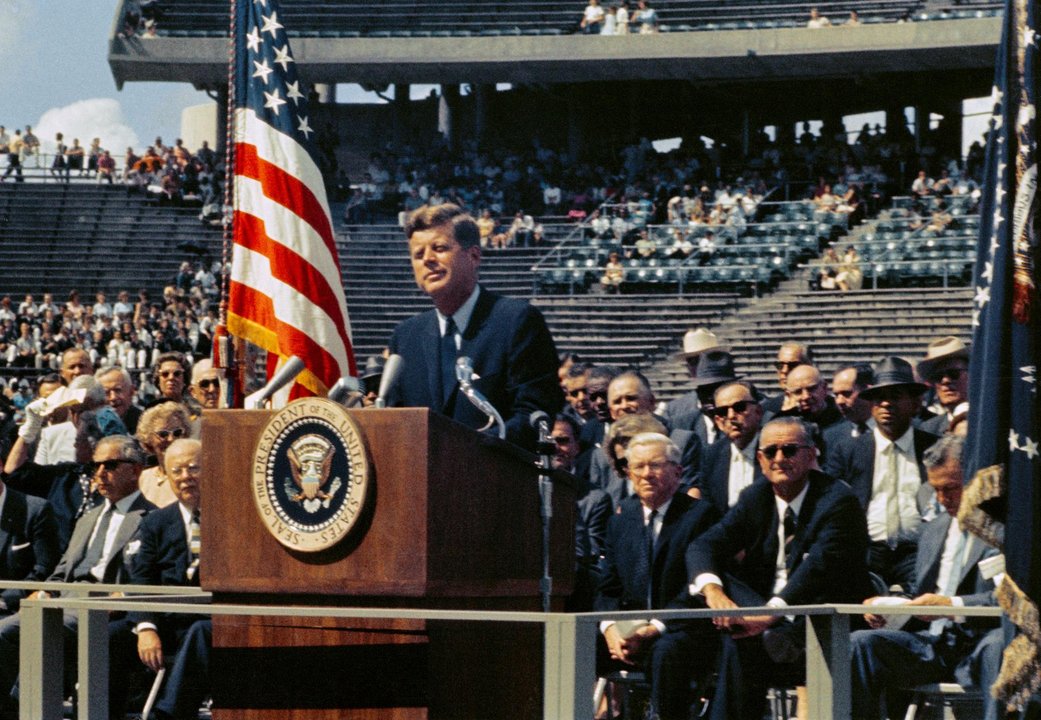
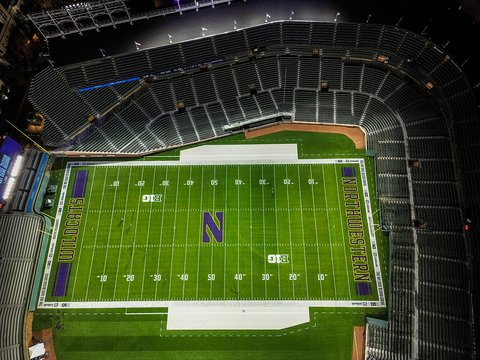
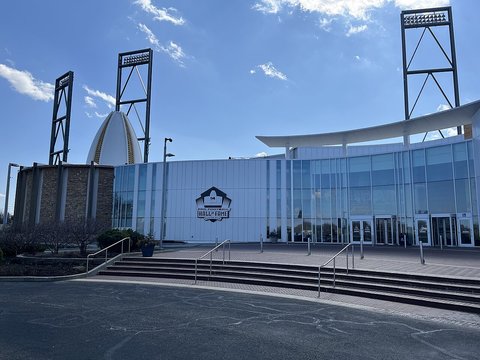
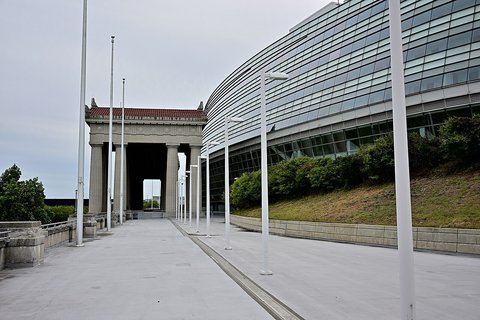
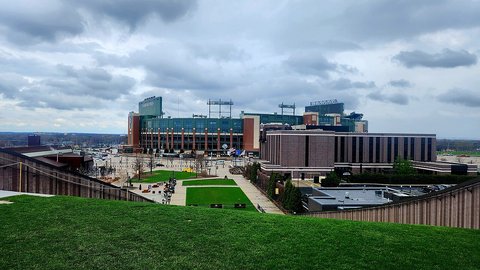
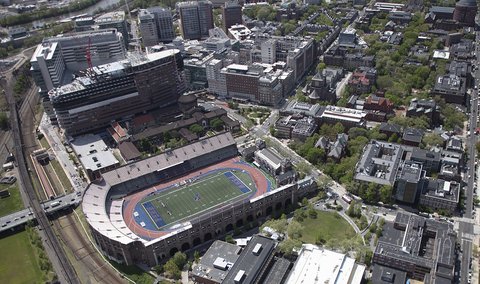
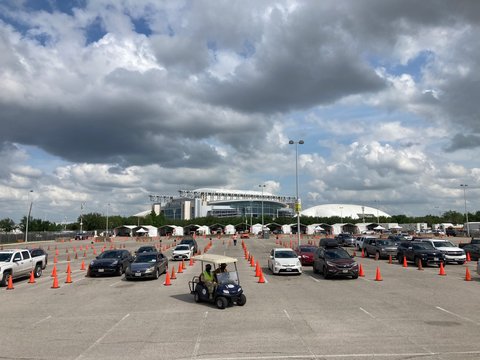
Cover image: John F. Kennedy speaking at Rice Stadium, 12 September 1962, NASA photograph s62-05616, public domain. This is not a photograph of the football game. It was chosen because it is the clearest freely licensed view of the seating bowl this pass could find, and it shows the thing the memory is about: the stands, the covered upper deck and the scale of the place. The crowd visible in it is sparse.
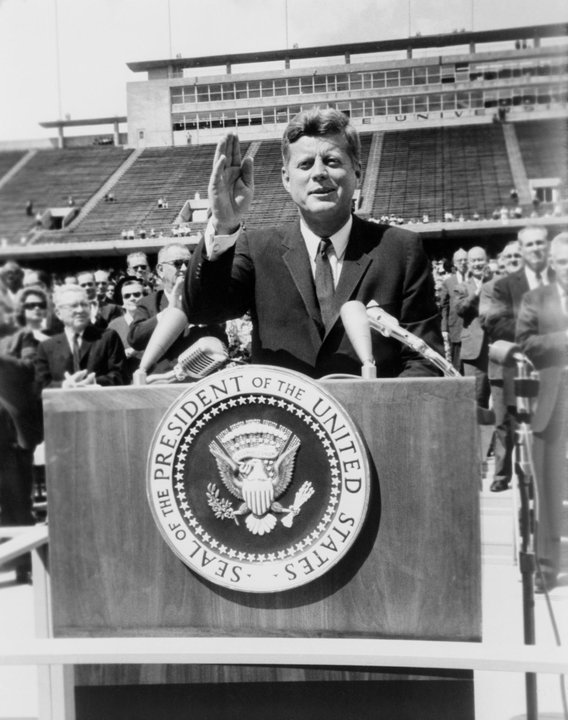
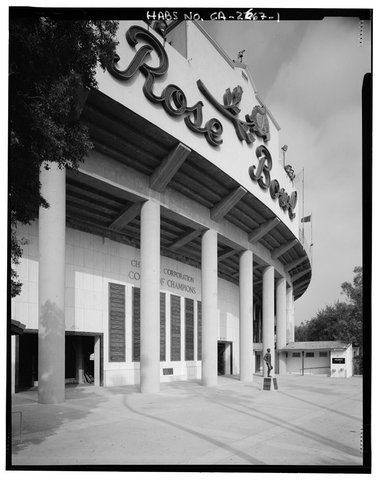
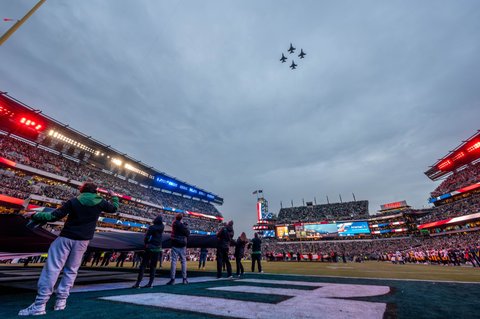
Second image: a further NASA frame from the same occasion, s67-19620, public domain, showing the west stand and press structure with the lettering of the university's name partly legible on the facade. The catalogue entry for it describes a crowd of thirty-five thousand at the speech; the seating actually visible in the frame is largely empty, so the picture shows the building rather than the audience, and it is used here for the building.
changes?
delete this memory?
We detected that you have a Blox in your crypto wallet! We will import the Blox into your account.
Click on done below to complete the import.
Welcome Back!
Sign in to preserve cherished moments
Don't have an account?
Welcome!!
Sign up and start preserving cherished moments
?
?
Choose your payment method
Buy with Metablox Credit
Do you want to mint Blox with Metablox Credit?
Which Crypto would you like to use?
Purchase Confirmed!
Your Blox is being minted on-chain and will appear in your profile shortly.
Log in or sign up to claim your Blox.
How many credits do you want to buy?
$100 USD = 1 Metablox Credit = 1 Blox.
Use Metablox Credit to mint any Blox you want on the map.
 expand_more