Biography | Molla Bjurstedt Mallory — the champion remembered for a match her opponent did not finish, Forest Hills, August 1921
volume_up
Listen
directions
Directions
The most consequential match Molla Bjurstedt Mallory ever played is one her opponent did not finish, and the record she actually holds is barely mentioned.
On Tuesday 16 August 1921, in the second round of the United States women's national championship on the grass of the West Side Tennis Club at Forest Hills, she beat Suzanne Lenglen of France 6-2 in the first set.
Lenglen lost the first two points of the opening game of the second set, walked to a chair beside the referee's stand and defaulted.
The Associated Press report put the crowd at 8,000. It said Lenglen had been noticed coughing early in the first set and attributed the collapse to a recent attack of bronchitis, and that attribution is repeated here as what was reported at the time rather than as a finding.
The papers split immediately on what the default meant.
The Evening World's William Abbott wrote that the official record would say Lenglen defaulted, but that the 8,000 present would say she quit in the face of the better player.
New York's Herald took a cooler line and gave the loser the credit for crediting the winner, reporting that Lenglen herself said Mallory deserved to win on the day's form and would have won in two sets.
The AP added the detail that outlives the argument: the set Mallory took was reportedly the first Lenglen had lost in more than two years of tournament play.
Later accounts inflate it. Britannica calls the match Lenglen's only loss as an amateur and places it in the final for the title.
The papers of that week are more careful and more accurate: second round, one set played out, a default early in the second.
Mallory went on to win the championship that year.
**Who she was before she was American.**
She was born Anna Margrethe Bjurstedt in Norway, and the reference works disagree about when.
The Library of Congress gives 1884-1959; Britannica gives an 1892 birth in Oslo, which does not fit the International Tennis Hall of Fame's account of her arriving in the United States in 1914 aged 30. Two of the three readings point to 1884.
She entered the American championship in 1915 as a Norwegian and won it, which was possible because the United States association ran entry through affiliated clubs rather than through nationality.
She married Franklin Mallory in 1919. By August 1921 the papers were calling her the American title holder, and she was one.
**The record.**
She won the United States women's singles championship eight times: 1915, 1916, 1917, 1918, 1920, 1921, 1922 and 1926. The International Tennis Hall of Fame calls it a record; Britannica states she is the only woman to have won that championship eight times.
Two things worth saying about the number rather than around it.
All eight fall inside the amateur era, when entry ran through affiliated clubs and the field was smaller than a modern draw. The eight are also not consecutive: 1919, and the three years from 1923 to 1925, belong to other players.
She is on this map twice, at Philadelphia and here. The Philadelphia entry is the 1915 championship she won as a Norwegian; this one is the afternoon that made her famous for someone else's exit.
**Coordinate.** 40.71975, -73.84680, precision radius 250 m. This reuses the coordinate already established for the West Side Tennis Club at Forest Hills in this vertical, from the U.S. Census TIGER geocoder and the GPS tag of the cover photograph used there. The reuse is deliberate and is disclosed here rather than presented as a fresh fix. The radius covers the club grounds; no source consulted fixes which court held the second round on 16 August 1921.
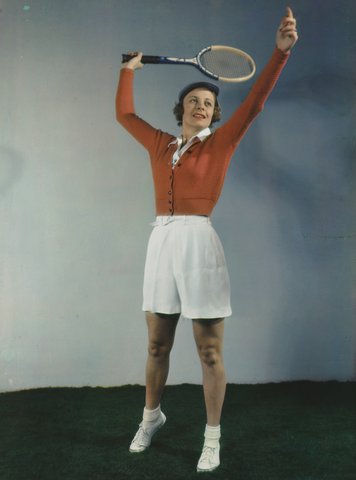
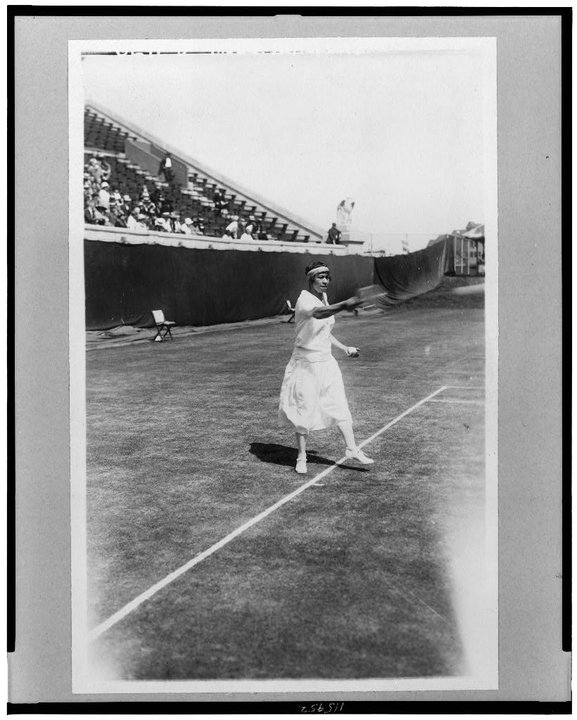
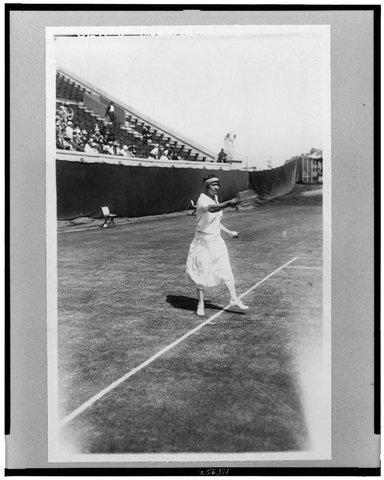
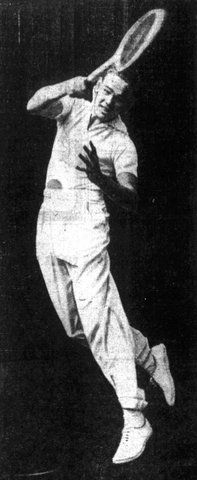
**Cover image.** "[Tennis player Molla Mallory on tennis court]" — Bain News Service via the George Grantham Bain Collection, Library of Congress, item 96502598, dated 15 August 1924, "No known restrictions on publication." What it shows: Mallory in play on grass, mid-stroke near a baseline, with a canvas backstop and a raked wooden stand of spectators behind her. It is not the 1921 match; it is three years later, and the Library does not name the ground. It is used as the best rights-clean action photograph of the subject on grass in her playing years. https://tile.loc.gov/storage-services/service/pnp/cph/3c10000/3c15000/3c15900/3c15952v.jpg
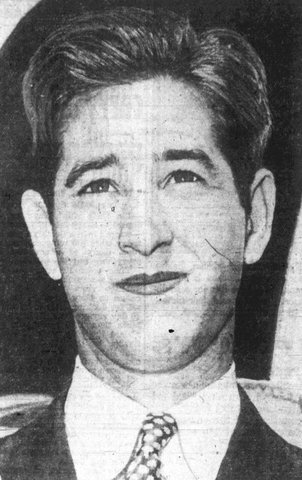
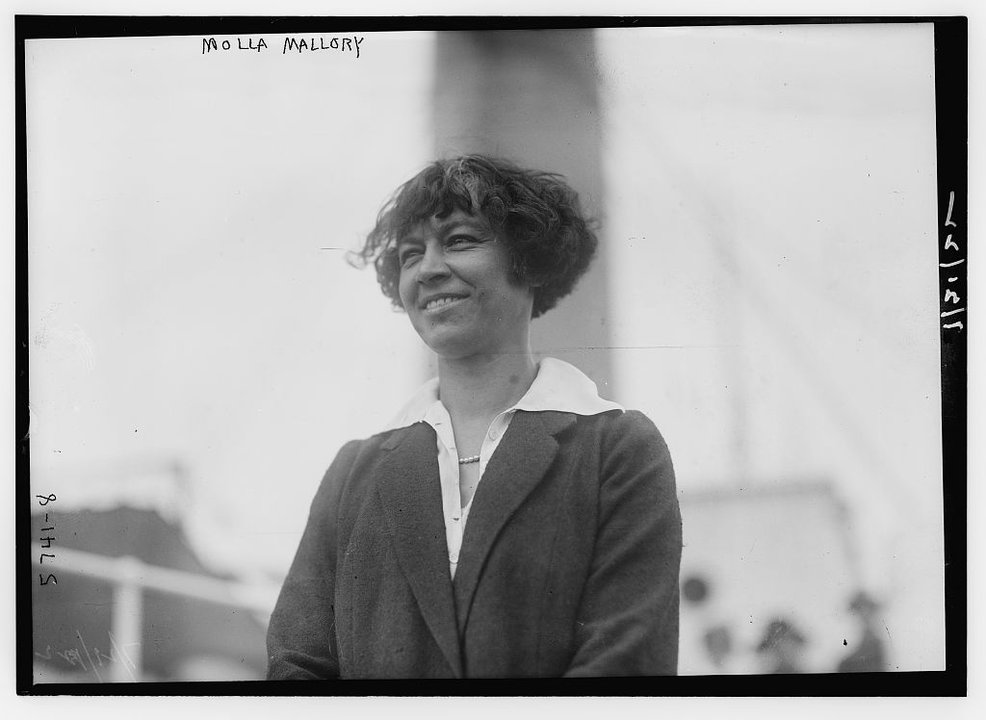
**Second image.** "Molla Mallory" — Bain News Service, negative LC-B2-5741-8, Library of Congress, item 2014714477, dated between about 1920 and about 1925, "No known restrictions on publication." What it shows: not a studio portrait but a shipboard one, taken on deck with a funnel and railing behind her, of the kind Bain's photographers made when players arrived or sailed. The negative carries the photographer's handwritten caption MOLLA MALLORY across the top. https://tile.loc.gov/storage-services/service/pnp/ggbain/34300/34325v.jpg
**Sources.** Great Falls Tribune (Montana), 17 August 1921, page 6, carrying the Associated Press report datelined Forest Hills, 16 August: https://www.loc.gov/resource/sn83045217/1921-08-17/ed-1/?sp=6 · The Evening World (New York), 17 August 1921, page 14: https://www.loc.gov/resource/sn83030193/1921-08-17/ed-1/?sp=14 · The New York Herald, 17 August 1921, page 11: https://www.loc.gov/resource/sn83045774/1921-08-17/ed-1/?sp=11 · Evening Public Ledger (Philadelphia), 17 August 1921, page 1: https://www.loc.gov/resource/sn83045211/1921-08-17/ed-1/?sp=1 · International Tennis Hall of Fame inductee record: https://www.tennisfame.com/hall-of-famers/inductees/molla-bjurstedt-mallory · Encyclopaedia Britannica, "Molla Mallory": https://www.britannica.com/biography/Molla-Mallory. The newspaper pages were read from the Library of Congress OCR text; that OCR garbles names and figures, so the wording above is paraphrase throughout and nothing is placed in quotation marks that was not read directly in a scan.





































































 expand_more