Finance History | New York Stock Exchange, Wall Street, October 1929 — Four Days That Were a Quarter of the Fall
volume_up
Listen
directions
Directions
The Dow Jones Industrial Average closed at 381 on 3 September 1929. It did not see that level again until November 1954.
The week everyone remembers ran from Thursday 24 October to Tuesday 29 October, and the arithmetic is worth setting out precisely, because almost every account of it rounds something in the wrong direction.
On Black Thursday a record 12,894,650 shares changed hands. Prices fell hard in the morning, a group of leading bankers put money in to steady the market, and much of the loss was recovered by the close.
That rally held through Friday and collapsed over the weekend, as people with borrowed positions worked out what they owed.
Black Monday, 28 October, took the index down about 12.8 per cent. Black Tuesday, 29 October, took it down about another 12 per cent on 16,410,030 shares, a volume the ticker could not keep up with, so that traders spent the afternoon acting on prices that were hours old.
Across those four sessions the Dow fell from 305.85 to 230.07, a drop of about 25 per cent.
Treat that last figure carefully, because it is where sources come apart. Britannica gives 305.85 to 230.07 in one paragraph and then says the index closed at 198 in another, which cannot both be right; 199 is roughly where it stood on 13 November, a fortnight later.
The crash was not the Depression. It was the beginning of a slide that ran to July 1932, when the Dow closed at 41.22, some 89 per cent below the September 1929 peak. The four famous days were about a quarter of the fall. The other three-quarters took three more years and got far less attention.
One story needs correcting whenever this place comes up. The image of ruined speculators throwing themselves from Wall Street windows is not what happened.
The rumours started on Black Thursday itself and were denied at the time; the New York Daily News observed the next morning that if the reports it had received were true the district would have been empty. Will Rogers made a joke about queuing for a window that was reprinted everywhere. Winston Churchill, staying nearby, described a man falling from a hotel, but the death he seems to have witnessed happened hours before the market's plunge and appears to have been an accident.
Real hardship followed for a great many people, and individual tragedies were reported. The mass suicide of Wall Street is a legend, and repeating it obscures a slower and much larger catastrophe.
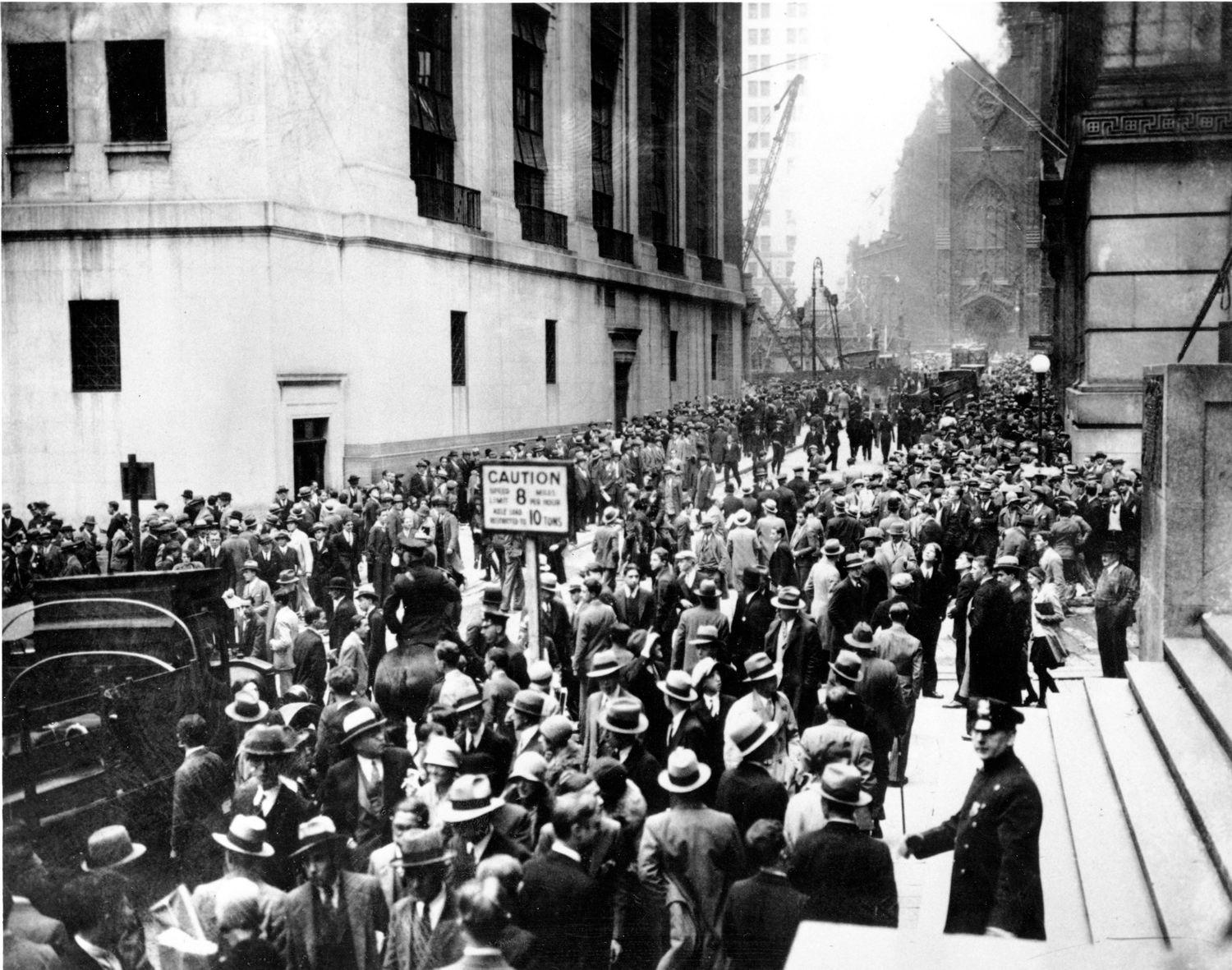
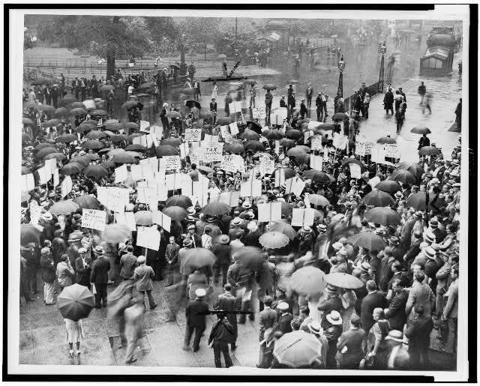
Cover photo: Associated Press, public domain, via Wikimedia Commons. The crowd is outside the exchange during the crash.
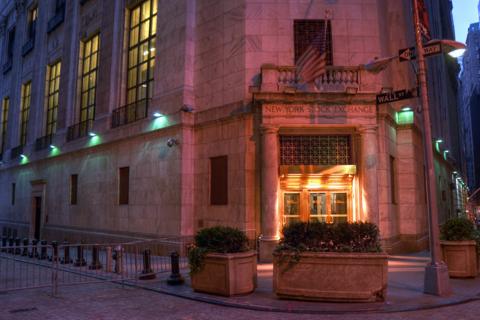
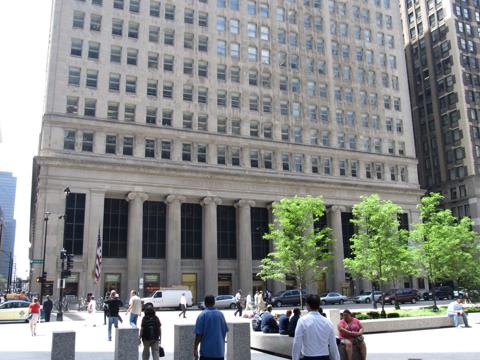
Coordinates 40.707065, -74.011176, resolved by Nominatim for the New York Stock Exchange at 11 Wall Street. The trading floor is not open to the public; the exterior on Broad Street is what visitors see.







 expand_more