Finance History | Oval Office, 3 October 2008 — TARP Began as an Asset Purchase and Became Bank Capital
volume_up
Listen
directions
Directions
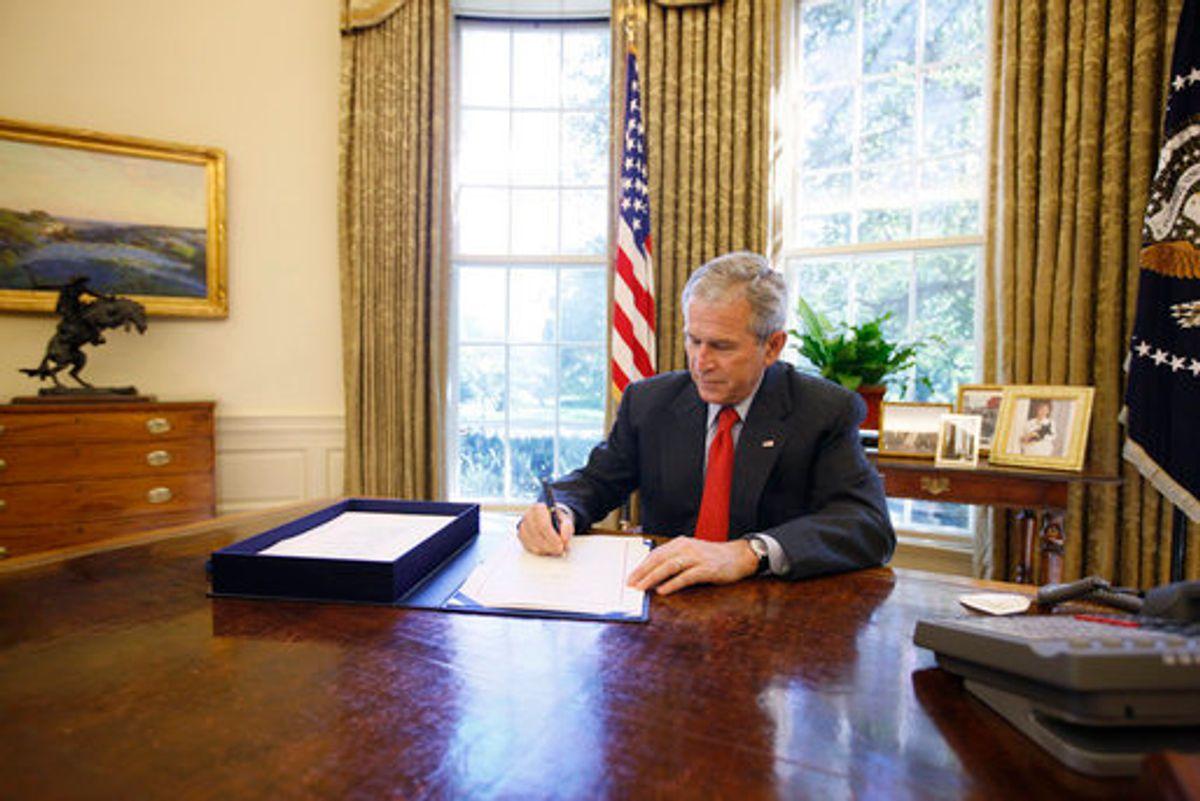
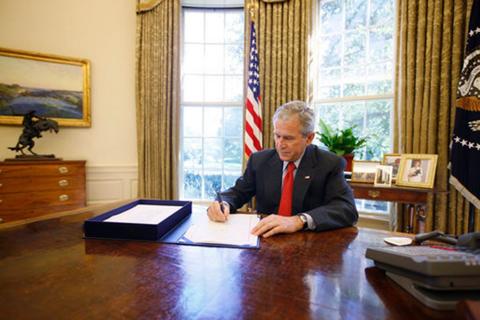
On 3 October 2008, President George W. Bush signed the Emergency Economic Stabilization Act in the Oval Office only hours after the House of Representatives approved it. The law authorized the Troubled Asset Relief Program, or TARP, during a crisis in which banks and investors were hoarding cash and doubting the value of mortgage-linked assets.
Congress initially authorized up to US$700 billion in 2008 dollars for Treasury purchases or guarantees of troubled assets. The Act also temporarily raised federal deposit-insurance coverage from US$100,000 to US$250,000 per depositor in 2008 dollars, strengthening a separate line of defense against bank runs.
The original mechanism focused on removing hard-to-price assets from financial institutions. If Treasury bought those assets, banks could replace uncertain claims with cash and investors might gain clearer information about what remained on each balance sheet.
Implementation soon moved in a different direction. On 14 October 2008, Treasury announced a Capital Purchase Program of up to US$250 billion in 2008 dollars, using TARP authority to buy preferred shares in qualifying financial institutions.
A capital injection works differently from an asset purchase. New preferred equity increases a bank’s capacity to absorb losses, which can reassure creditors and leave the institution better able to lend even while troubled assets remain on its books.
TARP later supported additional bank programs, credit markets, the automotive industry, housing initiatives, and American International Group. These interventions carried different terms and outcomes across loans, guarantees, asset purchases, and equity investments.
The law also created oversight, reporting, and recovery mechanisms, reflecting the scale of the authority and the conflict between rapid stabilization and public accountability. Treasury ultimately used less than the amount Congress authorized, and repayments, dividends, sales, and losses unfolded over many years.
The signing photograph captures a legislative turning point, while the policy pivot that followed supplies the deeper lesson. In a systemic crisis, the legal authority designed for one intervention can become the platform for another when officials conclude that the balance-sheet mechanism must change faster than a new statute can be enacted.
Image: White House photo by Eric Draper, public domain as a work of the U.S. federal government, via Wikimedia Commons.



























 expand_more