
NFL History | Joe Robbie Stadium, Miami Gardens — Sold by the Seat, Guaranteed by the Owner
· 1989-1
Unreviewed contributionBy kevin · · Report an issue




%20Ming%20Xiaoling%20-%20Bao%20Ding%20Mound%20%E5%AE%9D%E9%A1%B6%20-%20img%2002.jpg?width=1280)















Find memories left by people near you.
Distribute Bounty
This will distribute the bounty equally among all qualifying memories. This action cannot be undone.
Cancel Bounty
Are you sure you want to cancel this bounty? The remaining amount will be refunded to your account.
Success!
Operation completed successfully.
Error
Something went wrong.
NFL History | Joe Robbie Stadium, Miami Gardens — Sold by the Seat, Guaranteed by the Owner
kevin
On 22 January 1989 the Super Bowl was played at Joe Robbie Stadium in north Dade County, Florida. Pro-Football-Reference prints the line score by quarter as Cincinnati 0, 3, 10, 3 and San Francisco 3, 0, 3, 14, a final of 20-16, and gives the venue as Joe Robbie Stadium. No halftime figure is stated here and none is implied; the quarter cells are printed as the table prints them. The box score consulted carries no attendance figure, so this entry gives none.
The building was less than eighteen months old. What is worth knowing about it is not its age but its balance sheet.
WHO PAID FOR IT
Michael Rosenberg, writing in Sports Illustrated on 23 November 2015, sets out the financing. Joe Robbie built the stadium with private money, and the instrument was the seat itself: club seats sold on ten-year contracts, and executive suites, marketed before construction. Rosenberg reports that eight million dollars of club seats were sold before ground was broken, and that between the club seats and the seat licences the Dolphins had guaranteed a hundred and twenty million dollars in revenue against a construction cost of about a hundred and fifteen million. Stadiums of Pro Football gives the same cost figure and the same opening date, 16 August 1987; that site has been wrong on a checkable date before and is recorded here as agreement, not as independent confirmation.
Rosenberg also characterises Robbie as the first owner to use club seats to privately fund a stadium. That is his characterisation and it is left as his. Another entry in this series, on Ericsson Stadium in Charlotte, deliberately makes no first-of-its-kind claim about the permanent seat licence, and nothing here should be read as supplying one.
WHAT PRIVATE MONEY DOES NOT REQUIRE
A stadium paid for by selling seats needs no bond issue, no referendum and no council vote. That is usually told as the advantage, and for the owner it was. It has a second face.
The site sat in unincorporated Miami-Dade County. The neighbourhood beside it was known locally as Carol City. Joshua Ceballos, reporting for WLRN 91.3 FM in a piece carried by The Miami Times on 10 June 2026 and published on the broadcaster's own site under an adjacent date, which makes it one source and not two, writes that residents learned in 1985 that Robbie wanted to build there because the area was largely undeveloped, that they were not formally informed or asked whether they wanted the stadium near their homes, and that they believed they were ignored because theirs was a predominantly Black community. That is the residents' account as the reporter sets it down, and it is reported here as such.
This entry does not describe what county approvals the project required, because no source consulted here sets them out. What the sources do establish is narrower and still to the point: in 1985 there was no municipal government on that ground to be asked. The City of Miami Gardens, on its own about-the-city page, dates its incorporation to 13 May 2003, the thirty-third city in Miami-Dade County. The stadium had then been standing for more than fifteen years. Ceballos writes that the contentious arrival of the venue was one of the catalysts in turning a neighbourhood into a city, and that the founding mayor, Shirley Gibson, was a local activist who had helped push for incorporation. Those are his words for the causal link and this entry does not strengthen them.
WHAT THE OWNER PUT UP
The other half of private financing is the guarantee behind it. Rosenberg reports that the banks required Robbie to guarantee the borrowing personally, that the football club was the collateral, and that he held eighty-five per cent of the team in his own name against roughly a hundred million dollars of debt.
Robbie died in January 1990. A United Press International dispatch of 12 September 1991, reporting a dispute in Dade Circuit Court between his widow Elizabeth and three of their children as trustees, values the estate at seventy-three million dollars and states that fifty-nine point six million of that was his eighty-seven per cent interest in the Dolphins. Rosenberg's eighty-five per cent and UPI's eighty-seven per cent are both printed here and neither is preferred. The same dispatch records something a reader of the financing story should notice: the family's fifty per cent of Joe Robbie Stadium was not part of the estate. The building and the team had been split apart.
A further UPI dispatch of 15 June 1993 reports that the Robbies had agreed to sell a majority interest in the club and a fifty per cent interest in Robbie Stadium Corp and affiliates, with the Miami Herald reporting a price between a hundred and forty and a hundred and fifty-seven million dollars and no official terms announced. It gives estate taxes totalling forty-seven million dollars, arising from Joe Robbie's death and the subsequent death of Elizabeth Robbie, as the pressure to raise money, and separately records that the Robbie children had been divided over the distribution of assets and control of the club since their father died in 1990. Both accounts sit in the same reporting and this entry reconciles neither. The dispatch also notes that H. Wayne Huizenga already held fifteen per cent of the Dolphins and half the stadium and retained a right of first refusal. What became of that right is not followed here, because no source consulted for this entry follows it.
The argument is not that private financing failed. It did what it was sold as doing: the building went up without a public vote. The reckoning came in two places the prospectus did not cover, at the county line and in probate.
THE COORDINATE
25.9594 / -80.2386, precision plus or minus 350 metres, one method, disclosed.
The pin is a triangulation of United States Census TIGER geocodes and nothing else. The venue's own address returns empty from the federal address file, a sixth city in which that has happened in this series. A control query in the same municipality matched at once, so the geocoder was healthy and the address file was not. Two readings at the same house number on the streets north and south of the site, NW 199th Street and NW 207th Street, matched and were crossed; the same house number on NW 203rd Street between them returns empty, as do three separate avenues at the 200-block latitude, which is what a single large parcel does to a street grid and is the reason the pin sits where it does rather than on either road. Matched address strings were read in full, including the ZIP code, in every case.
Routes that failed and are recorded so they are not retried blind: the Historical Marker Database returns nothing for this municipality; the Socrata catalogue returns 404 for the county's open-data domain; the United States Geographic Names Information System holds no stadium names in Florida at all, which rules that route out for this whole class of subject; and the national structures dataset that would answer the question is a 1.5 gigabyte download and was not fetched. The radius is sized from the bowl, its apron and the spread between the two street readings, not from the decimal places in either.
STATUS NOTE, SEPTEMBER 2026
This entry describes the building and the arrangements as its sources record them, the earliest of the contemporaneous reporting from 1991 and the most recent account from June 2026. Nothing in it establishes what the stadium is called now, who owns it or the club today, what has been built or rebuilt on the site since, or what the City of Miami Gardens has done in the years since its incorporation.
COVER IMAGE
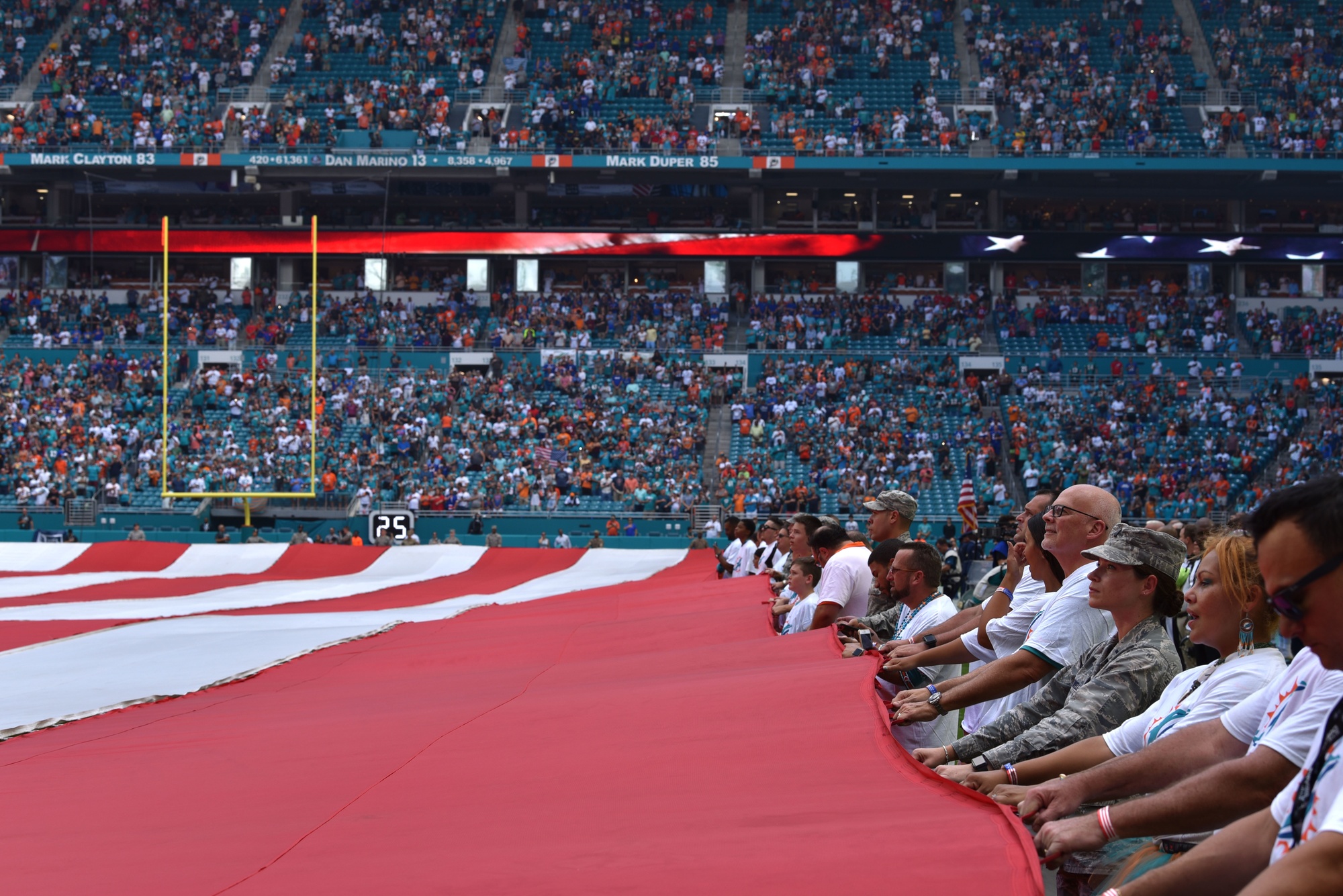
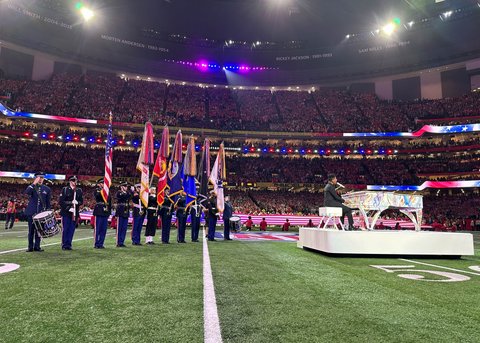
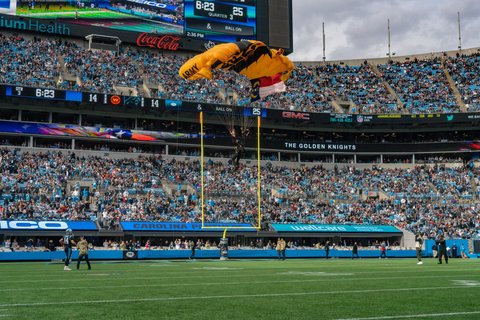
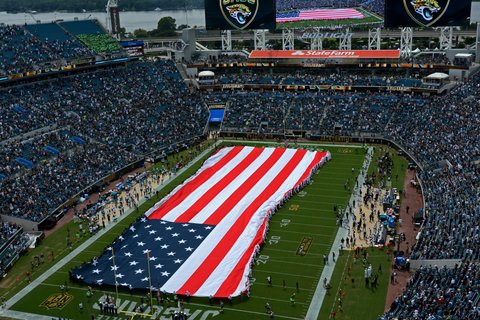
Airmen and local community members unfurl a flag before a Miami Dolphins home game, 2 December 2018. United States Air Force photograph by Tech. Sgt. Andrew Satran, Space Launch Delta 45, VIRIN 181202-F-CY114-1152, public domain, via DVIDS. The photograph shows the side of the bowl with its ring of glass-fronted boxes above the lower deck and the club level behind them, which is the thing this entry is about: the seats that were sold before the building existed. The retired numbers of Mark Clayton, Dan Marino and Mark Duper are visible on the facade. The DVIDS location field for this file reads only Miami, Florida; the caption places it at a Dolphins home game on that date but does not name the stadium at all. The venue was therefore taken from the box score for 2 December 2018, which gives a Buffalo Bills fixture at Hard Rock Stadium; Bills supporters are visible throughout the stands in both files, which is the check that ties the photographs to that game.
SECOND IMAGE
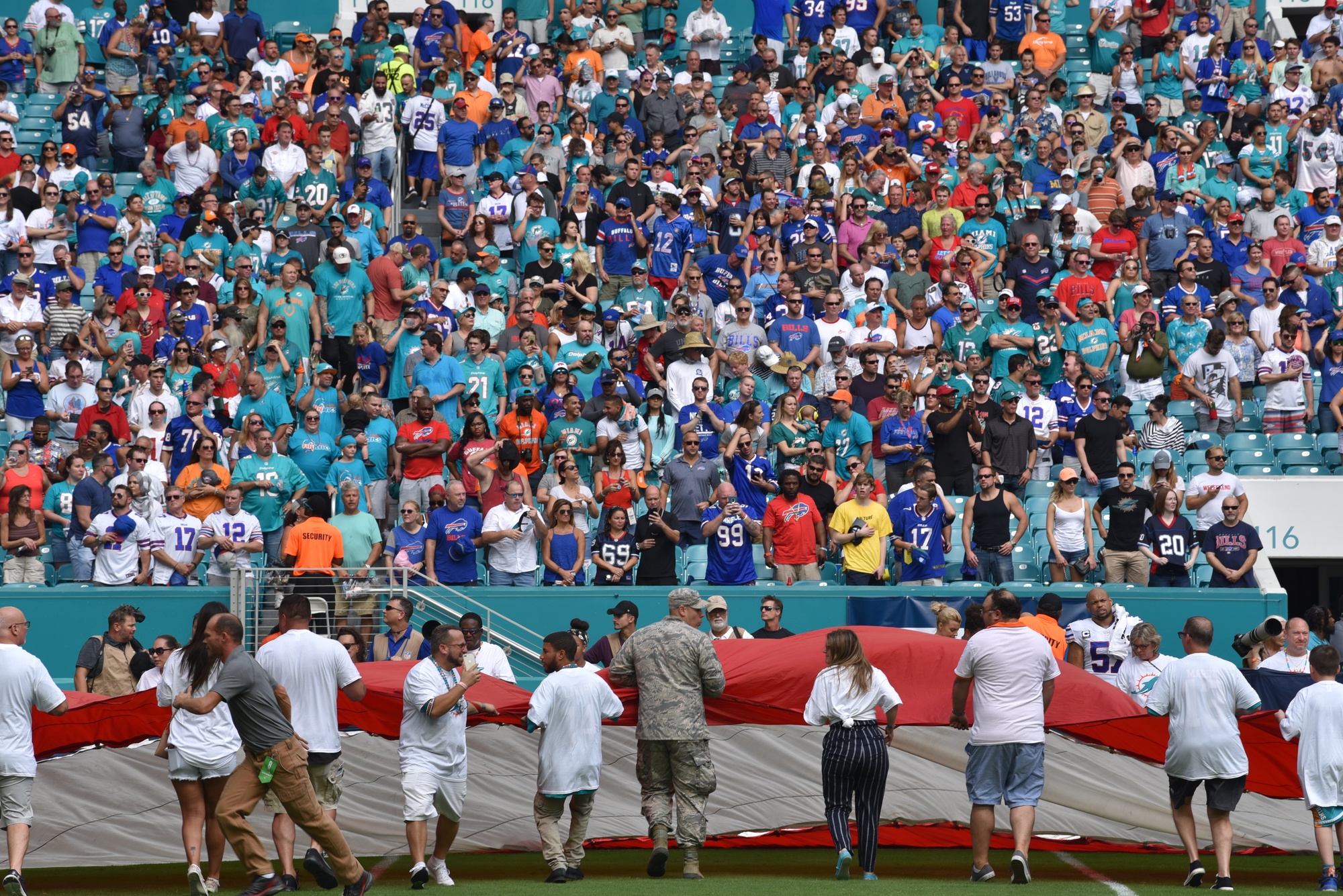
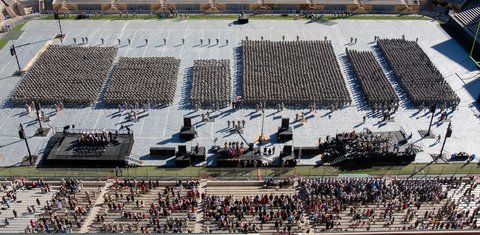
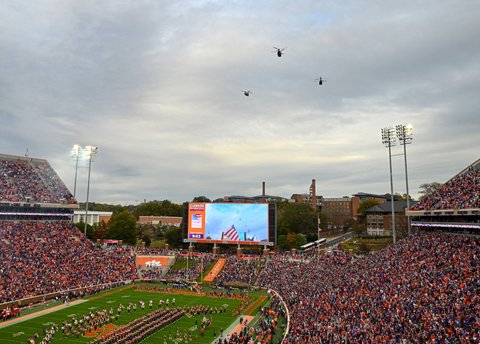
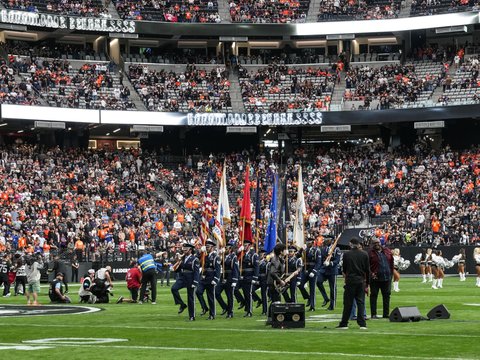
The same ceremony from the field, showing the lower bowl and the crowd. United States Air Force photograph by Tech. Sgt. Andrew Satran, VIRIN 181202-F-CY114-1136, public domain, via DVIDS.



changes?
delete this memory?
We detected that you have a Blox in your crypto wallet! We will import the Blox into your account.
Click on done below to complete the import.
Welcome Back!
Sign in to preserve cherished moments
Don't have an account?
Welcome!!
Sign up and start preserving cherished moments
?
?
Choose your payment method
Buy with Metablox Credit
Do you want to mint Blox with Metablox Credit?
Which Crypto would you like to use?
Purchase Confirmed!
Your Blox is being minted on-chain and will appear in your profile shortly.
Log in or sign up to claim your Blox.
How many credits do you want to buy?
$100 USD = 1 Metablox Credit = 1 Blox.
Use Metablox Credit to mint any Blox you want on the map.
 expand_more