


Military History | Corbridge Roman Town Museum — Worked Out From the Scrap
· 1964
Personal memoryBy kevin · · Report an issue













































Find memories left by people near you.
Distribute Bounty
This will distribute the bounty equally among all qualifying memories. This action cannot be undone.
Cancel Bounty
Are you sure you want to cancel this bounty? The remaining amount will be refunded to your account.
Success!
Operation completed successfully.
Error
Something went wrong.
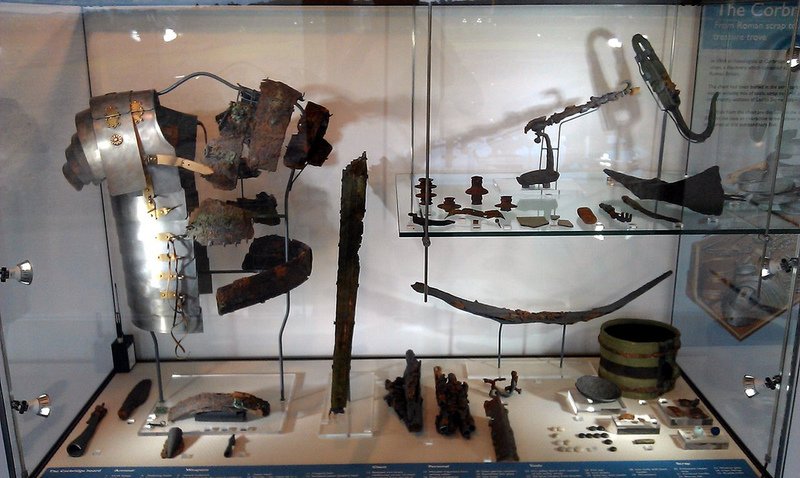
Military History | Corbridge Roman Town Museum — Worked Out From the Scrap
kevin
In 1964 a training excavation run by the universities of Durham and Newcastle reached the timber forts beneath the later Roman base at Corbridge and lifted a corroded mass out of the ground. The English Heritage report published in 1988, Excavations at Roman Corbridge: The Hoard, records what had been found: "the remains of an iron-bound wooden chest was uncovered." Its planks were dovetailed at the corners and it had been covered in leather.
Almost nothing inside was in good condition, and that turned out to be why it mattered. The report reads the contents as "an armourer's hoard of scrap metal and other useful items", buried when the fort was abandoned between AD 122 and 138. English Heritage's collection record agrees, dating the chest c. AD 122–38 and placing it in the road beside the headquarters building. The same organisation's history page gives an earlier date, about AD 105–20, and a different findspot; the report and the collection record agree with each other against it.
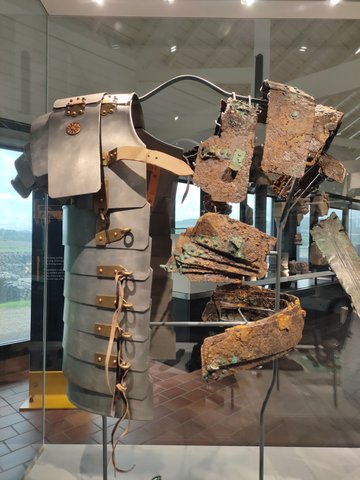
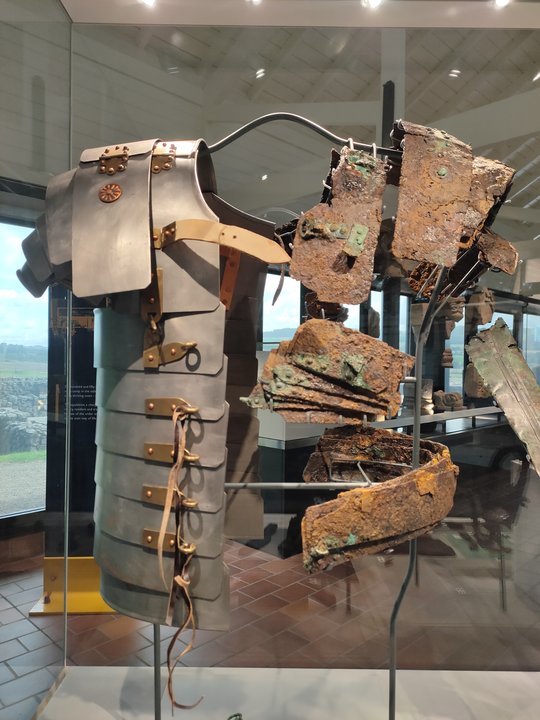
The armour did not match. Six upper and six lower half-units of lorica segmentata could represent three whole cuirasses or parts of twelve, and the count has never been settled. Mike Bishop, who co-wrote the report, notes that one cuirass had been "frequently repaired in the past" and "was in the process of being cannibalised again." Charles Daniels reassembled the plates and Henry Russell Robinson of the Tower of London Armouries worked on interpreting them. How the armour went together was established from pieces that had already come apart.
Organic material survived by mineralisation, the cell structure replaced by minerals leached from the corroding iron.
The site museum has shown the material since July 2012. A reconstruction stands in the case beside the original plates, rust-orange on wire, the excavated town visible through the window behind them.
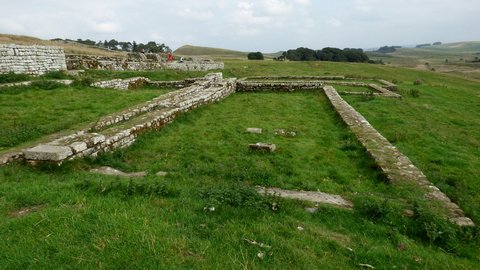
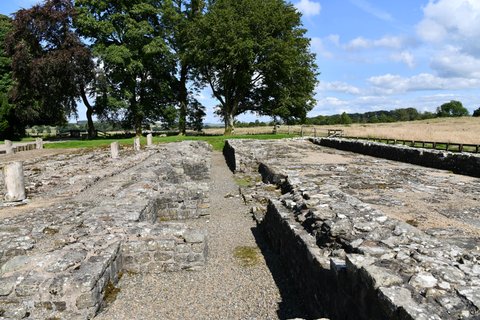
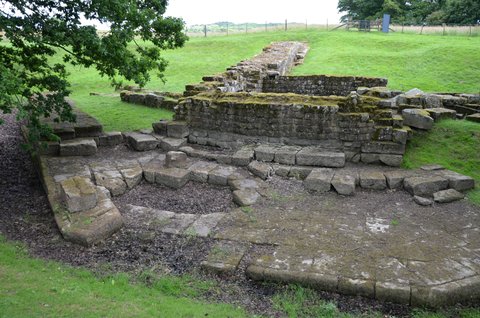
📸 Cover: the Corbridge Hoard display at the site museum, with a modern reconstruction of the armour beside the original corroded plates; photograph by FropFrop, 7 August 2023, CC BY-SA 4.0 via Wikimedia Commons. Second image, the full hoard case with armour, tools, weapons and chest fittings; Mike Bishop, 20 December 2018, CC BY-SA 3.0 via Wikimedia Commons.


changes?
delete this memory?
We detected that you have a Blox in your crypto wallet! We will import the Blox into your account.
Click on done below to complete the import.
Welcome Back!
Sign in to preserve cherished moments
Don't have an account?
Welcome!!
Sign up and start preserving cherished moments
?
?


Choose your payment method
Buy with Metablox Credit
Do you want to mint Blox with Metablox Credit?
Which Crypto would you like to use?
Purchase Confirmed!
Your Blox is being minted on-chain and will appear in your profile shortly.
Log in or sign up to claim your Blox.
How many credits do you want to buy?
$100 USD = 1 Metablox Credit = 1 Blox.
Use Metablox Credit to mint any Blox you want on the map.
 expand_more