


Military History | Vindolanda — What the Wet Ground Kept
· 1973-3
Unreviewed contributionBy kevin · · Report an issue


























Find memories left by people near you.
Distribute Bounty
This will distribute the bounty equally among all qualifying memories. This action cannot be undone.
Cancel Bounty
Are you sure you want to cancel this bounty? The remaining amount will be refunded to your account.
Success!
Operation completed successfully.
Error
Something went wrong.
Military History | Vindolanda — What the Wet Ground Kept
kevin
In March 1973 a deep trench at the south-west corner of the third-century stone fort at Vindolanda reached ground that had stayed wet since the first century. Two slivers of wood came up looking, in the published edition's phrase, "rather like oily plane shavings." Prised apart, they carried writing on their inner faces, and the ink began to fade on contact with the air. The excavation's own account, published fifty years later, says one of the diggers spotted the fragment and passed it to Robin Birley, who was running the dig; Bowman and Thomas's edition credits the find to Birley himself.
That first fragment is Tab. Vindol. 346, a letter listing "pairs of socks from Sattua, two pairs of sandals and two pairs of underpants." Over two hundred more came out of the same season. They exist because of the water: below the later stone forts, oxygen-poor layers dated to roughly AD 80-125 preserved wood, leather and textile that would ordinarily rot. Vindolanda stands on the Stanegate road about a mile south of Hadrian's Wall, and these levels predate the Wall.
What survived is not battle. It is administration. Tablet 154, a strength report of the First Cohort of Tungrians under the prefect Iulius Verecundus, sets 752 men against 456 absent, 337 of them at Coria, leaving 296 present. Fifteen were sick, six wounded, ten had inflamed eyes. 265 were fit for duty. Its editors call it the only document of its kind from Britain.
Every word is the occupying army's own. The people beyond the frontier appear in Tablet 164 under Brittunculi, a word attested nowhere else in Latin, whose dismissive force the editors infer from its form.
The British Museum bought the tablets for the nation in 1981 and holds more than 1,700. A group is on long-term loan to the site museum, and the Trust still digs every summer with the trenches open to visitors.
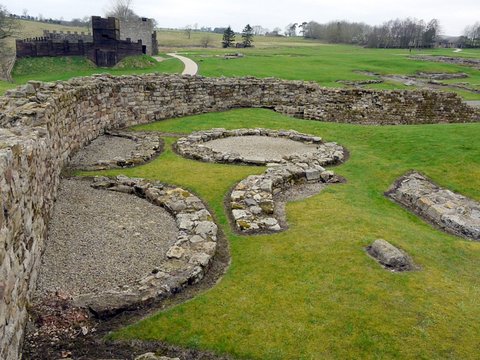
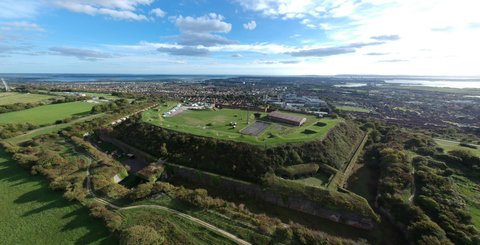
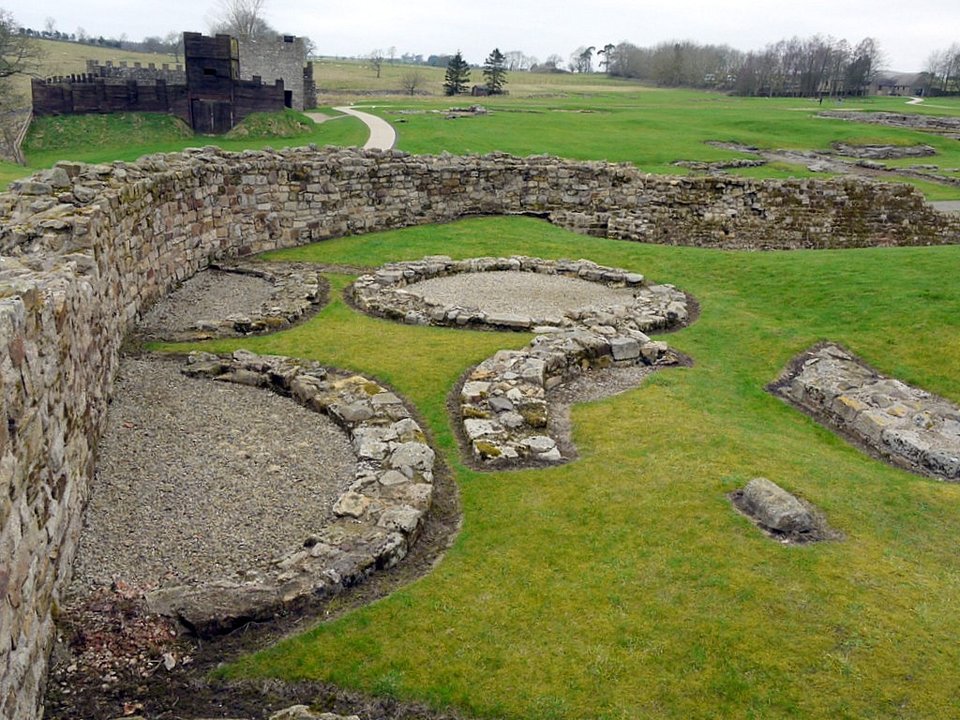
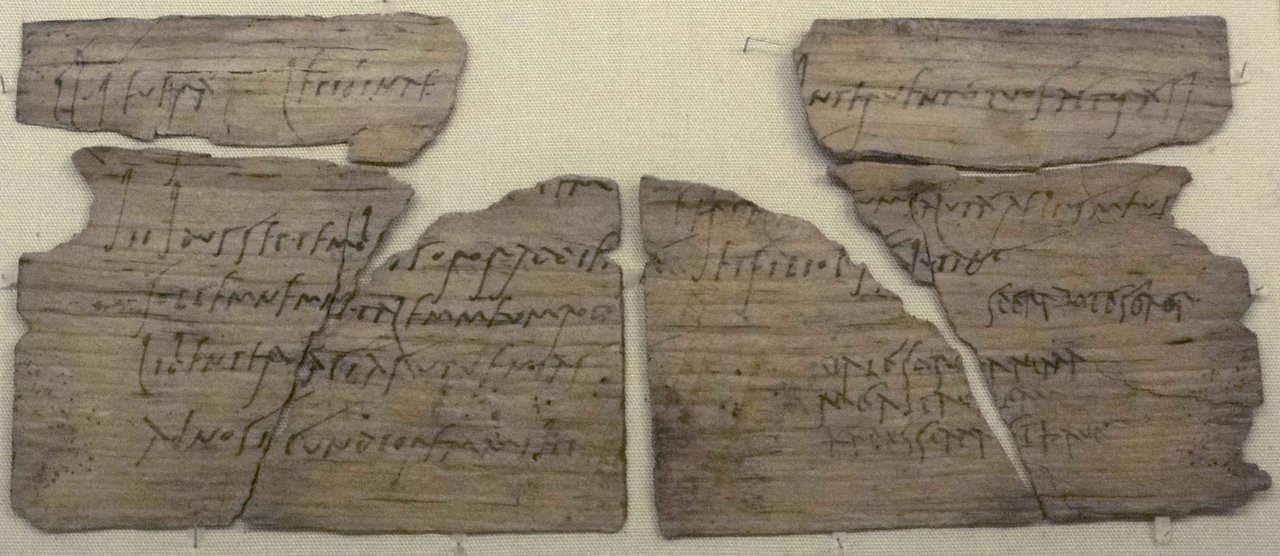
📸 Cover: the excavated south-west quarter of the fort, where the 1973 trench was cut, with the site's full-scale wall reconstructions behind; photograph by Andrew Curtis, 13 March 2012, CC BY-SA 2.0 via Geograph and Wikimedia Commons. Second image, Vindolanda tablet 291 on display at the British Museum, a leaf tablet in two hands - representative of the form, not the 1973 find; by Fæ, 3 March 2011, CC BY-SA 3.0.
changes?
delete this memory?
We detected that you have a Blox in your crypto wallet! We will import the Blox into your account.
Click on done below to complete the import.
Welcome Back!
Sign in to preserve cherished moments
Don't have an account?
Welcome!!
Sign up and start preserving cherished moments
?
?
Choose your payment method
Buy with Metablox Credit
Do you want to mint Blox with Metablox Credit?
Which Crypto would you like to use?
Purchase Confirmed!
Your Blox is being minted on-chain and will appear in your profile shortly.
Log in or sign up to claim your Blox.
How many credits do you want to buy?
$100 USD = 1 Metablox Credit = 1 Blox.
Use Metablox Credit to mint any Blox you want on the map.
 expand_more