


Military History | Corbridge Roman Town — A Thousand Years of Quarrying
· 1840
Personal memoryBy kevin · · Report an issue








































Find memories left by people near you.
Distribute Bounty
This will distribute the bounty equally among all qualifying memories. This action cannot be undone.
Cancel Bounty
Are you sure you want to cancel this bounty? The remaining amount will be refunded to your account.
Success!
Operation completed successfully.
Error
Something went wrong.
Military History | Corbridge Roman Town — A Thousand Years of Quarrying
kevin
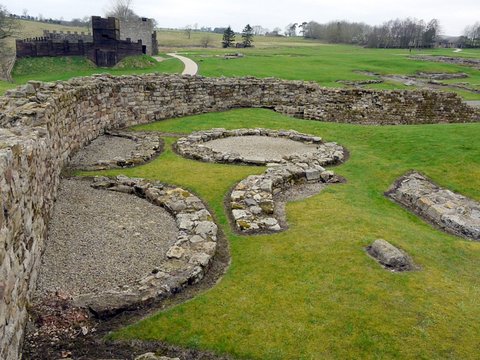
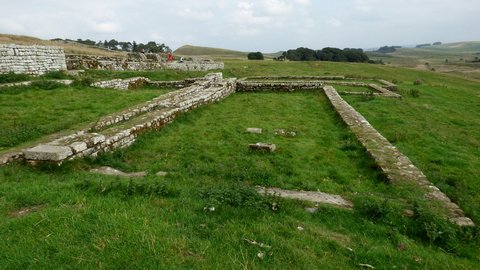
Where Dere Street reached the Tyne, south of Hadrian's Wall, the Roman army built a fort and then a supply town around it. The Roman Inscriptions of Britain catalogue names the place Corbridge (Coria). Its stone did not stay there.
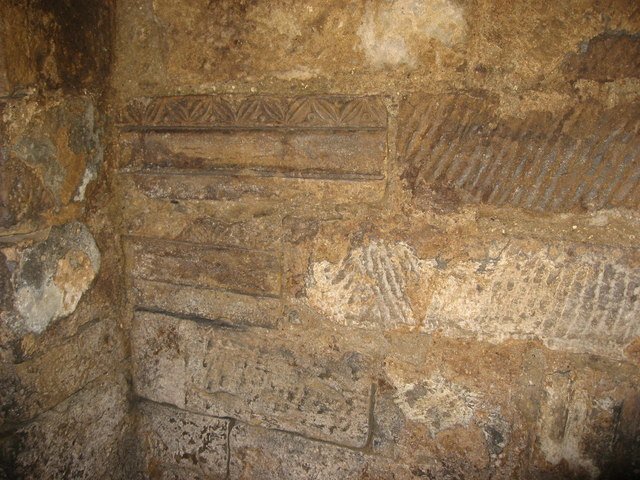
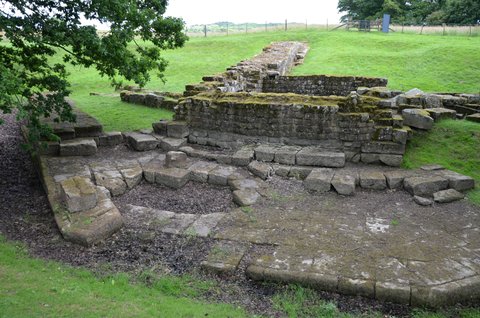
English Heritage's history of the site, written by the archaeologist Nick Hodgson, dates the first removal early: "As early as the 670s remains from Corbridge were quarried by the Saxon builders of St Wilfrid's church at Hexham." Hexham Abbey says the same from the other end, and goes further. Its heritage pages, written by Tom Corfe, call Coria "that very handy quarry", three miles down the river, and judge that "it is likely that every stone in the crypt came from" it. The Roman finish is still legible in those crypt walls: diagonal broaching cut to hold rendering, and a leaf-and-berry frieze that once ran inside a good house.
One block is more specific. RIB 1151 records that Severus, Caracalla and Geta built a granary at Coria in about AD 207–8. It was found in 1725, reused as roofing material in the Anglo-Saxon crypt.
The habit continued. Northumberland's survey of the town states that "there is no doubt that the Church of St Andrew is largely built of Roman stones from Corstopitum", and notes that many stones in the Vicar's Pele tower "have cramp holes and must have been obtained from the Roman buildings". The same survey carries the last dated removal: in 1840 an agent of the Greenwich Hospital Estate took stone from the Roman bridge to build a water wheel at Dilston Mill.
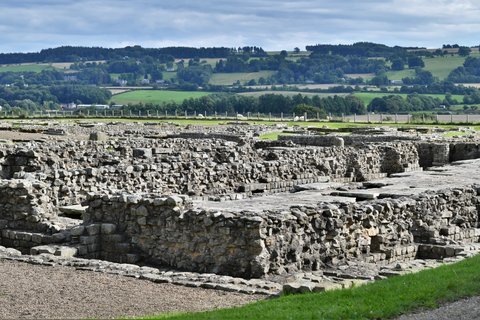
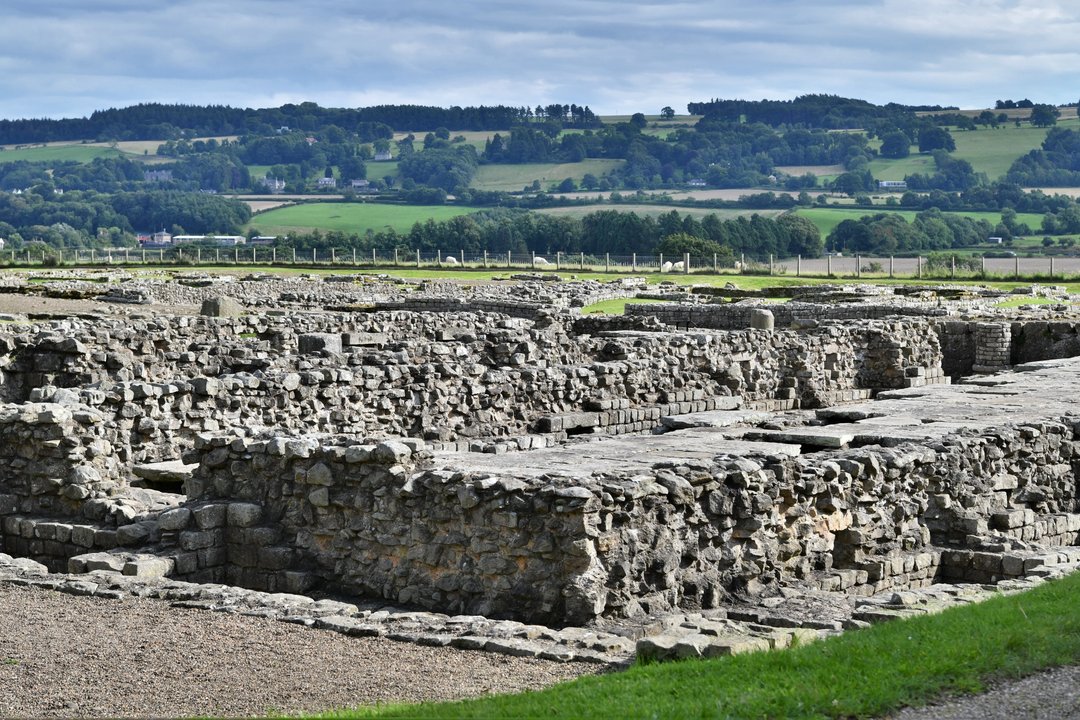
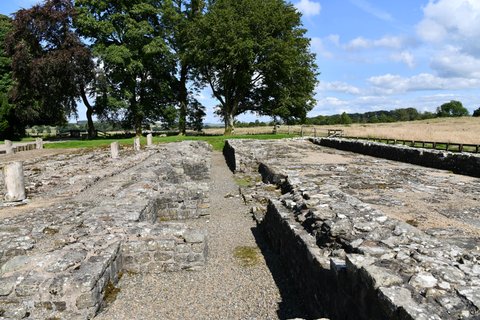
No source counts what was taken. The boldest claims are hedged ones — likely, probably. What remains is a stripped platform of wall footings above the valley, the granaries standing at its western end, open daily from ten until five.
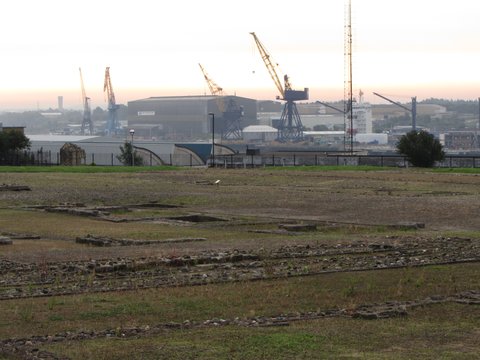
📸 Cover: the excavated platform of the Roman town above the Tyne valley; photograph by Michael Garlick, 17 August 2023, CC BY-SA 2.0 via Geograph Britain and Ireland. Second image, reused Roman masonry in the wall of the seventh-century crypt at Hexham Abbey; Mike Quinn, 20 March 2008, CC BY-SA 2.0 via Geograph Britain and Ireland.

changes?
delete this memory?
We detected that you have a Blox in your crypto wallet! We will import the Blox into your account.
Click on done below to complete the import.
Welcome Back!
Sign in to preserve cherished moments
Don't have an account?
Welcome!!
Sign up and start preserving cherished moments
?
?

Choose your payment method
Buy with Metablox Credit
Do you want to mint Blox with Metablox Credit?
Which Crypto would you like to use?
Purchase Confirmed!
Your Blox is being minted on-chain and will appear in your profile shortly.
Log in or sign up to claim your Blox.
How many credits do you want to buy?
$100 USD = 1 Metablox Credit = 1 Blox.
Use Metablox Credit to mint any Blox you want on the map.
 expand_more