


Military History | Housesteads — The Courses Clayton Restacked
· 1848
Unreviewed contributionBy kevin · · Report an issue
























































Find memories left by people near you.
Distribute Bounty
This will distribute the bounty equally among all qualifying memories. This action cannot be undone.
Cancel Bounty
Are you sure you want to cancel this bounty? The remaining amount will be refunded to your account.
Success!
Operation completed successfully.
Error
Something went wrong.
Military History | Housesteads — The Courses Clayton Restacked
kevin
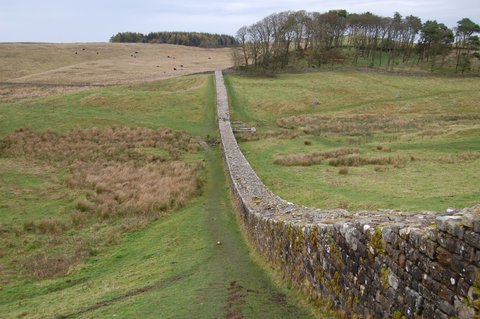
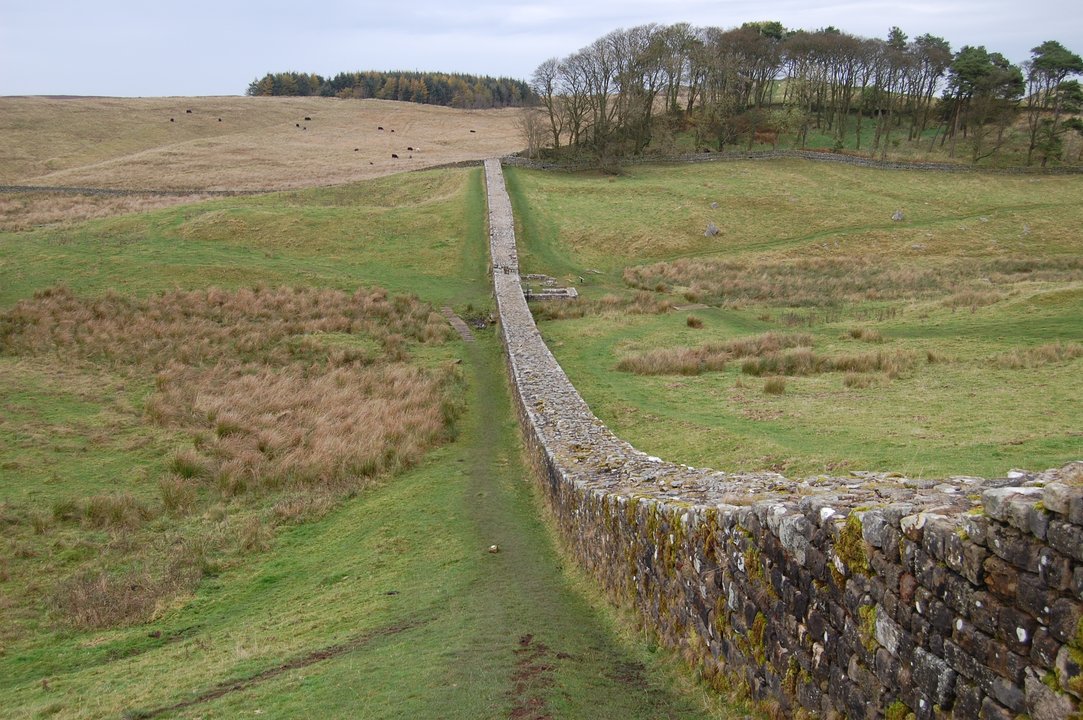
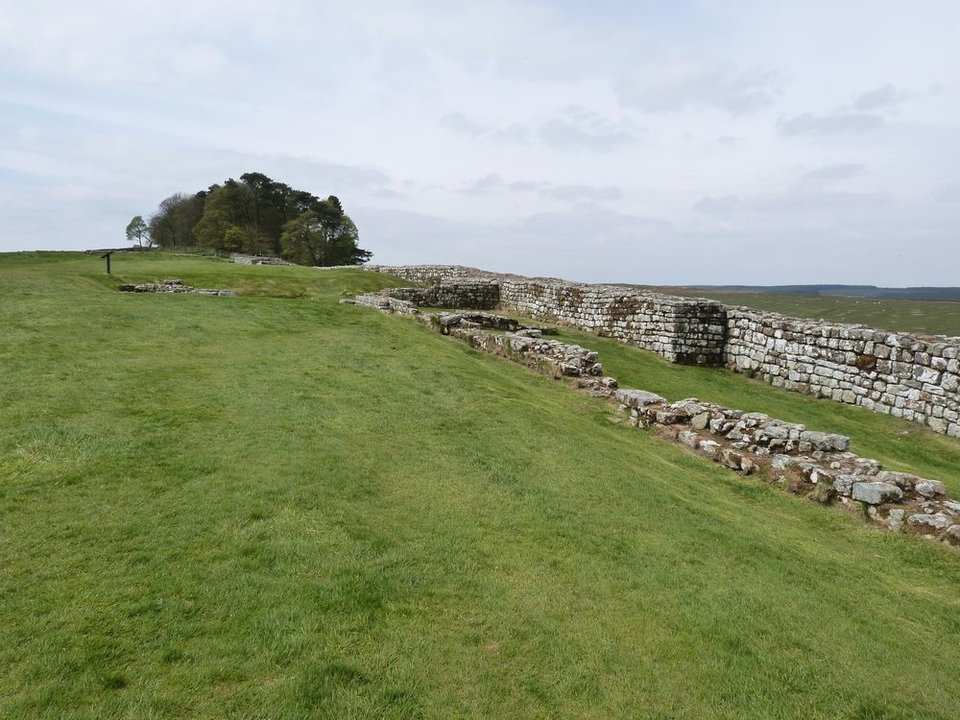
The Wall running downhill from the north-east corner of Housesteads holds a level crown for hundreds of metres, course on course, capped in turf. Very little of that shape is Roman.
John Clayton, town clerk of Newcastle, assembled a Roman Wall Estate out of the farms the Wall crossed. English Heritage gives 1838 for his purchase of Housesteads; no document for the year has been published, and no other producer supplies it independently. From about 1848 into the 1880s his workmen cleared the fallen debris off the curtain, picked the Roman facing stones out of it, restacked them dry, packed the interior with earth and sealed the top with turf.
The National Trust's field records count the courses. On Hotbank Crags the Wall averages eight courses under its turf cap, of which up to five are original Roman masonry still set in hard mortar over surviving Roman core; the rest is Clayton's dry work. Between Rapishaw Gap and Housesteads Wood, up to six of eight. At Steel Rigg, three of seven. Nothing anywhere was taken back to Roman height.
That Clayton saved the central sector from the quarrymen is a claim with an author. The World Heritage Site's management description gives other reasons in the same breath — this is upland the plough never worked, and where the Wall served as a field boundary it was left standing — and records that the sector was extensively quarried regardless.
Even the fort's Roman name is a reconstruction. The Notitia Dignitatum has Borcovicio, the Ravenna list Velurtion, and one stone from the site reads VER; Vercovicium is what modern editors made of those. Clayton's own 1855 paper on the milecastle immediately west of here calls the place Borcovicius.
The National Trust owns Housesteads, English Heritage runs it and charges admission, and the fort stands in the guardianship of the Secretary of State. The Trust's own record asks that repairs to the Clayton Wall be supervised by an archaeologist.
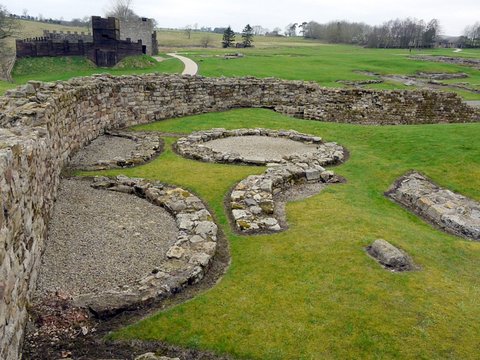
📸 Cover: Hadrian's Wall running downhill from the north-east corner of Housesteads, the Clayton Wall's coursed drystone face and turf crown in the foreground; photograph by Steven Fruitsmaak, 27 October 2007, public domain. Second image, the fort's own north wall looking east toward Housesteads Wood; by Derek Voller, 15 May 2015, CC BY-SA 2.0 via Geograph and Wikimedia Commons.
changes?
delete this memory?
We detected that you have a Blox in your crypto wallet! We will import the Blox into your account.
Click on done below to complete the import.
Welcome Back!
Sign in to preserve cherished moments
Don't have an account?
Welcome!!
Sign up and start preserving cherished moments
?
?



Choose your payment method
Buy with Metablox Credit
Do you want to mint Blox with Metablox Credit?
Which Crypto would you like to use?
Purchase Confirmed!
Your Blox is being minted on-chain and will appear in your profile shortly.
Log in or sign up to claim your Blox.
How many credits do you want to buy?
$100 USD = 1 Metablox Credit = 1 Blox.
Use Metablox Credit to mint any Blox you want on the map.
 expand_more