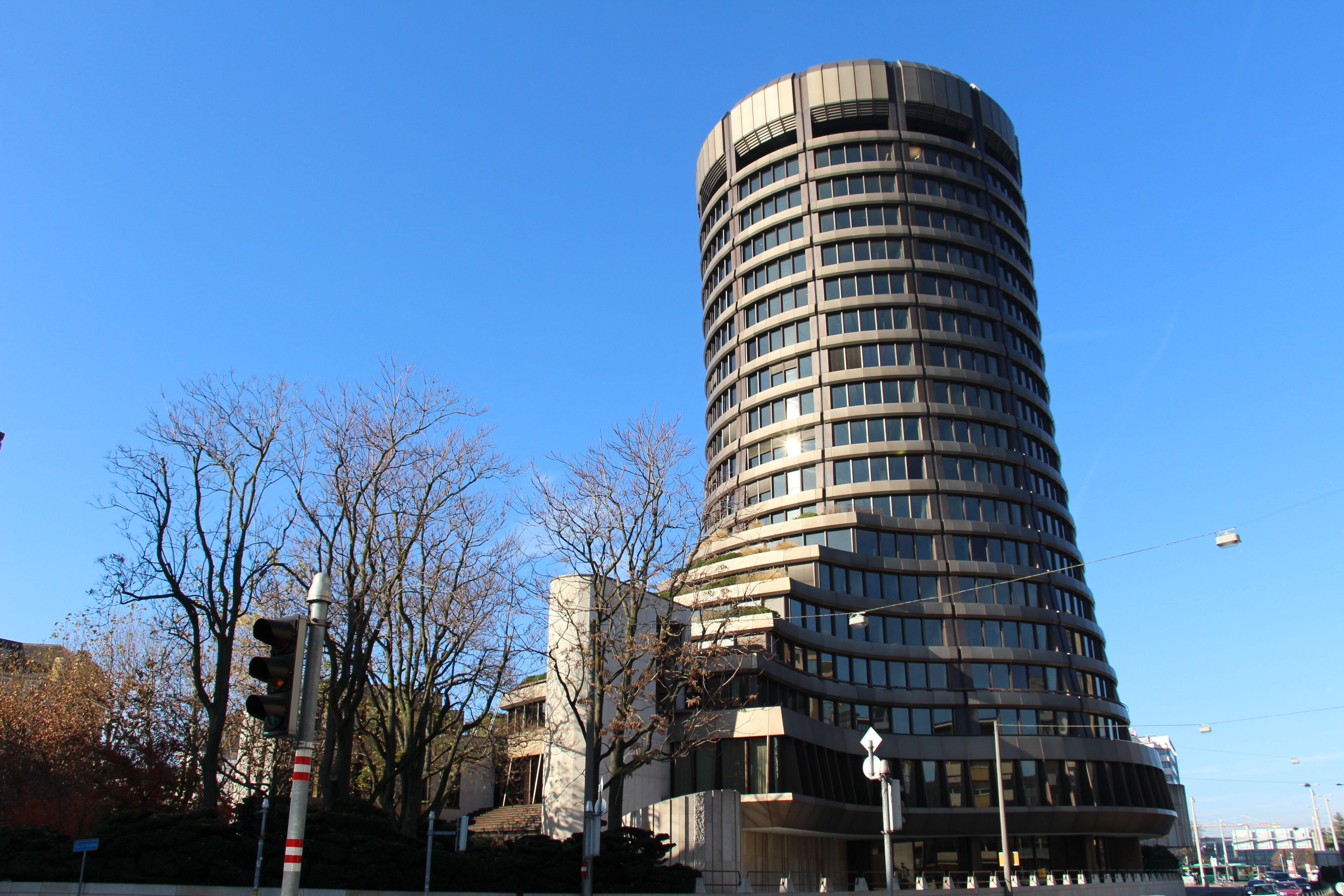
Finance History | BIS Tower, 15 July 1988 — Banks Received One International Capital Minimum
volume_up
Listen
directions
Directions
On 15 July 1988, the Basel Committee on Banking Supervision issued an agreement from the Bank for International Settlements in Basel that gave internationally active banks a common capital framework.
The immediate concern had grown during the Latin American debt crisis. Supervisors saw capital ratios at major banks deteriorating while cross-border risks increased, and national rules allowed institutions competing in the same markets to carry different regulatory burdens.
The Basel Capital Accord created a shared measurement system. It defined eligible capital, converted off-balance-sheet commitments into credit equivalents, assigned assets to broad risk categories, and required total capital equal to at least 8 percent of risk-weighted assets by the end of 1992.
Core capital formed the foundation. Tier 1 capital had to represent at least half of the required total, while supplementary elements such as certain reserves and subordinated debt could fill the remaining portion within limits.
Risk weighting changed the denominator as much as the capital rule changed the numerator. Claims considered very low risk could receive a zero weight, many interbank claims received 20 percent, qualifying residential mortgages 50 percent, and most private-sector loans 100 percent.
The framework was designed for the Group of Ten’s internationally active banks, yet its influence spread much further as national supervisors incorporated it into domestic rules. A committee without treaty-making power established a standard that markets, regulators, and bank managers could compare across borders.
Its simplicity was both strength and weakness. Four broad categories made implementation possible, but they treated many unlike exposures as if they carried the same risk and encouraged banks to favor assets whose regulatory weights understated their economic danger.
Later amendments added market risk, while Basel II and Basel III developed more elaborate approaches to credit, operational risk, liquidity, leverage, and loss absorption. Each revision retained the premise established here: international banking required internationally comparable safeguards.
The BIS Tower is therefore the physical marker for a quiet transformation in finance. Bank capital moved from a predominantly national accounting question toward a common language for how much loss-bearing capacity should stand behind cross-border risk.
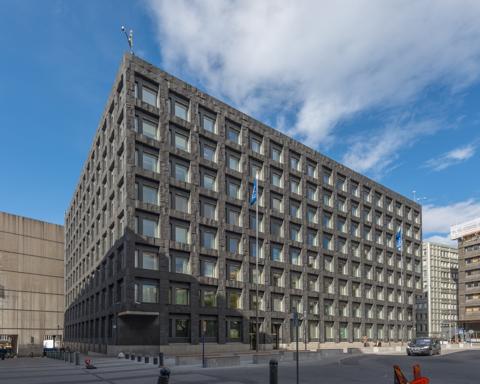
The accompanying photograph is by Fred Romero, licensed CC BY 2.0 via Wikimedia Commons.




















 expand_more