NFL History | Giants Stadium Site, East Rutherford — The Fumble That Taught the League to Kneel
volume_up
Listen
directions
Directions
On 19 November 1978 the New York Giants led the Philadelphia Eagles 17–12 at a stadium two years old, and had only to let the clock finish. *Sports Illustrated*'s fortieth-anniversary account puts the moment at 1:43 to play, third down and one at the Giants' 29, with the offensive coordinator Bob Gibson calling a handoff to the fullback Larry Csonka. Joe Pisarcik and Csonka never completed the exchange. Herman Edwards picked the ball off the ground and ran 26 yards with it. The box score records it flatly: a 26-yard defensive fumble return, Mike Michel's conversion, Philadelphia 19, New York 17.
What makes this league history rather than one club's bad afternoon is the shape of the response. The Giants dismissed Gibson the next morning, and at the end of a 6–10 season the head coach John McVay, the general manager Andy Robustelli and the rest of the staff went too. Every other club, meanwhile, taught its quarterback to kneel. The Denver Broncos' team historian Jim Saccomano, writing about the origin of the victory formation, reports the coach Bill Musgrave's recollection that every team in football began working on the kneel-down straight after this game; the play existed before 1978 but was not standard. On when the rulebook caught up the accounts differ, and it is worth saying so rather than picking one: *Sports Illustrated* states the victory formation was not formally provided for until 1987. The narrow claim is the safe one — the behaviour changed first, at every club except the one it happened to.
The ground itself belongs to this vertical's other argument. The Giants had spent the early 1970s as tenants at Yankee Stadium, where a memory in this collection is already pinned, and Giants Stadium was built for them by the New Jersey Sports and Exposition Authority, a state agency, on filled marshland across the Hudson. In 1984 the Jets moved in as tenants of a building named after the other club. Professional football's landlord had changed from a baseball club to a state authority; the tenancy had not.
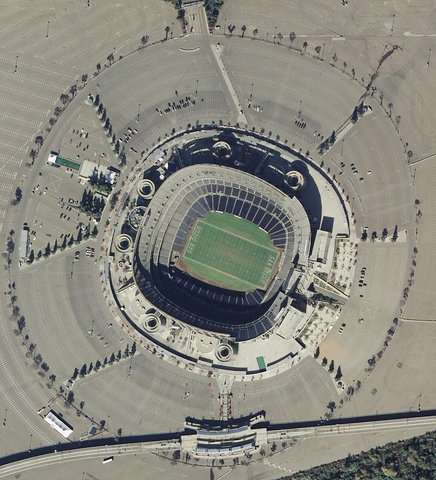
Coordinates 40.812241, −74.077023, precision ±120 m. Established from the English Wikipedia infobox value and corroborated by three separate geotagged photographs taken at the ground before demolition, including images from inside the bowl during the stadium's final season in September 2009. Wikidata's entity for Giants Stadium (Q375365) carries 40.813726, −74.074433 — that is MetLife Stadium, 271 m north-east, and it is wrong; this is a case of the gazetteer needing to be checked against the ground rather than against another gazetteer. The US Census geocoder places the stadium's postal address, 50 Route 120, more than a kilometre away on the state highway. The site today is car park.
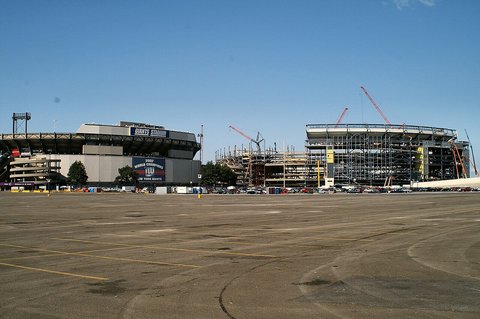
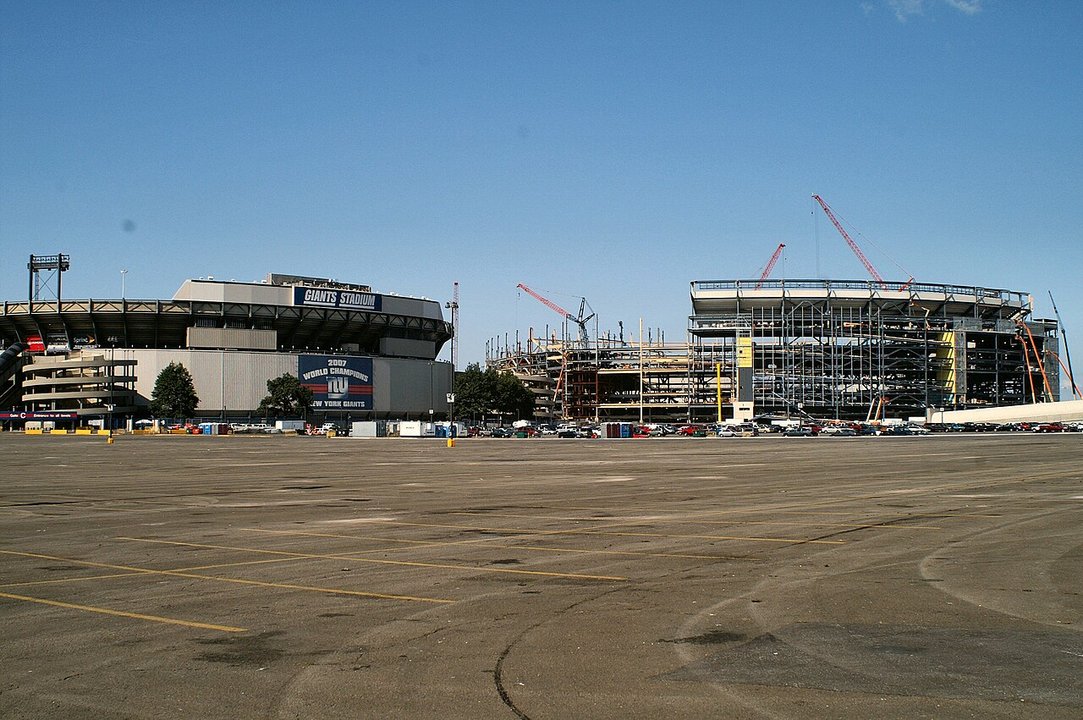
Cover: *Giant's Stadium Old and New* by Agardk, CC BY-SA 3.0, via Wikimedia Commons, 23 September 2008. Giants Stadium stands at left with the 2007 championship banner on its flank; the replacement is steel frame and tower cranes at right. The two grounds in one frame is why this file was chosen over cleaner portraits of the stadium.
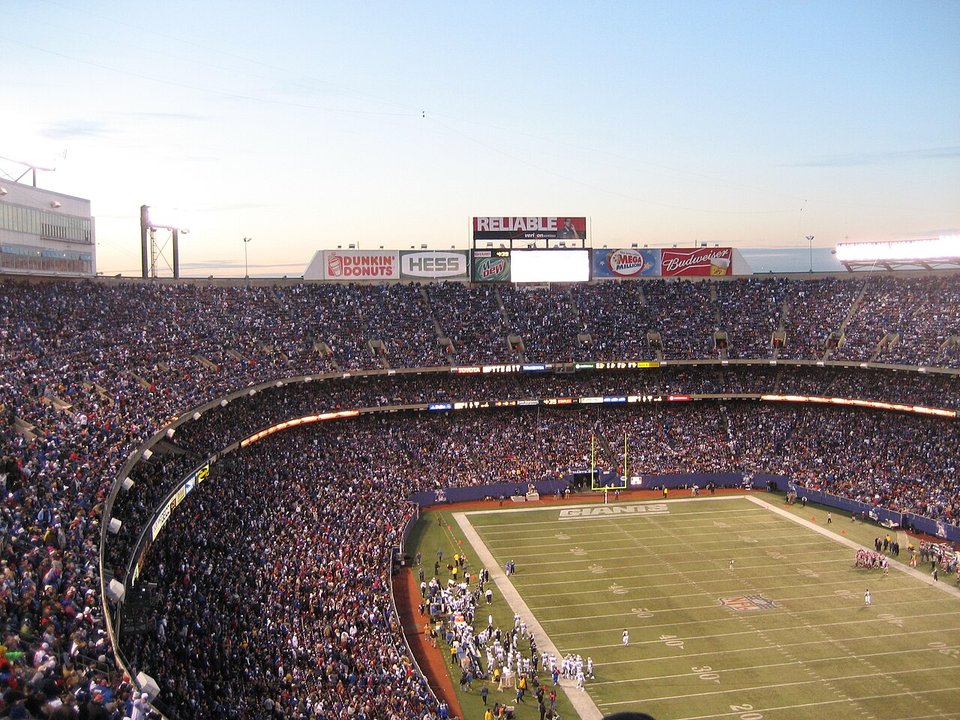
Second image: *Giants Stadium 2006* by Flickr user nautical2k, CC BY 2.0, via Wikimedia Commons, 3 December 2006. A full house seen from the upper deck — a Giants game twenty-eight years after the one described here, not the 1978 game.




















































 expand_more