NFL History | Heritage Field, the Bronx — The Park and the Stadium Changed Places
volume_up
Listen
directions
Directions
The stadium and the park changed places, which is why so many accounts pin this ground wrong.
Until 2006 Yankee Stadium stood on the south side of 161st Street and Macombs Dam Park lay on the north side. The Yankees broke ground on their replacement in August 2006 on the parkland to the north, opened it in 2009, and demolished the old stadium between 2009 and May 2010. The city then rebuilt the park on the south side, on the ground the stadium had occupied. Heritage Field opened there in April 2012.
So the current stadium sits on the old park and the current park sits on the old stadium. Anyone pinning the 1958 game at a place called Macombs Dam Park today is a block north of where it happened. The Society for American Baseball Research puts the identification precisely: among Heritage Field's three ballfields, the baseball diamond occupies the footprint of the old stadium's playing field. It was named for Elston Howard in 2020.
The football happened on that footprint. The New York Giants played home games at Yankee Stadium from 1956 to 1973, on a gridiron laid across the baseball field, and on 28 December 1958 they lost the NFL championship there to the Baltimore Colts, 23–17, before 64,185 people, on NBC. Baltimore tied the game at 17 with a field goal in the closing seconds and won it in the first sudden-death overtime the league's title game had ever needed. Johnny Unitas was the game's outstanding player. A week earlier, on 21 December, the Giants had beaten Cleveland 10–0 on the same field to reach it.
One detail from the losing sideline is worth having. The Giants' offensive coordinator that season was Vince Lombardi and the defensive coordinator was Tom Landry.
Now the claim. This game is routinely called the greatest ever played and credited with making professional football a national sport. That is an interpretation, and it competes with two others that have better paperwork. The Sports Broadcasting Act of 1961 gave the league a limited exemption to sell television rights as a pool, and the revenue sharing built on it distributed the proceeds so that small-market clubs could survive. A dramatic finish in front of a national audience is a plausible cause. A statute and a distribution formula are documented ones. The honest position is that the 1958 game is the story the league tells about itself, and that the money arrived by legislation three years later.
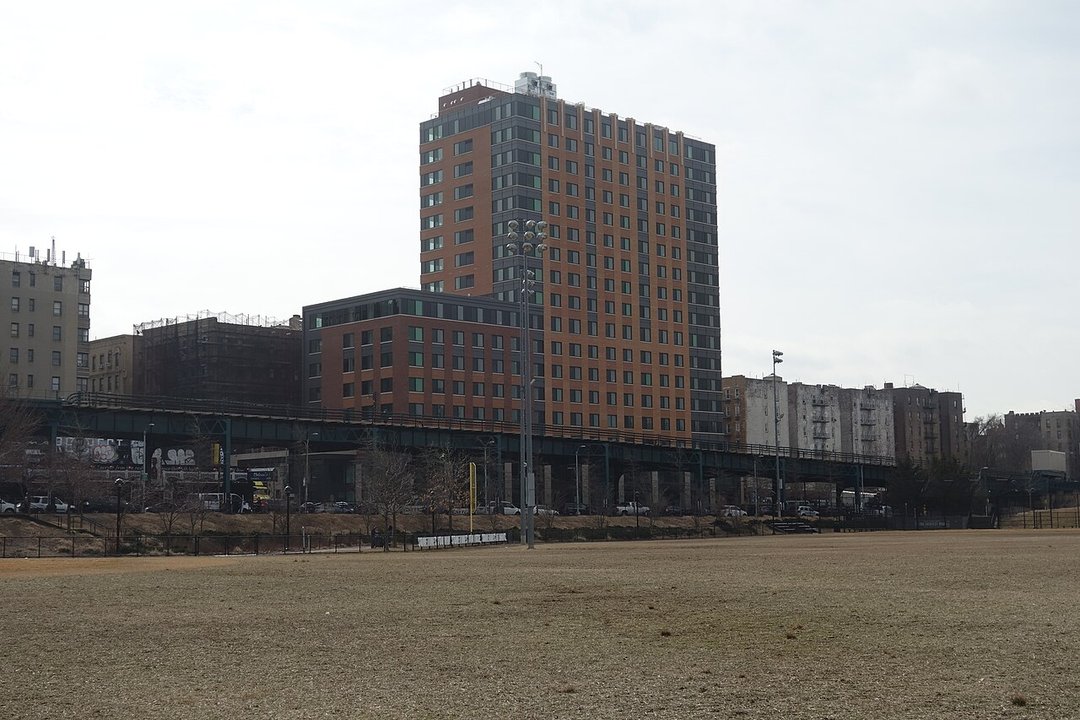
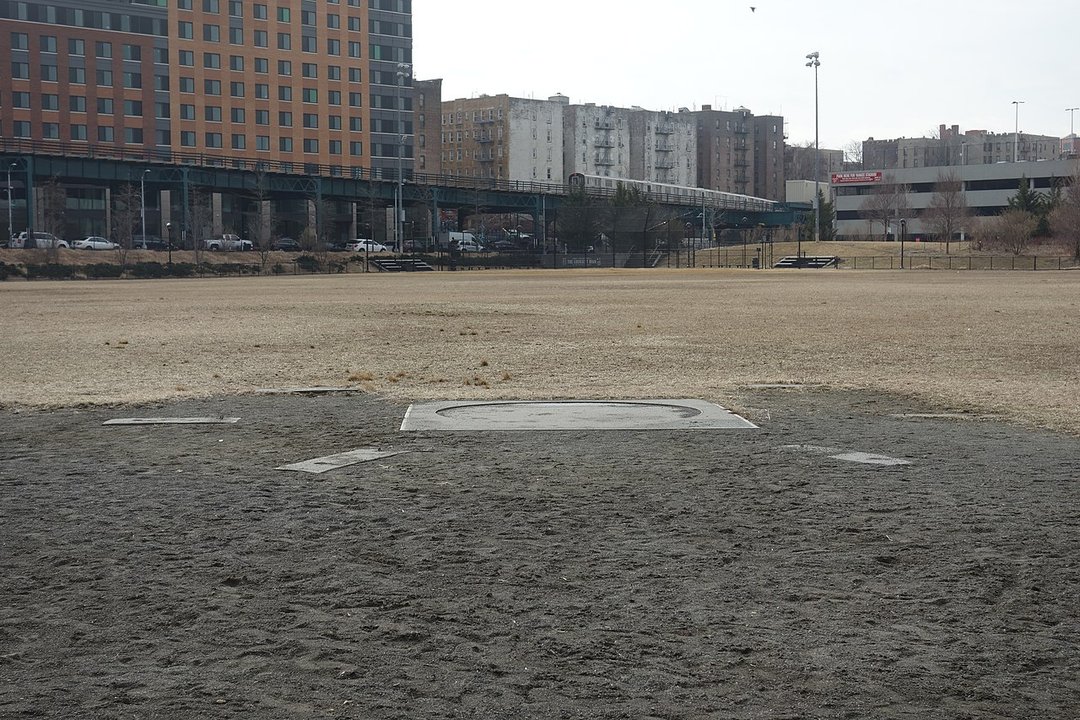
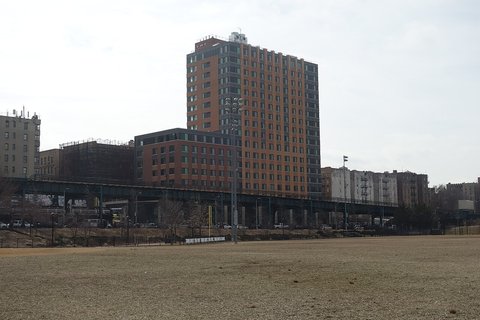
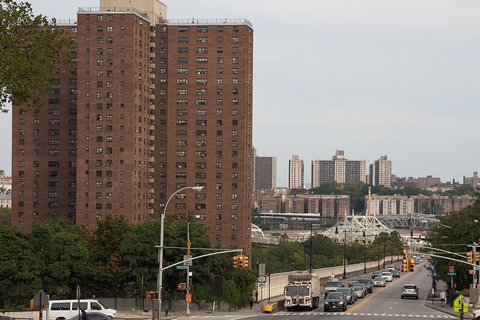
What stands here now is a flat municipal ballfield under the elevated tracks, with apartment towers behind it. No stand, no plaque on the spot where the goalposts were, and a name that belongs to the ground rather than to the game.
Coordinate: the old stadium footprint on the south side of 161st Street. The Wikidata point for the demolished stadium and the Wikidata point for Heritage Field differ by about 24 m, which is itself the confirmation that they are the same ground. Precision ±150 m for the footprint.
Cover: Heritage Field in March 2019, looking across the ground where the stadium stood toward the elevated IRT. Photo: Tdorante10, CC BY-SA 4.0, via Wikimedia Commons.
Second image: the centre of Heritage Field, same day and photographer. CC BY-SA 4.0, via Wikimedia Commons. Neither photograph shows the stadium, which was gone nine years before they were taken.








 expand_more