Tennis History | West Hants Club, Bournemouth — the first open tournament was not a major, April 1968
volume_up
Listen
directions
Directions
The Open era did not begin at Wimbledon. It began on the clay courts of a members' club in a Bournemouth suburb, in front of a crowd modest enough that the whole week's takings ran to five figures in pounds.
The British Hard Court Championships opened at the West Hants Club, Roslin Road South, Talbot Woods, on 22 April 1968. It was the first tournament in the history of the sport in which professionals and amateurs entered the same draw. Roland-Garros followed in May, The Championships at Wimbledon in July. Any account of the Open era that opens at a major has the sequence backwards, and the reason the sequence matters is that the majors did not lead this change — they were carried into it by a national association that had already voted, four months earlier, to stop pretending.
A note on the name, which misleads modern readers badly. "Hard court" in British usage did not mean an American acrylic surface. It meant a court that was not grass. The 1968 championships were played on clay.
Ken Rosewall, thirty-three years old and a professional since 1957, won the men's singles, beating Rod Laver after losing the opening set. The score is usually given as 3-6, 6-2, 6-0, 6-3; the ATP's own retrospective account of the tournament prints a different set order, which is a useful reminder that a governing body's website is that body's account of itself and not a primary record. Rain interrupted the final and it finished on 28 April. Rosewall was paid £1,000 — worth roughly $2,400 at the exchange rate then in force, sterling having been devalued to $2.40 five months before.
The result that actually carried the argument came earlier in the week. Mark Cox, an amateur, beat the professional Richard Gonzales, known as Pancho, over five sets: 0-6, 6-2, 4-6, 6-3, 6-3. He then beat Roy Emerson 6-0, 6-1, 7-5 before Laver stopped him in the semi-final. It is generally recorded as the first win by an amateur over a professional in an open tournament. One of the standing arguments for keeping the two apart had been that they could not meaningfully compete; the argument did not survive the first week in which they were allowed to.
Virginia Wade won the women's singles, beating Winnie Shaw 6-4, 6-1. She was offered £300. Rosewall's cheque for the same tournament was £1,000. She refused hers, because accepting prize money would have ended her amateur status and with it her eligibility for the tournaments that had not yet opened. Both halves of that belong in the record: the size of the gap, and the fact that the woman who won the first open tournament could not safely take any of the money.
The ATP's retrospective account puts the week's gate receipts at £12,030 and the tournament's surplus at £3,192. Those are the numbers the Open era started with.
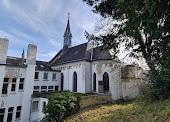
STATUS NOTE, current as of September 2026. The West Hants Club is a private members' club still operating on the Roslin Road South site.
COORDINATE. The pin sits on the club grounds at Roslin Road South, Talbot Woods, Bournemouth, BH3 7EF. Two independent sources agree: the Office for National Statistics postcode centroid for BH3 7EF at 50.737939, -1.885961, and OpenStreetMap's mapped extent of the West Hants Club, whose centre falls at 50.736994, -1.887354. The club's own website places its entrance at approximately 50.7375, -1.8857. All three fall within about 150 m of one another, which is the spread expected across a set of grounds rather than a disagreement about the place. Precision radius 250 m, covering the grounds. The pin is the club, not the court the final was played on; this account has not established which court that was, and the club's court layout has been rebuilt since 1968.
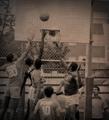
COVER. "De Australiër Ken Rosewall in actie", photographed by Bert Verhoeff for Anefo, 5 July 1970, Nationaal Archief of the Netherlands, released CC0. NOT BOURNEMOUTH: this shows Rosewall at the net during a tournament at Scheveningen in the Netherlands, two years after the events described here, and is used because no free-licensed photograph of the 1968 championships has been found. It does show what the period looked like — a wooden racket, a white sweater, and spectators in overcoats behind a chain-link fence a few feet from the court.









































 expand_more