NFL History | Tulane Stadium, New Orleans — The Last Game Before the Name Stuck
volume_up
Listen
directions
Directions
Nobody in this stadium on 11 January 1970 was watching a Super Bowl. Officially they were watching the fourth AFL–NFL World Championship Game.
The first games carried that title and no other. Lamar Hunt had used the phrase Super Bowl informally, later putting the naming down to his children's Super Ball toy and calling it accidental, and the press adopted it well before the league did. Sources disagree over whether official adoption came with the third game or the fourth, which is reason enough to say that they disagree rather than to pick one. The Roman numerals began with the fifth game and were applied backwards to the first four.
This was the last of the old kind. Kansas City of the AFL beat Minnesota of the NFL 23–7 before 80,562 people, a record for the event at the time, and the two leagues merged for the following season. The AFL ended its existence having split these games two apiece with the NFL, which is not what anyone expected after the first two.
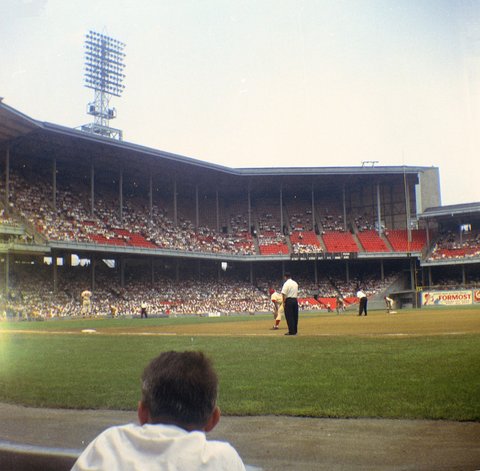
Tulane Stadium was a college bowl on a university campus, opened on 23 October 1926 and seating 80,985 in its final configuration. Its record crowd was 86,598, in December 1973. It held three of these championships: the fourth, the sixth and the ninth. The ninth, on 12 January 1975, was the last professional football game played in it.
The building deserves remembering for a duller reason than the games it held. Before the league had venues of its own worth the name, its championship went wherever a bowl big enough already stood, and that usually meant a university had built it for college football.
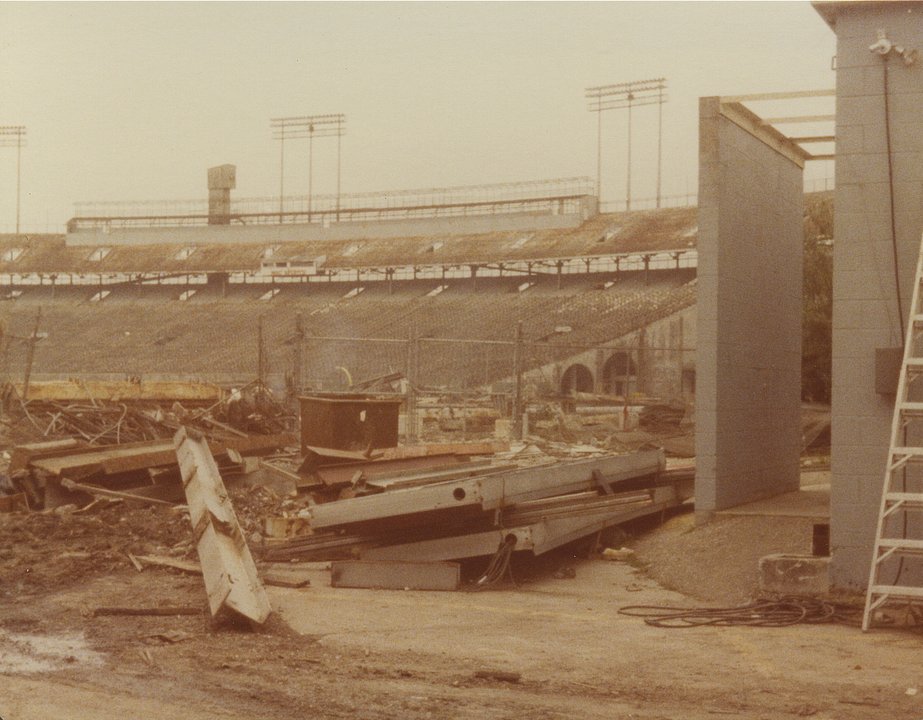
The ending was drawn out. The Superdome opened in 1975 and Tulane Stadium was condemned the same day. On the university's appeal the original brick and concrete section was judged still fit for use, though the expanded metal seating was not, so the stadium survived several more years on practice sessions and schoolboy fixtures. The last game of any kind here was between two New Orleans high schools on 1 November 1979. The president announced demolition the following day, and the work ran from 18 November 1979 to 15 June 1980.
A correction worth carrying, because it is easy to get wrong and this memory got it wrong at first. **The university's current football stadium is not on this site.** It stands immediately to the north, and the Historic New Orleans Collection places it lakeside of the old ground rather than on it. What actually occupies the footprint, by the university's own account, is student housing, a parking structure, the Reily student recreation centre, Brown Quad and a practice facility.
Coordinate: the stadium footprint, a block bounded by Willow Street to the south, Ben Weiner Drive to the east, the university property line west of McAlister Place, and the current stadium and practice facility to the north. Precision ±180 m for a bowl of this size. An earlier version of this entry gave ±250 m on the basis of an apparent disagreement with the current stadium's coordinate; that was not a disagreement but the distance to a neighbouring building, and the wider figure was wrong.
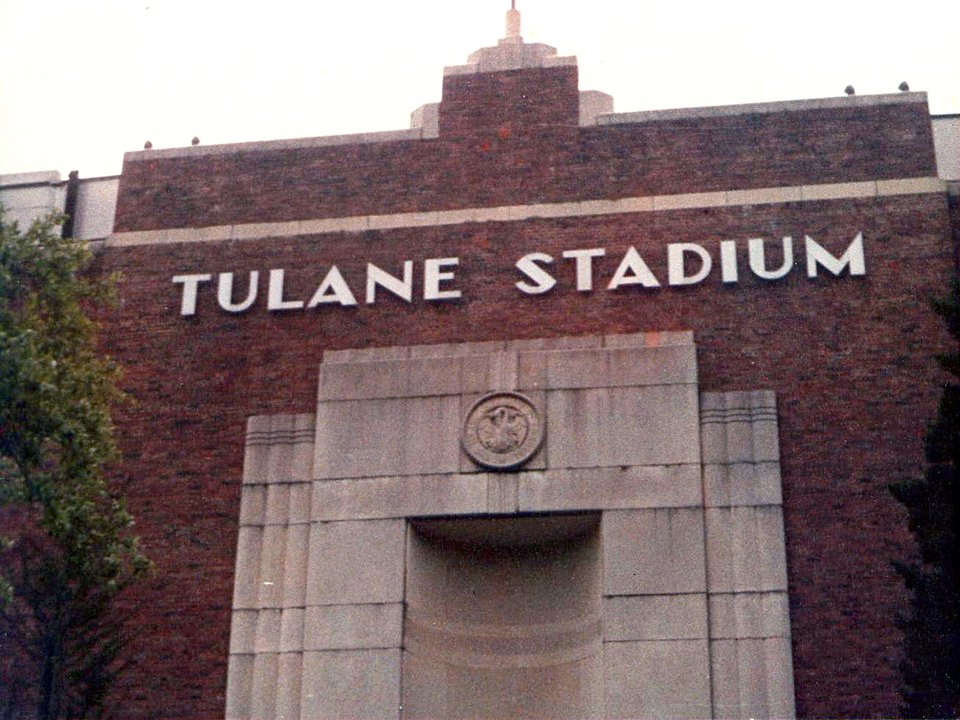
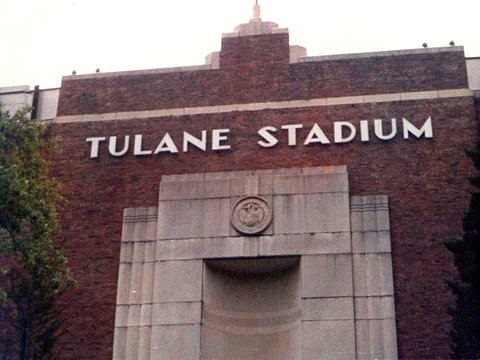
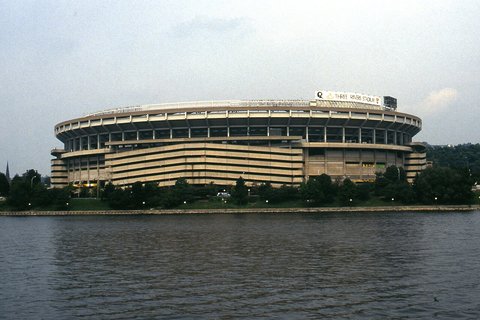
Cover: the Willow Street front of Tulane Stadium, photographed in 1979, not long before demolition. Photo: Infrogmation of New Orleans, CC BY 3.0, via Wikimedia Commons.
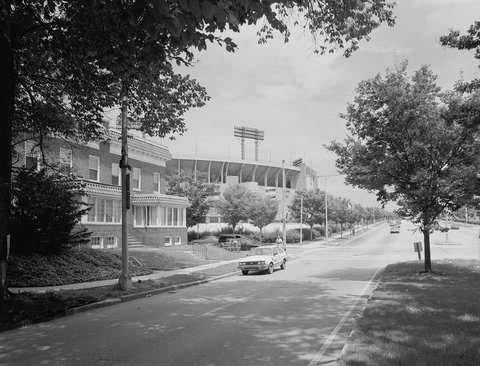
Second image: Tulane Stadium coming down, about 1980. Photo: Infrogmation of New Orleans, CC BY 2.0, via Wikimedia Commons.





 expand_more