- Home
- Semiconductor History | Who Bought the First Chips | Cambridge, Massachusetts
- Semiconductor History | MIT Instrumentation Laboratory — A Computer Built From One Gate, and the Market It Created
Semiconductor History | MIT Instrumentation Laboratory — A Computer Built From One Gate, and the Market It Created
· 1962
Personal memoryBy kevin · · updated · Report an issue
Find memories left by people near you.

Distribute Bounty
This will distribute the bounty equally among all qualifying memories. This action cannot be undone.
Cancel Bounty
Are you sure you want to cancel this bounty? The remaining amount will be refunded to your account.
Success!
Operation completed successfully.
Error
Something went wrong.
Semiconductor History | MIT Instrumentation Laboratory — A Computer Built From One Gate, and the Market It Created
kevin
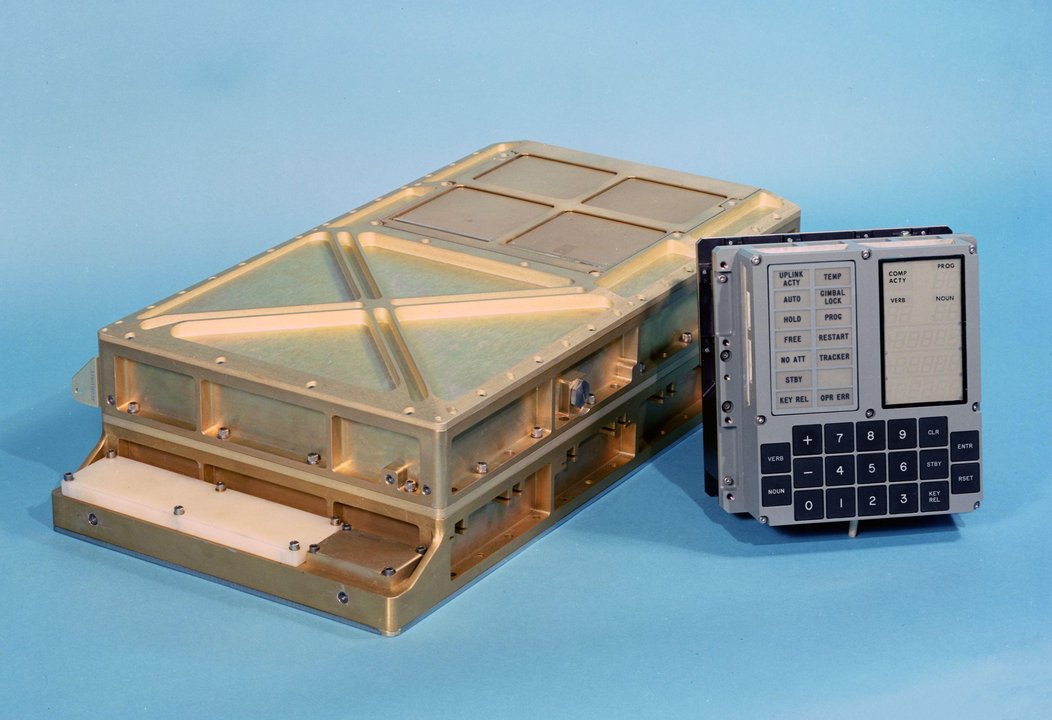
The whole processor was built from one kind of part.
Not one kind of chip family, or one supplier, but a single logic function repeated a few thousand times: a three-input NOR gate, which is enough to construct every other operation a computer needs if you are willing to use enough of them.
That decision was taken at the MIT Instrumentation Laboratory in 1962, and it is the reason the integrated circuit had a market before anyone had a use for it at home.
The laboratory won the Apollo guidance contract from NASA in August 1961, the first major contract of the programme, under its director Charles Stark Draper, with Eldon Hall leading the hardware.
Hall had form with this technology.
He had visited Texas Instruments in 1959, met Jack Kilby, and MIT ordered sixty-four hand-built NOR gates at a thousand dollars each for the Polaris guidance computer, which is a price that tells you exactly how experimental the parts still were.
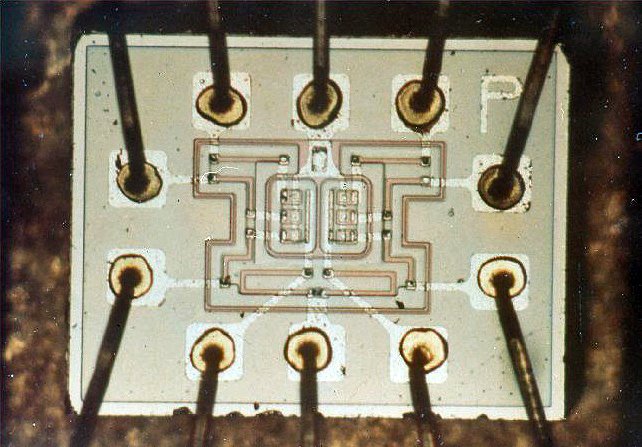
For Apollo he chose Fairchild's Micrologic instead, built on Jean Hoerni's planar process.
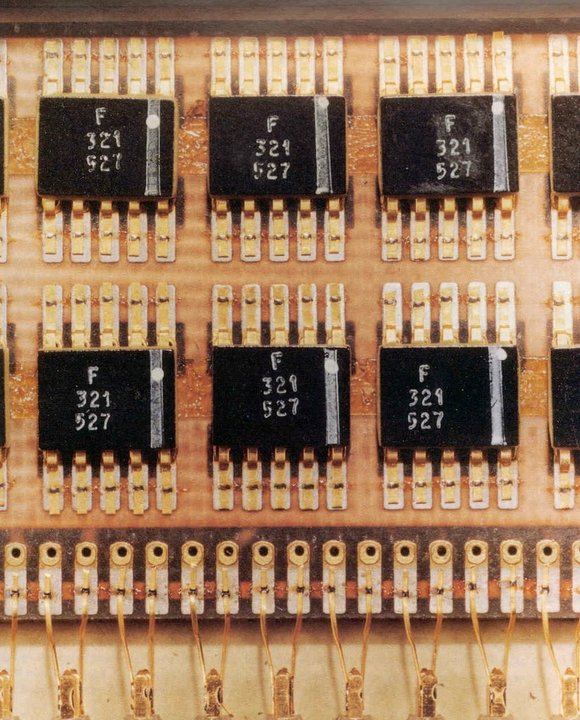
Block I of the computer held around 4,100 integrated circuits of a single type; Block II switched to a dual gate in a flat package and used roughly half as many devices for more logic.
The chips were welded to the boards rather than soldered.
Nothing about this was ordinary manufacturing, and the reliability requirement was absolute in a way commercial electronics has never had to match, because the machine had to work a quarter of a million miles from anyone who could fix it.
What that bought the industry was demand.
The Computer History Museum puts the programme's consumption at around two hundred thousand Micrologic circuits, making it the largest single user of integrated circuits through 1965, and the widely repeated figure is that Apollo took something like sixty per cent of American integrated circuit output in 1963.
Prices fell accordingly, which is the part that mattered to everyone else.
A component that cost a thousand dollars in 1959 was a commodity within a decade, and it got there because a government programme bought the early production at any price and forced the yields up.
The supply chain did not stay put.
NASA required second sources, so Motorola, Philco, Texas Instruments, Transitron and Westinghouse were brought in, and Fairchild eventually lost interest in the obsolete logic family it had started with, leaving Philco to supply most of the parts by the end.
There is no plaque, and there is not really a single building.
The laboratory occupied fourteen buildings around the MIT campus in the 1960s; it was renamed for Draper in 1970 after anti-war protests targeted its military work, separated from MIT in 1973, and this memory is pinned at the successor institution's address in Kendall Square rather than at any room where the work was done.
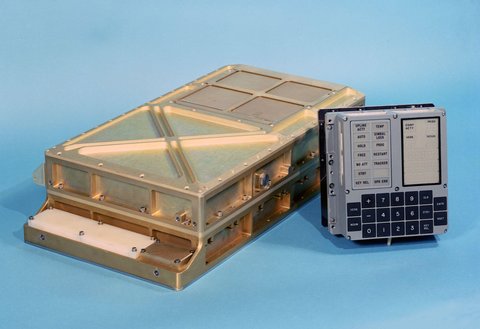
Photo: public domain, via Wikimedia Commons.
changes?
delete this memory?
We detected that you have a Blox in your crypto wallet! We will import the Blox into your account.
Click on done below to complete the import.
Welcome Back!
Sign in to preserve cherished moments
Don't have an account?
Welcome!!
Sign up and start preserving cherished moments
?
?
Choose your payment method
Buy with Metablox Credit
Do you want to mint Blox with Metablox Credit?
Which Crypto would you like to use?
Purchase Confirmed!
Your Blox is being minted on-chain and will appear in your profile shortly.
Log in or sign up to claim your Blox.
How many credits do you want to buy?
$100 USD = 1 Metablox Credit = 1 Blox.
Use Metablox Credit to mint any Blox you want on the map.
expand_more