NFL History | Tampa Stadium Site, Dale Mabry Highway — Ground Broken Before the Bonds Were Validated
volume_up
Listen
directions
Directions
On 27 January 1991 the New York Giants beat the Buffalo Bills 20-19 in the twenty-fifth Super Bowl on this ground. Pro-Football-Reference records the venue as Tampa Stadium and gives the deciding score as a 21-yard field goal by Matt Bahr in the fourth quarter; the New York Giants' own account of the game records that Buffalo's Scott Norwood attempted a 47-yard field goal in the closing seconds and that it missed wide. No attendance figure appears in this memory. The sources consulted print different numbers and none of them is a record-keeper.
The game was played ten days after the air campaign against Iraq began, and it was policed accordingly. A United Press International wire report of 19 January 1991 sets out the plan while it was still being made: the league's security division and the Tampa Police Department were preparing the site together, the department's Robert L. Smith had asked the Federal Aviation Administration to restrict air traffic over the stadium on the day, x-ray machines and metal detectors were under consideration for the gates, and the force was holding SWAT teams, hostage negotiators and bomb technicians in readiness. The report gives the reason plainly, and it is worth noting that it is the reason a wire service gave at the time rather than one assembled afterwards: the game's television audience reached the Middle East, and that made it a target. The same report records that planning had begun before Iraq invaded Kuwait.
What the crowd heard before the game is a second story about ownership, and it has never been settled. Whitney Houston sang the national anthem over an accompaniment played by the Florida Orchestra under Jahja Ling. Beyond that the accounts diverge. The St Pete Catalyst reports that Houston sang into a microphone that was switched off and that the stadium and the broadcast heard a vocal she had recorded days earlier in a Los Angeles studio. The Saturday Evening Post describes her as performing live on the day with a safety copy in place, recorded in mid-January over the orchestra's track. The two accounts do not reconcile and neither is treated here as settled. They also disagree about who wrote the arrangement: the Catalyst credits John Clayton, the Saturday Evening Post credits Houston's musical director Rickey Minor and says he altered the time signature.
What is not in dispute is what happened to the recording. Arista released it as a single with Houston's proceeds directed to the American Red Cross Gulf Crisis Fund; the Saturday Evening Post reports 750,000 copies sold within eight days, a peak of number twenty on the Hot 100, and describes that as the first time the national anthem had reached the Top 40, which is the magazine's characterisation and not a ranking offered here. The Florida Orchestra, in financial difficulty that year, was initially paid nothing for the performance on the record. The Catalyst records that its lawyer Frank Jakes negotiated a settlement with the label under which the orchestra was recognised as a co-performer and credited on later releases. Whatever the stadium heard that afternoon, the object that went on sale was a record, and the musicians who played on it had to go to a lawyer to get their names on the label.
Tampa Stadium was not built for professional football and was not built by the league. The Tampa Sports Authority's own timeline records construction beginning on 18 October 1966 and the first game played on 4 November 1967, between the University of Tennessee and the University of Tampa. Stadiums of Pro Football gives the build cost as 4.6 million dollars and the original capacity as 40,000. After an NFL franchise was awarded to the city the building was enlarged, at a cost of 13 million dollars, to a capacity of 72,000; Stadiums of Pro Football and the Clio entry for the building agree on those figures and date the work differently, one to the franchise award of 1974 and the other to 1976.
That enlargement invites a claim this memory does not make. Four memories in this vertical turn on a post-merger requirement that a club's home stadium seat more than fifty thousand, and it emptied Wrigley Field, War Memorial Stadium and Metropolitan Stadium and filled Soldier Field. Tampa's original 40,000 sat below that threshold and the enlarged building sat comfortably above it. No source consulted for this memory says the rule is why the work was done. The arithmetic is consistent; the causation is unestablished, and it is left unestablished here.
The building lasted thirty-one years and was replaced entirely. The sequence is the argument, and it runs in an order most accounts reverse. Hillsborough County voters approved a half-cent local option sales tax on 3 September 1996, by 53 per cent, to pay for public facilities including a community stadium; the figure and the date are recited in the Florida Supreme Court's opinion. The Tampa Sports Authority's timeline puts groundbreaking on the new stadium at 15 October 1996, six weeks later. The bonds that were to pay for it were not validated until 22 May 1997.
The delay was a lawsuit. William F. Poe, Sr., a former mayor of Tampa, challenged the use of public money for the stadium. According to the Florida Bar Journal's account of the case, the trial judge, Sam D. Pendino of the Thirteenth Judicial Circuit, found in March 1997 that the project did serve a paramount public purpose and still refused to validate the bonds, because of a single clause in the lease giving the club the first two million dollars of annual net revenue from events that had nothing to do with the club. The Florida Supreme Court reversed him unanimously on 22 May 1997 in Poe v. Hillsborough County, 695 So. 2d 672. Its reasoning, as the Bar Journal and the reported opinion set it out, was that once a project's public purpose is paramount a court has no business micromanaging the terms an arms-length negotiation produced. The opinion records the agreed shape of the deal: a 65,000-seat stadium at 168.5 million dollars, against which the club would pay three and a half million a year in rent for the stadium, the practice facility and development rights.
So the vote came first, the diggers came second, and the court came third, seven months after the ground was opened. No source consulted here explains how the interval was financed, and that gap is left open rather than filled from a weaker source.
The old building went quickly once the new one was ready. Stadiums of Pro Football gives the Buccaneers' last game there as 13 September 1998; the Tampa Sports Authority records the first Buccaneers game at Raymond James Stadium a week later, on 20 September 1998, and the first wrecking ball on 19 January 1999, with the last of the structure brought down by explosion on 11 April 1999.
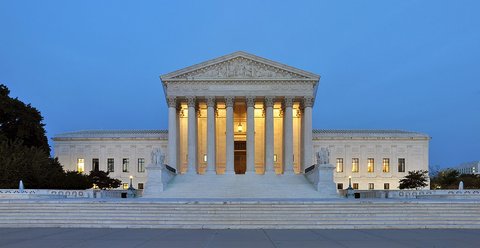
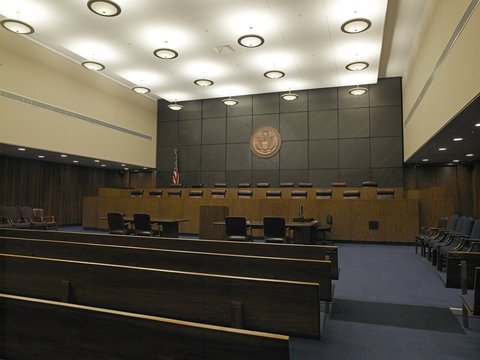
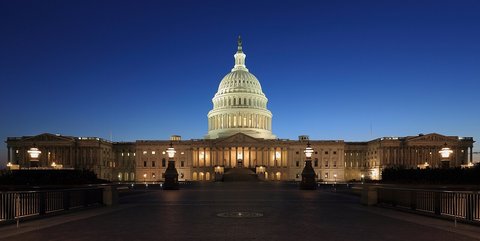
This vertical has the other side of the 1991 result. Memory 9513 covers Rich Stadium in Orchard Park, where Buffalo produced a thirty-two-point postseason comeback two years after losing here. The courtroom thread this memory joins is otherwise entirely federal - memories 6738, 6754, 6790, 6890, 6892, 6918 and 7020 sit at the Supreme Court, the Capitol and United States district courts. Poe is a state constitutional case about public money, and it is here because the question of who pays for these buildings has been settled in court at least as often as on a ballot.
Coordinate: 27.9806, -82.5034. Precision plus or minus 300 m. This pin deliberately does not come from the stadium's street address. 4201 North Dale Mabry Highway is the address of Raymond James Stadium, the building that replaced this one; a United States Census TIGER geocode of it, run on 4 September 2026, returns 27.977838, -82.505423, which is the successor and not the subject. Anyone pinning this memory from the address lands on the wrong stadium, about 370 m away. The longitude used here takes the midpoint of two TIGER legs on the old footprint's boundary streets, the western frontage on North Dale Mabry Highway at -82.5055 and the eastern frontage at 4501 North Himes Avenue at -82.5013. The latitude is weaker. Its northern limit comes from the same gazetteer work; its southern limit rests on published statements of relative position rather than on a measurement, and those statements are not identical - Stadiums of Pro Football says the replacement was built adjacent to the old stadium, the Clio entry says it was rebuilt across the street, and neither gives a bearing. The radius is widened to cover that.
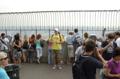
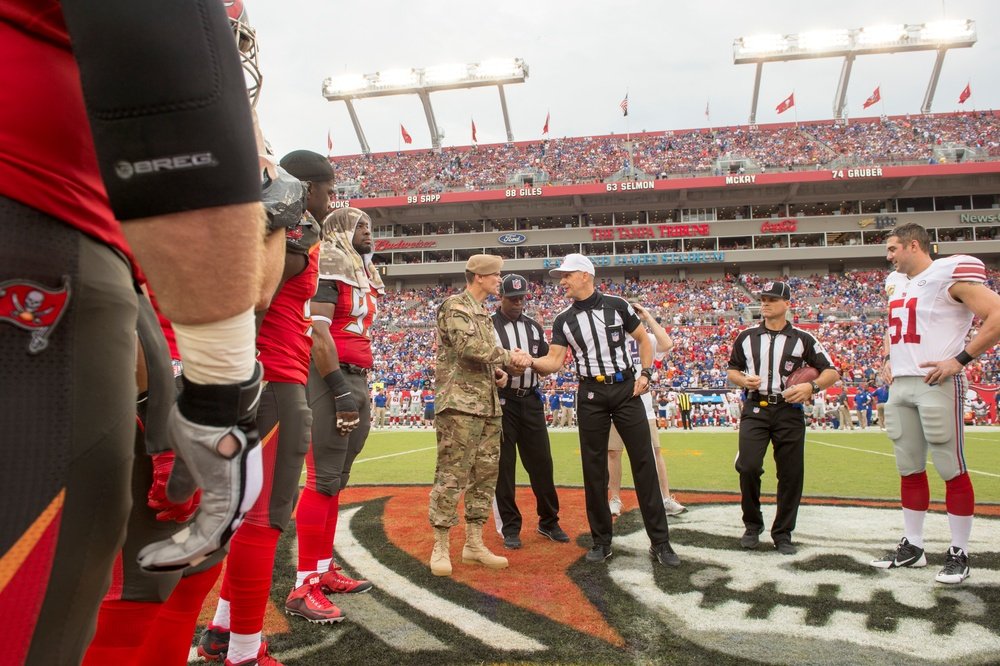
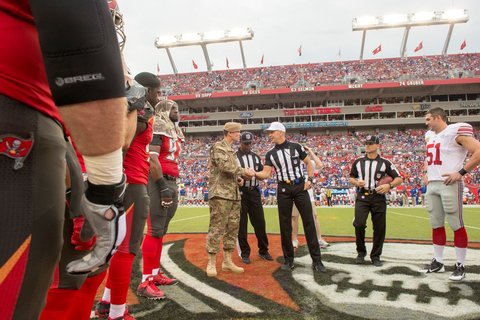
Cover: the coin toss at midfield before a Tampa Bay Buccaneers game against the New York Giants on 8 November 2015, General Joseph Votel, then the commander of United States Special Operations Command, shaking hands with the referee while the captains wait, and the names of the club's Ring of Honor legible along the facing deck. Photograph by Jayson Price, United States Marine Corps, distributed through DVIDS; a work of the United States Government, in the public domain. The DVIDS record gives the photographer's rank two different ways on the same page, so no rank is given here. The building shown is Raymond James Stadium, the successor described above, photographed twenty-four years after the game this memory is about. It is not Tampa Stadium, and it is not a photograph of Super Bowl XXV.


































 expand_more