NFL History | James A. Byrne Courthouse, Philadelphia — The Settlement and the Scoring
volume_up
Listen
directions
Directions
The brain injury story reaches this building as a claims process, and the claims process is where the arguing actually happened.
The verified spine is short. Mike Webster, the Steelers centre, died in 2002. Bennet Omalu published his findings on Webster's brain in the journal Neurosurgery in 2005, and the league's own Mild Traumatic Brain Injury committee demanded a retraction. That committee had been created in the 1990s and had published a series of papers minimising the risk. The players' suits were consolidated here as MDL 2323 before Judge Anita B. Brody of the Eastern District of Pennsylvania.
The settlement agreed in 2013 was capped at $765 million. Brody held a fairness hearing on 19 November 2014, asked for changes, received an amended agreement on 13 February 2015, and issued the final order on 22 April 2015 with the compensation fund uncapped. It is now generally described as a billion-dollar settlement.
Read what it covers, because that is where the argument sits. Awards attach to six qualifying diagnoses: two levels of neurocognitive impairment, Alzheimer's disease, Parkinson's disease, ALS, and death with CTE. That last one applies only to players who had died by the date of final approval. The cut-off was set deliberately, so that a future death could not become a route to a payment. A disease that can only be identified after death was written into the agreement in a form that closes.
Then the scoring. The tests used to assess cognitive decline were adjusted by race, on an assumption that Black players began from a lower cognitive baseline. A player's decline is measured against his own estimated starting point, so a lower assumed baseline makes decline harder to demonstrate and a claim harder to win. Around seventy per cent of active players and more than sixty per cent of living retirees are Black.
Two former Steelers, Najeh Davenport and Kevin Henry, sued in 2020, saying they would have qualified had they been white. Brody dismissed the suit in March 2021 as an improper challenge to a settlement the court had already approved, and in the same breath ordered the parties to fix the problem and sent them to a magistrate. The league pledged to stop race-norming on 2 June 2021. Brody ordered the proposed agreement filed by 20 October 2021 and approved the modifications on 4 March 2022, allowing affected claims to be rescored.
That sequence is the point. The practice was not ended by the science, or by the league, or by the settlement as written. It ended because two retired players who had been refused money filed a suit that was formally unsuccessful.
Reporting from early 2022 put payments past $800 million, with roughly three in ten dementia claims paid, about a third refused, and the rest still moving through the claims administrator, medical consultants, auditors and judges.
A note on what this memory does not say. CTE is identified after death, so no living person is described here as having it, and no individual's death, decline or conduct is attributed to it. The findings named above are the published and court-recorded ones.
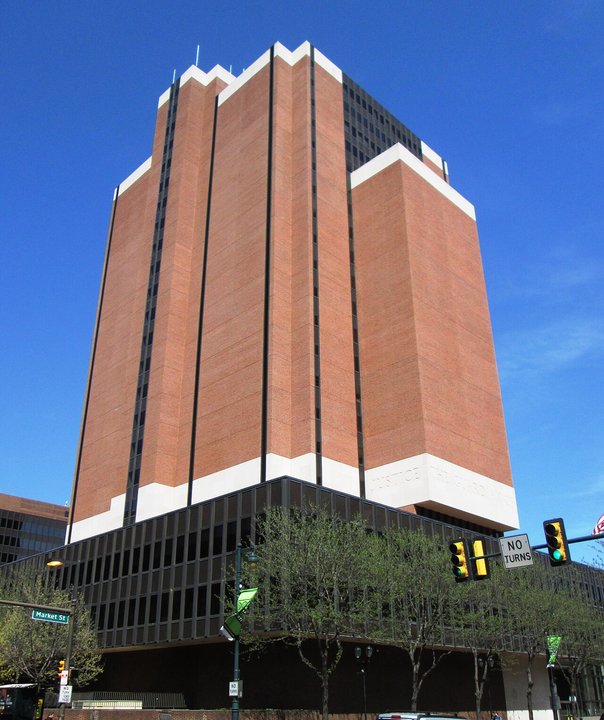
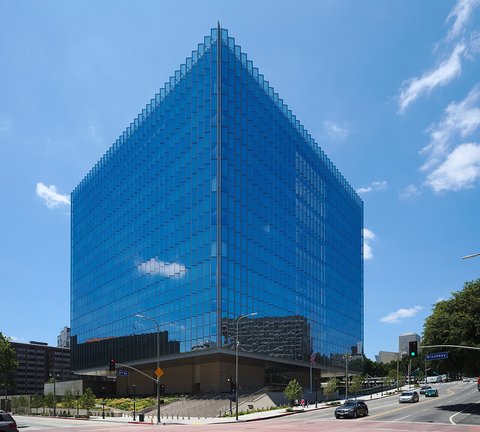
Coordinate: the James A. Byrne United States Courthouse, 601 Market Street, which houses the Eastern District of Pennsylvania. The Wikidata point and the United States Census geocode agree to within about 6 m, the closest agreement of any anchor in this set. Precision ±25 m.
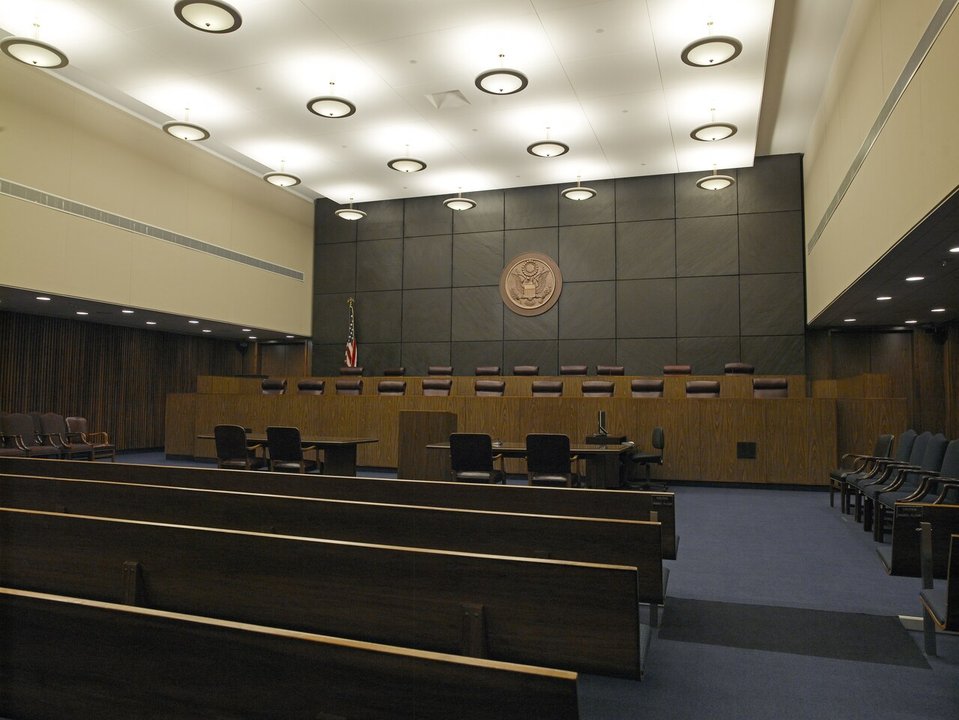
Cover: a courtroom in this building. Photo: Carol M. Highsmith, Library of Congress, public domain, via Wikimedia Commons. It is a general view of a courtroom here, not a photograph of these proceedings.
Second image: the courthouse exterior on Market Street. Photo: Beyond My Ken, CC BY-SA 4.0, via Wikimedia Commons.








 expand_more