Finance History | New Court, St Swithin's Lane, London, 1809 — Five Brothers, Five Capitals, One Lane
volume_up
Listen
directions
Directions
The bank has been on this lane since 1809 and has knocked down its own building three times to stay.
Nathan Mayer Rothschild had been in Manchester since 1799, buying English textiles for the continental market. In 1809 he took the lease of No. 2 New Court, St Swithin's Lane, for £750, as a house for his family and a place of business, a short walk from the Bank of England. He wound up the Manchester trade in 1811.
Four buildings called New Court have stood on that site since. The first, which Nathan lived in and died in; a palazzo by Thomas Marsh Nelson in the 1860s; a glass and marble block by Fitzroy Robinson in the mid 1960s; and the current one by OMA, finished in 2011, which is what the cover photograph hangs on.
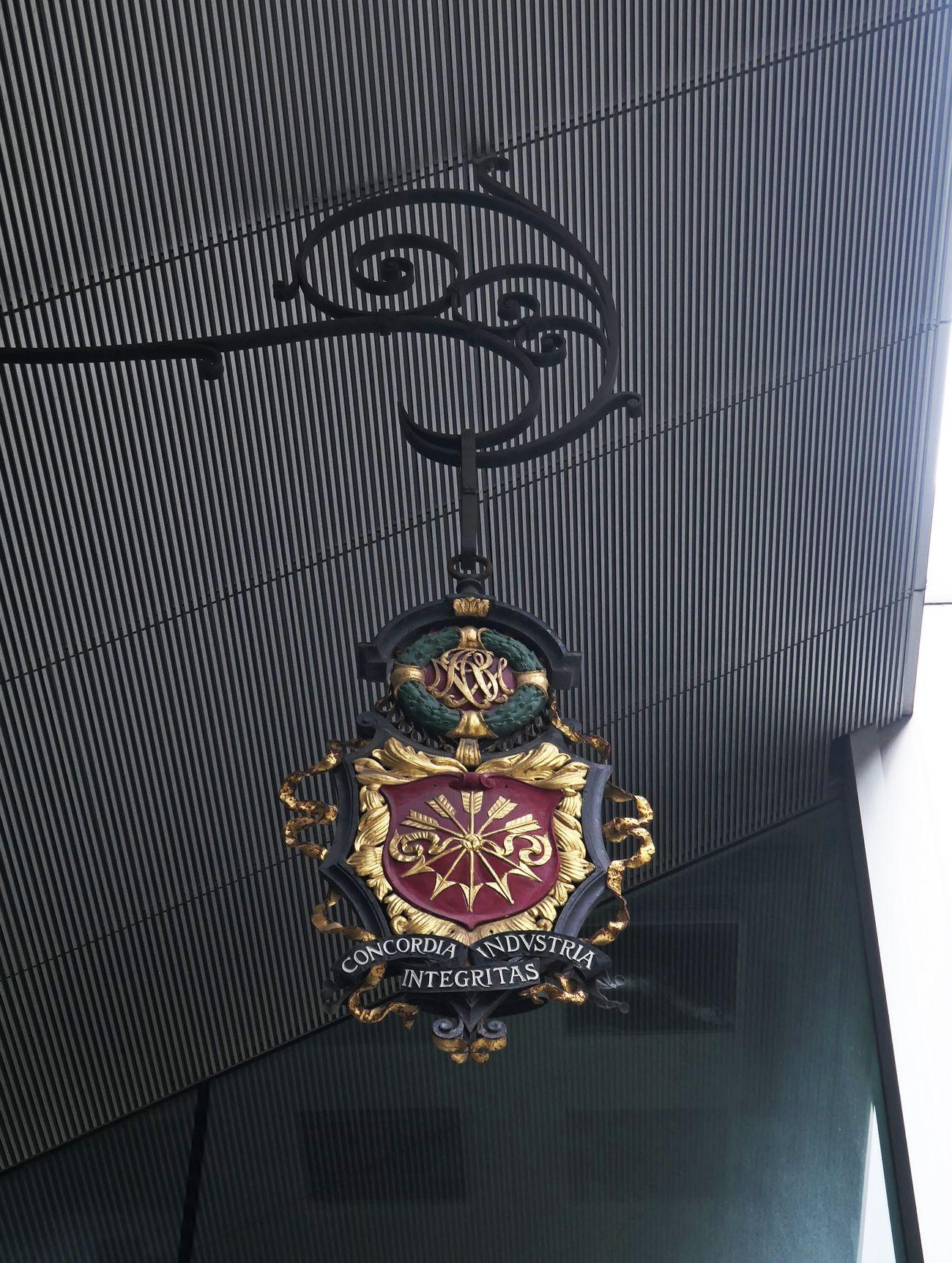
The family arms on that bracket carry five arrows, for the five sons Mayer Amschel Rothschild placed in Frankfurt, London, Paris, Vienna and Naples.
That arrangement is the mechanism, and it is worth stating carefully because it is usually described as conspiracy rather than logistics.
Five brothers in five capitals, corresponding constantly and running their own couriers, could learn what a government intended before the market did, settle a payment in one country against a receipt in another without shipping metal, and price a loan in Vienna against conditions in London. Before the telegraph, an information and settlement network across five states was a genuine competitive advantage, and a lawful one.
By 1814 Nathan held the British government contract to buy and move gold coin to pay Wellington's army in the field. That, rather than anything cleverer, is the documented Napoleonic business.
The Waterloo story needs the correction. It is often said that Nathan learned of the victory first and made a fortune by spreading false news of defeat to buy government stock cheaply.
Analyses of his actual dealings attribute his profits to a faster information network and to a large position taken and held for two years, not to a rumour. Versions of the tale, and quotations in which he boasts of controlling Britain's money supply, come from polemical literature rather than from any document, and a good deal of that literature was written to make a point about a Jewish banking family.
What is documented is stranger. In the panic of 1825 the Bank of England ran short of coin, and Nathan supplied it, which means a private house on this lane kept the central bank paying that winter.
Also documented: the Alliance Assurance Company was founded at New Court in 1824. In 1875 Lionel de Rothschild advanced £4 million so that the British government could buy the Khedive of Egypt's shares in the Suez Canal. In 1889 the demand for Burma Ruby Mine shares was such that Natty Rothschild got into the building through a first-floor window.
And in September 1919 the first London gold fixing was held here, a price agreed in a room on this lane and used worldwide, a practice that continued at New Court until 2004.
Cover photo: Amanda Slater, CC BY-SA 2.0, via Wikimedia Commons, showing the arms with the five arrows and the motto Concordia, Industria, Integritas.
Coordinates 51.512345, -0.089042, resolved by Nominatim for N M Rothschild and Sons on St Swithin's Lane and matching four Commons geotags within about 25 m. The Bank of England entry in this collection is a three-minute walk north.















































































 expand_more