NPB History | Nishinomiya Stadium Site — A Home Plate in a Rooftop Garden
volume_up
Listen
directions
Directions
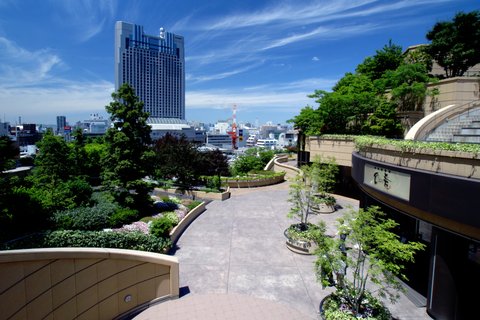
Four floors above the shop units at Hankyu Nishinomiya Gardens there is a roof garden with lawns, a rose walk and a fountain, and set into the ground somewhere in it is a home plate. The mall's own guide to the Sky Garden says plainly what it is: the home plate of the old Hankyu Nishinomiya ballpark, in the place it stood. Visitors regularly walk the garden twice before they find it.
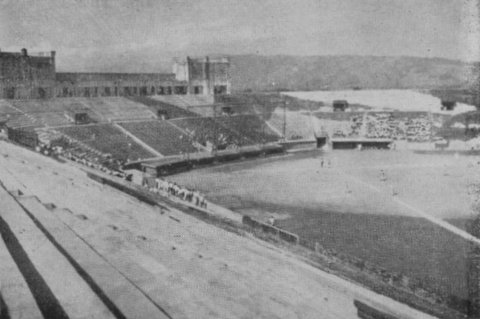
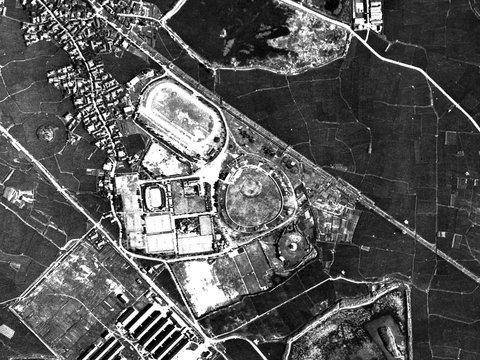
Kobayashi Ichizō, who built the Hankyu group, ordered the ballpark for his own baseball club. Construction started on 1 December 1936, the building was finished on 30 April 1937, and it opened the next day — five months, start to finish. It was designed from material on the home grounds of the Chicago Cubs and the Cleveland Indians, and it gave Japan its first two-tier grandstand and, at opening, a field of natural grass throughout. The plan had been to run the entrance straight out of Nishinomiya-kita-guchi station; the land could not be bought, so the ground went up a short walk to the south-east instead.
Four days after it opened, on 5 May 1937, it staged the first official fixtures of Japanese professional baseball's league era: two games in a day, Tokyo Kyojin against the Eagles and Hankyu against Nagoya. In October 1943 the iron canopy over the second deck was taken down and surrendered for scrap under the wartime metals requisition. In 1946, with Koshien requisitioned by the occupation, the entire national middle-school championship was played here.
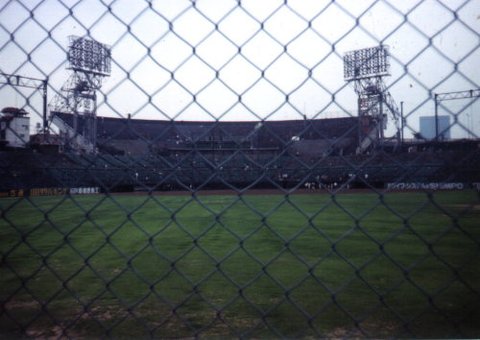
Keirin ran on a banked track laid inside the field from 1949. The ballpark took the first artificial turf in Kansai in 1978 and the first electronic scoreboard in 1982, and the outside was painted orange. The foul lines ran 101 metres and centre field 118.9; capacity was thirty-five thousand.
On 17 July 1971 Enatsu Yutaka started the first All-Star game here and struck out all nine batters he faced across the three innings an All-Star pitcher is allowed. Because of that limit the record can be equalled but never beaten. The Central side went on to combine on the first no-hitter in the game's history. Eight years later the same pitcher would finish the 1979 Japan Series across the bay at Osaka Stadium.
Hankyu sold the club to Orix in 1988 and the team moved home to Kobe in 1991. American football and concerts kept the place busy until it closed at the end of 2002; NPB's own listing dates the demolition to 2005. Hankyu Nishinomiya Gardens opened on the site in 2008, and small plates around the building mark other pieces of what stood here before.
Go up to the Sky Garden and look down at the paving rather than out at the view. The gallery of ballpark material on the fifth floor has moved since 2023, so ask at the information desk; the home plate has not moved at all.
Coordinates 34.743716, 135.359745 — Hankyu Nishinomiya Gardens; ±60 m, OSM map-verified, pending on-site check. The home plate is on the fourth-floor roof garden.
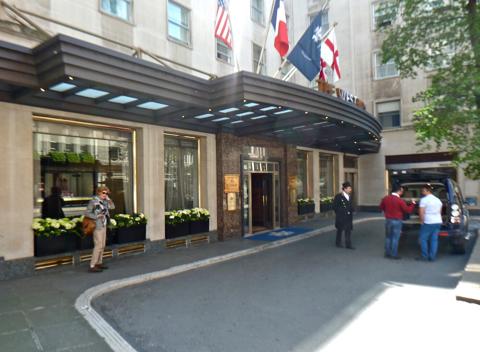
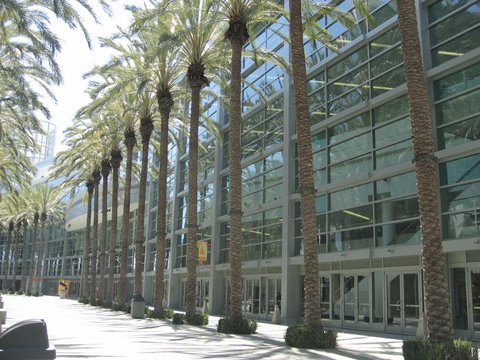
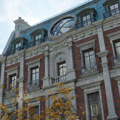
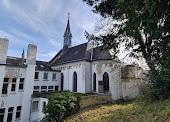
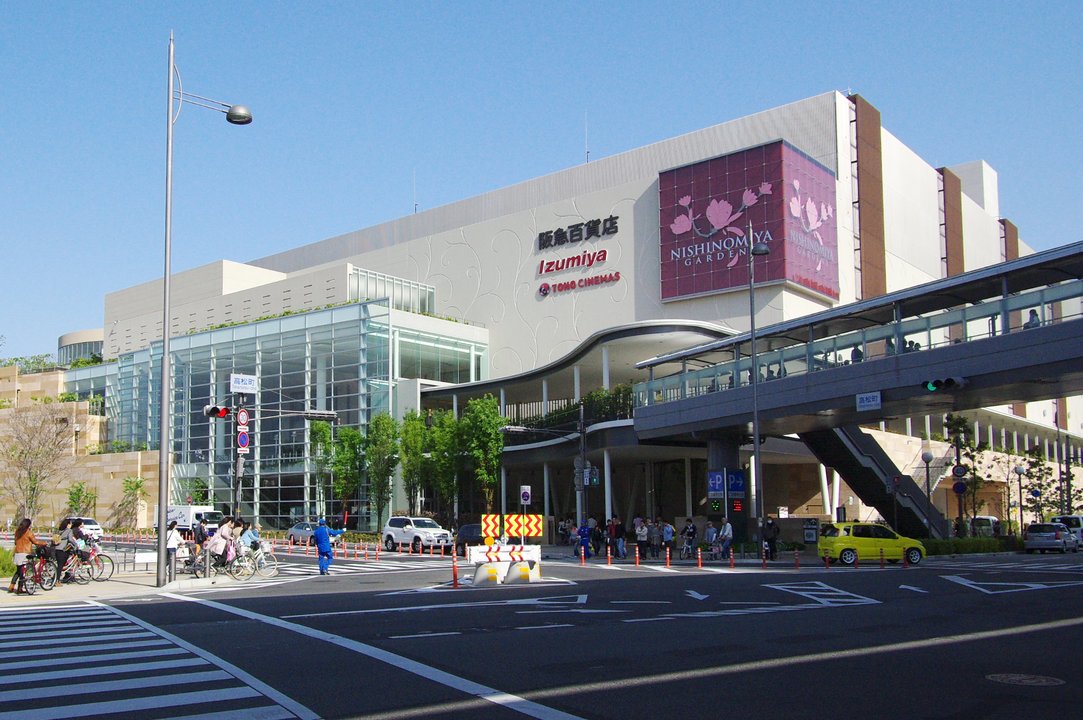
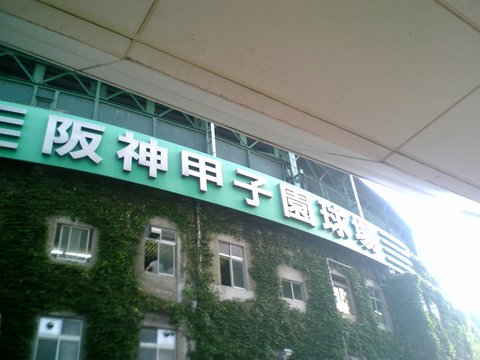
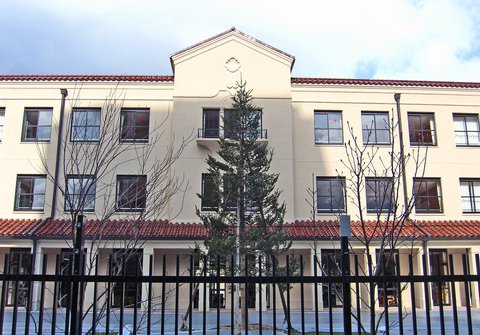
Cover: the main entrance of Hankyu Nishinomiya Gardens, photographed 29 April 2010 by J o, CC BY-SA 3.0, via Wikimedia Commons. This is the site today, not the ballpark.


























 expand_more