MLB | The Three Neighbourhoods Under the Outfield (Chavez Ravine, Los Angeles)
volume_up
Listen
directions
Directions
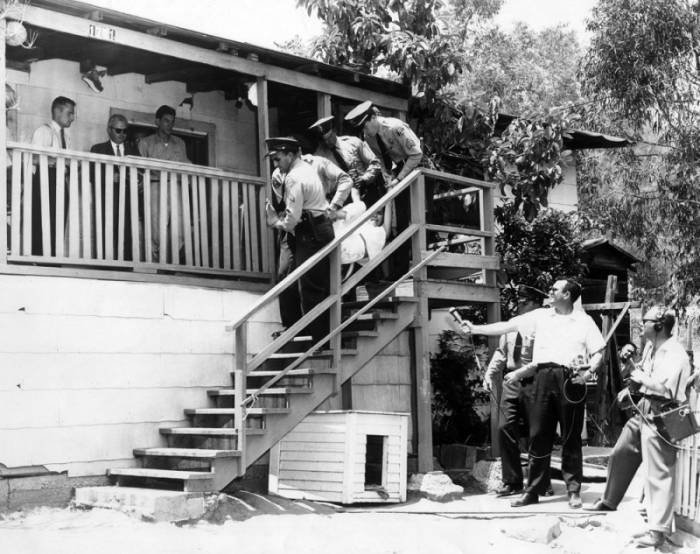
On Friday 8 May 1959, Los Angeles County sheriff's deputies carried a 36-year-old woman named Aurora Vargas out of her family's house at 1771 Malvina Avenue while television cameras filmed it. She had said they would have to carry her, and they did, bent forward with her hands behind her back. Bulldozers flattened the house the same day. Residents called it Black Friday; some accounts date it to the 9th, when the demolition continued.
Three neighbourhoods stood on these hills: Palo Verde, La Loma and Bishop, mostly Mexican-American, largely self-built because other parts of Los Angeles would not sell to the people who lived here. They had a church, an elementary school and their own economy. City surveys photographed the area to document slum conditions. Former residents described bonfires, singing, corn and sugar cane on the hillsides.
The order of events matters, and the shortened version gets it wrong. The land was not taken for the Dodgers. On 24 July 1950 the city sent eviction letters for Elysian Park Heights, a public housing project designed by Richard Neutra and Robert Alexander, more than three thousand units of low-cost apartments. Residents were told they would have first choice of the new homes. Most sold and left on that promise.
Then the project died. Public housing became politically radioactive, Frank Wilkinson of the city housing authority was hauled before the House Un-American Activities Committee and jailed, and Norris Poulson was elected mayor in 1953 on a platform of killing the scheme. The city bought the cleared land back from the federal government cheaply, on the condition it be used for a public purpose.
In 1958 that public purpose turned out to be a privately owned ballpark. The city agreed a land swap with Walter O'Malley, and a referendum approved it narrowly. By then only a handful of families were left, holding on. The Arechigas were the last of them, and Aurora Vargas was their daughter.
So the promise of new homes was made by one government, the land was cleared on the strength of it, and the ground was handed to a baseball club by another. Nobody was ever given first choice of anything.
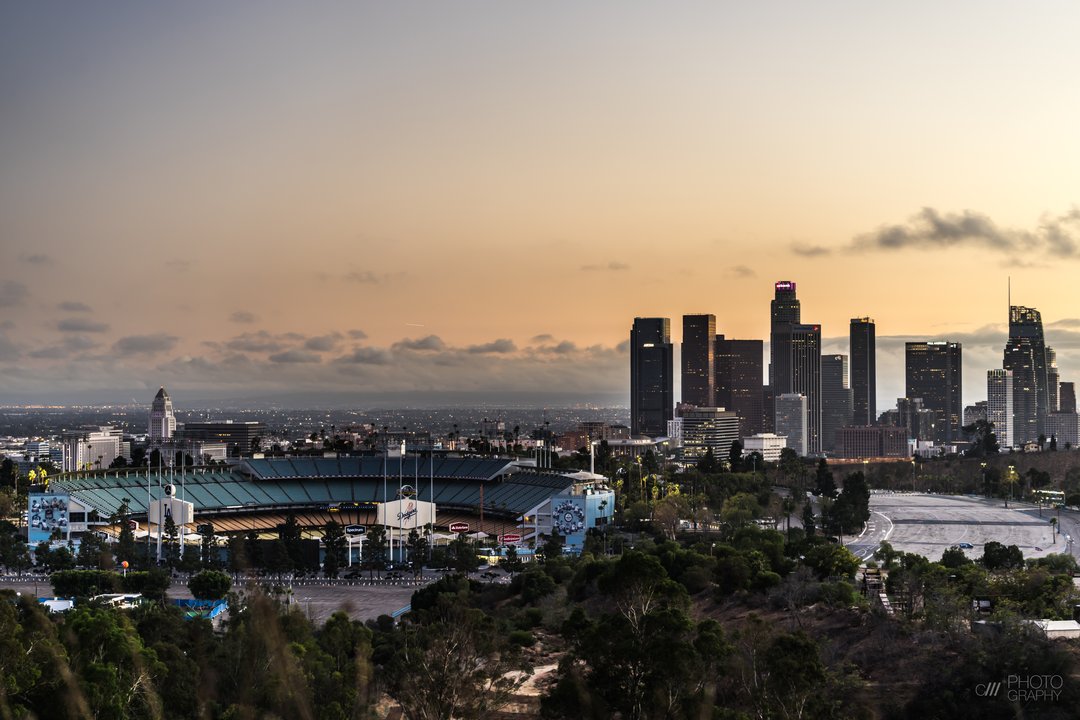
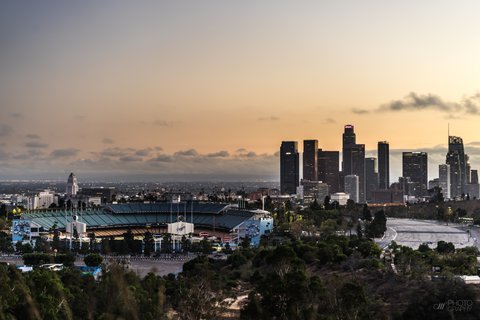
Dodger Stadium opened on 10 April 1962, built for $23 million, the first privately financed major-league ballpark since Yankee Stadium. Crews levelled the ridge between two ravines and filled them in, burying Palo Verde Elementary School under the grading. Descendants have been campaigning for years for an apology and reparations from the city and the club.
Coordinates are Dodger Stadium, from OpenStreetMap.
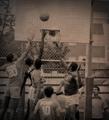
Cover: Dodger Stadium in the hills above downtown Los Angeles, photographed by Cody Williams, 2016, CC BY-SA 4.0, via Wikimedia Commons. Second image: the forcible eviction at Chavez Ravine, 1959, photographer unknown, public domain via Calisphere and Wikimedia Commons. It is the only photograph of the clearances available under a free licence, and it is small; the fuller photographic record sits in the Los Angeles Public Library, USC and UCLA collections and is not freely licensed.





































 expand_more