- Home
- Technology History | Computers People Could Actually Use | Business Machines, Timesharing and the First Personal Computers
- Technology History | 3333 Coyote Hill Road — Hundreds Were Built and None Were Sold
Technology History | 3333 Coyote Hill Road — Hundreds Were Built and None Were Sold
· 1973-5
Personal memoryBy kevin · · Report an issue
Find memories left by people near you.

Distribute Bounty
This will distribute the bounty equally among all qualifying memories. This action cannot be undone.
Cancel Bounty
Are you sure you want to cancel this bounty? The remaining amount will be refunded to your account.
Success!
Operation completed successfully.
Error
Something went wrong.
Technology History | 3333 Coyote Hill Road — Hundreds Were Built and None Were Sold
kevin
Xerox opened this research centre in 1970, and by the spring of 1973 the machine it is remembered for was running.
The Alto put its screen on end like a sheet of paper, 606 by 808 pixels of bitmap, and gave it a three-button mouse and a removable disc cartridge holding 2.5 megabytes.
Butler Lampson had asked for it in a memo of December 1972 headed "Why Alto?", proposing ten to thirty units.
On 22 May 1973 Robert Metcalfe typed a memo in this building describing an ether network, the scheme that let those machines share one cable and detect each other's collisions on it.
Metcalfe and David Boggs published the design in Communications of the ACM in July 1976, the patent issued in December 1977 with Charles Thacker and Lampson added as inventors, and the standard became IEEE 802.3 in 1983.
Hundreds of Altos were built. They spread through this centre, through Xerox, out to a few universities and as far as the White House, and none of them was ever offered for sale.
Laser printing is usually filed here too, and the filing is slightly off. Gary Starkweather built his first version at Xerox's research centre in Webster, New York, and was moved to Palo Alto in 1971 because his own division would not back the idea.
A working prototype followed in 1972 and the product in 1977, which is a decade between the invention and the invoice.
The commercial answer to the Alto came in 1981 as the Xerox 8010 Star, at over sixteen thousand dollars for a workstation and up to a hundred thousand for an office fitted out with them. It did not sell either.
Metcalfe had already gone, leaving in 1979 to found 3Com and sell the network instead of the machine.
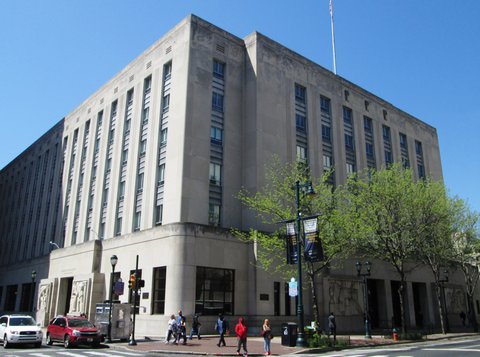
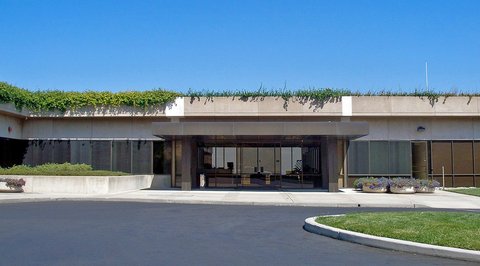
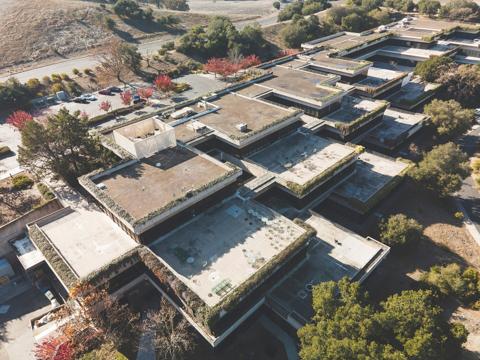
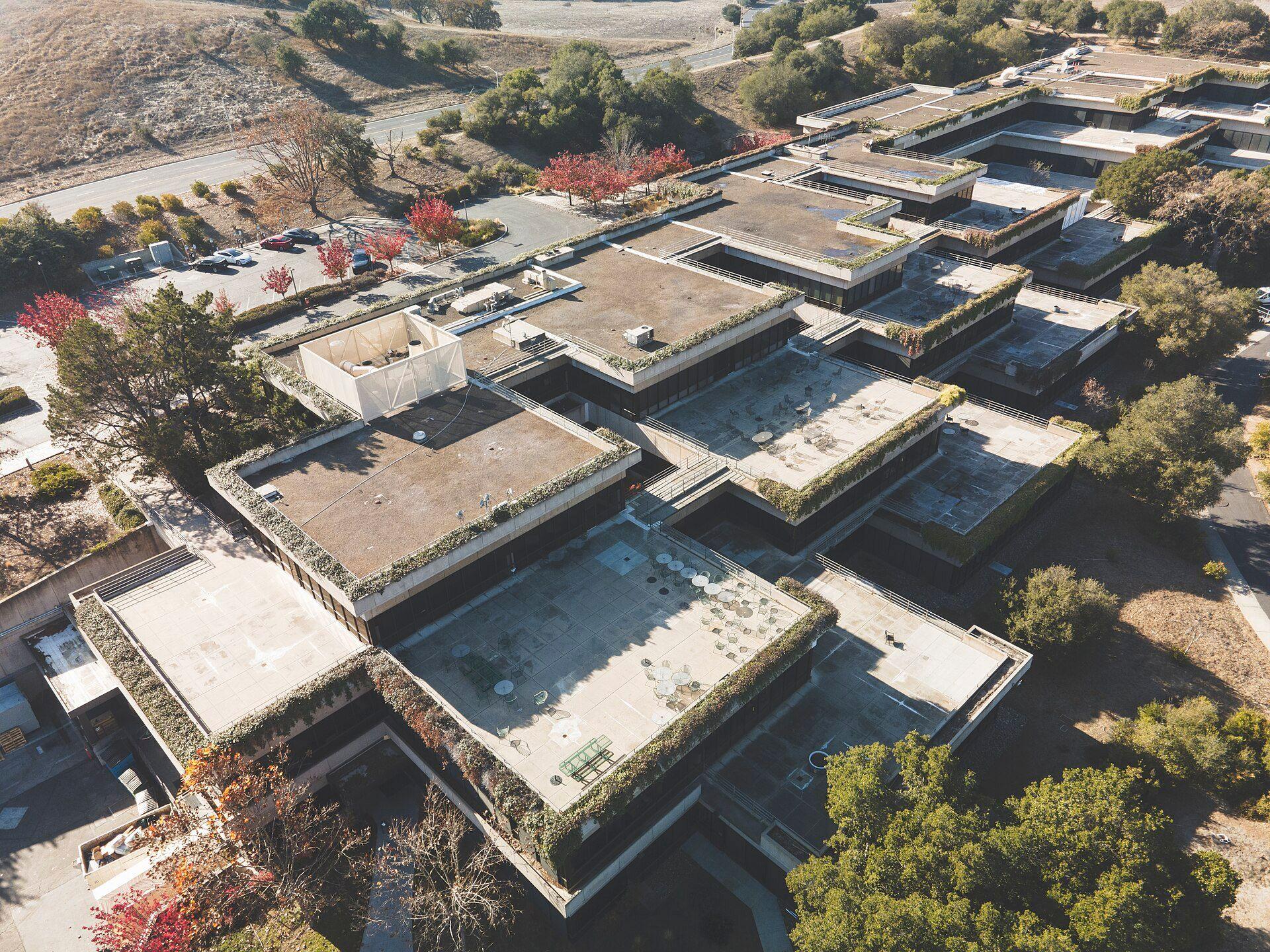
The building in the photograph is the one the memos were written in, a terraced concrete complex cut into Coyote Hill. PARC has been run by SRI International since 2023.
Photo: Christopher Michel, CC BY-SA 4.0, via Wikimedia Commons
changes?
delete this memory?
We detected that you have a Blox in your crypto wallet! We will import the Blox into your account.
Click on done below to complete the import.
Welcome Back!
Sign in to preserve cherished moments
Don't have an account?
Welcome!!
Sign up and start preserving cherished moments
?
?
Choose your payment method
Buy with Metablox Credit
Do you want to mint Blox with Metablox Credit?
Which Crypto would you like to use?
Purchase Confirmed!
Your Blox is being minted on-chain and will appear in your profile shortly.
Log in or sign up to claim your Blox.
How many credits do you want to buy?
$100 USD = 1 Metablox Credit = 1 Blox.
Use Metablox Credit to mint any Blox you want on the map.
expand_more