- Home
- Technology History | Computers People Could Actually Use | Business Machines, Timesharing and the First Personal Computers
- Technology History | 3333 Coyote Hill Road — The Office Park Where the Desktop Was Assembled
Technology History | 3333 Coyote Hill Road — The Office Park Where the Desktop Was Assembled
· 1973-3
Personal memoryBy kevin · · updated · Report an issue
Find memories left by people near you.
Distribute Bounty
This will distribute the bounty equally among all qualifying memories. This action cannot be undone.
Cancel Bounty
Are you sure you want to cancel this bounty? The remaining amount will be refunded to your account.
Success!
Operation completed successfully.
Error
Something went wrong.
Technology History | 3333 Coyote Hill Road — The Office Park Where the Desktop Was Assembled
kevin
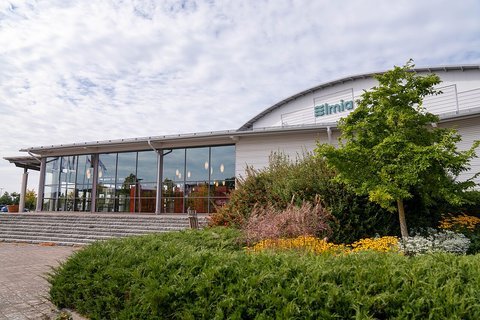
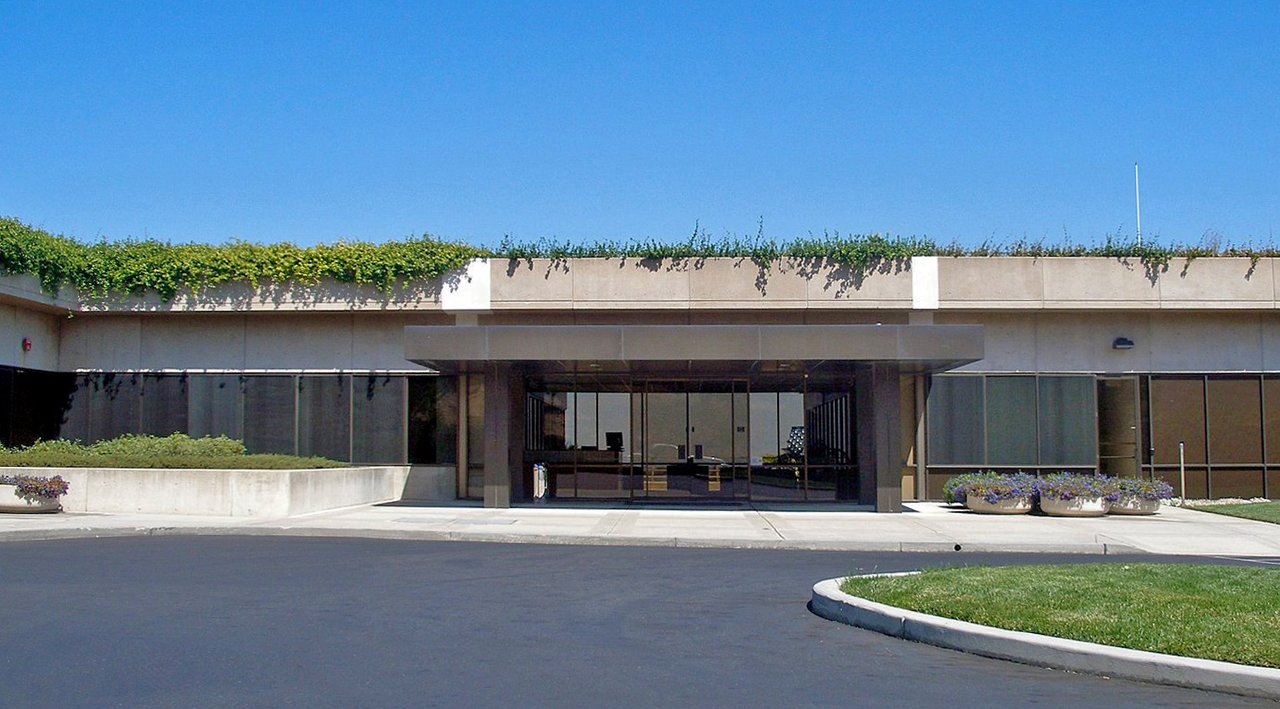
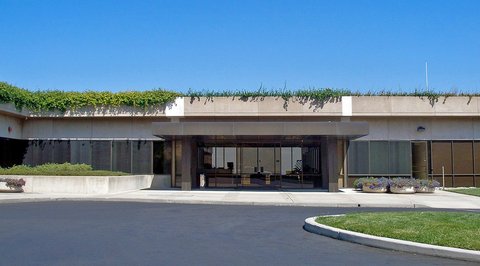
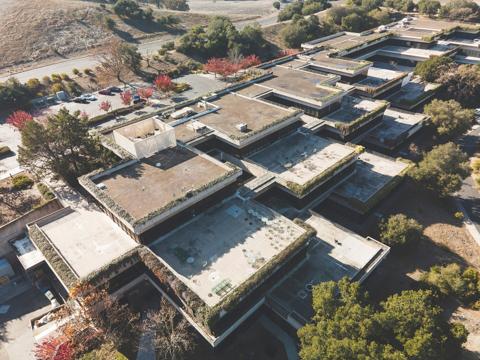
The building is a low concrete block with ivy over the parapet and a glass reception under a canopy, indistinguishable from ten thousand other office parks.
Inside it, the modern desktop was assembled.
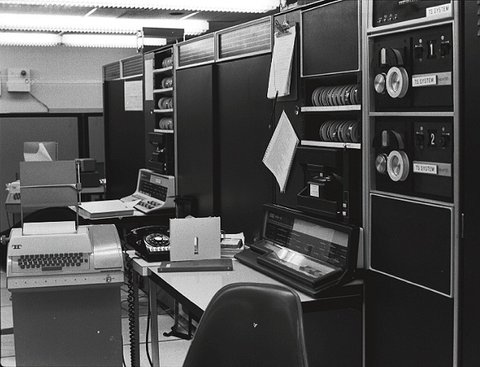
The first Xerox Alto ran here in March 1973, at the Palo Alto Research Center on Coyote Hill Road.
Butler Lampson had written the memo arguing for it the previous December, under the title "Why Alto?", proposing that Xerox build ten to thirty of them.
Chuck Thacker led the design, with Lampson, Ed McCreight, Bob Sproull, David Boggs and others on the hardware and software.
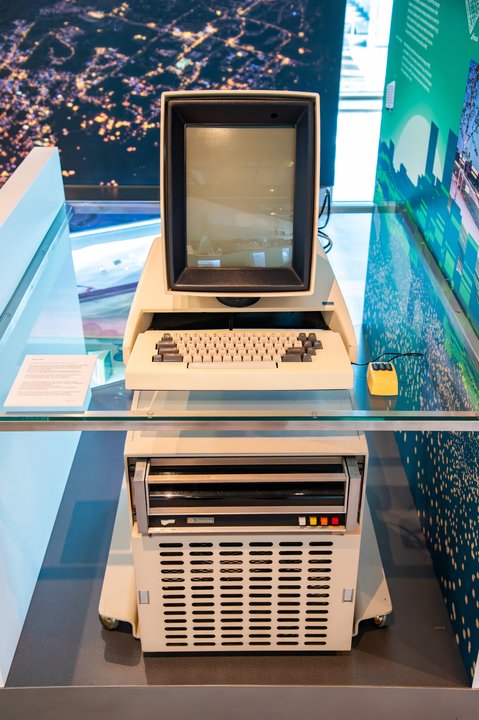
What they built had a bitmapped display of 606 by 808 pixels, mounted in portrait orientation because it was meant to hold a page rather than a spreadsheet.
It had a three-button mouse, a five-key chord keyset, a removable 2.5-megabyte disk cartridge, and eventually overlapping windows, menus, icons, a text editor that showed you the printed page, and Ethernet.
Bob Metcalfe worked out that last part the same year with Boggs, Thacker and Lampson, which meant the Altos could talk to each other and to a laser printer.
Britannica calls the Alto the first personal computer, and that needs a qualifier.
It was never a product. Roughly 120 Alto Is were built, then around 2,000 Alto IIs, and they went to Xerox sites and selected universities rather than to shops — so the machines people could actually buy came later and were far less capable.
The recognition arrived slowly. Thacker, Alan Kay, Lampson and Robert Taylor took the Draper Prize in 2004, and Thacker's Turing Award was announced in 2010.
The Computer History Museum published the Alto's source code in 2014, which is why a machine from 1973 can be run in emulation today.
PARC has been part of SRI International since 2023.
The IEEE milestone plaque for the Alto is inside, on the back wall of the innovation museum near reception, so seeing it means getting past the front desk rather than reading it from the road.

A second plaque for the same milestone sits at the Computer History Museum in Mountain View, which is the easier one to visit.
Photos: the Coyote Hill Road entrance, and an Alto on museum display — the portrait screen and the chord keyset beside the keyboard are the giveaways.
Sources: IEEE ETHW milestone record for the Xerox Alto; English Wikipedia's Alto article and the 1979 Thacker, McCreight, Lampson, Sproull and Boggs technical report; Britannica.
Photos: Coolcaesar, CC BY-SA 3.0, and Bc4040, CC BY 4.0, both via Wikimedia Commons.
changes?
delete this memory?
We detected that you have a Blox in your crypto wallet! We will import the Blox into your account.
Click on done below to complete the import.
Welcome Back!
Sign in to preserve cherished moments
Don't have an account?
Welcome!!
Sign up and start preserving cherished moments
?
?
Choose your payment method
Buy with Metablox Credit
Do you want to mint Blox with Metablox Credit?
Which Crypto would you like to use?
Purchase Confirmed!
Your Blox is being minted on-chain and will appear in your profile shortly.
Log in or sign up to claim your Blox.
How many credits do you want to buy?
$100 USD = 1 Metablox Credit = 1 Blox.
Use Metablox Credit to mint any Blox you want on the map.
expand_more