
- Home
- Technology History | Consumer Electronics | Tokyo
- Technology History | 和光, 銀座四丁目 — The Watch That Cost as Much as a Car
Technology History | 和光, 銀座四丁目 — The Watch That Cost as Much as a Car
· 1969-12
Personal memoryBy kevin · · Report an issue
Find memories left by people near you.
Distribute Bounty
This will distribute the bounty equally among all qualifying memories. This action cannot be undone.
Cancel Bounty
Are you sure you want to cancel this bounty? The remaining amount will be refunded to your account.
Success!
Operation completed successfully.
Error
Something went wrong.
Technology History | 和光, 銀座四丁目 — The Watch That Cost as Much as a Car
kevin
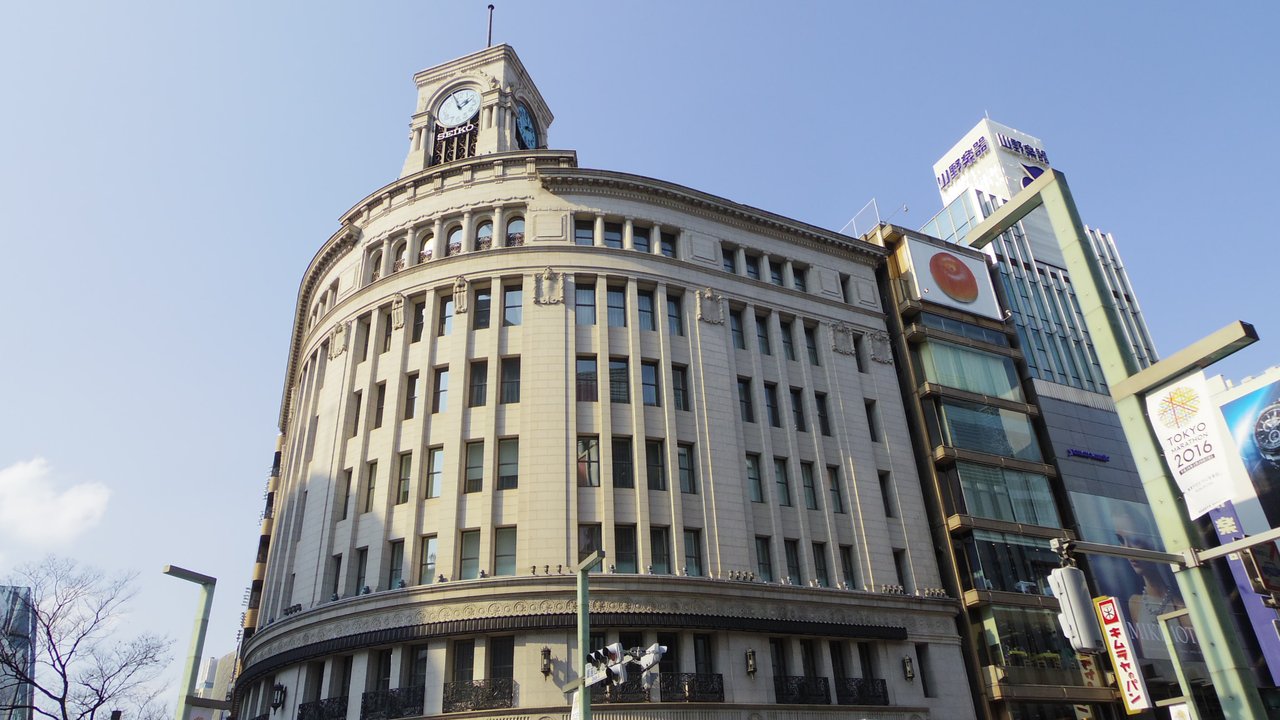
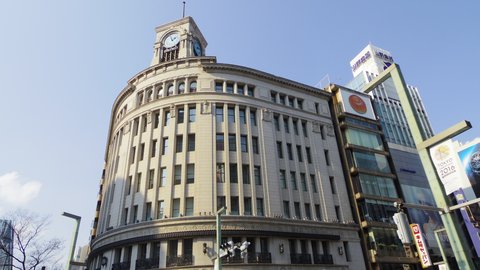
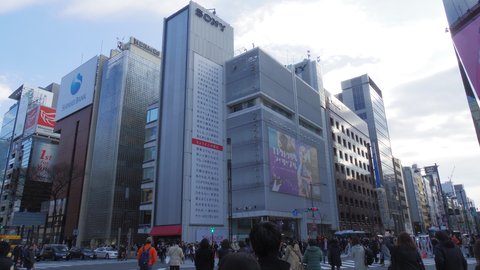
On Christmas Day 1969 a shop on this corner put a wristwatch in the case at ¥450,000.
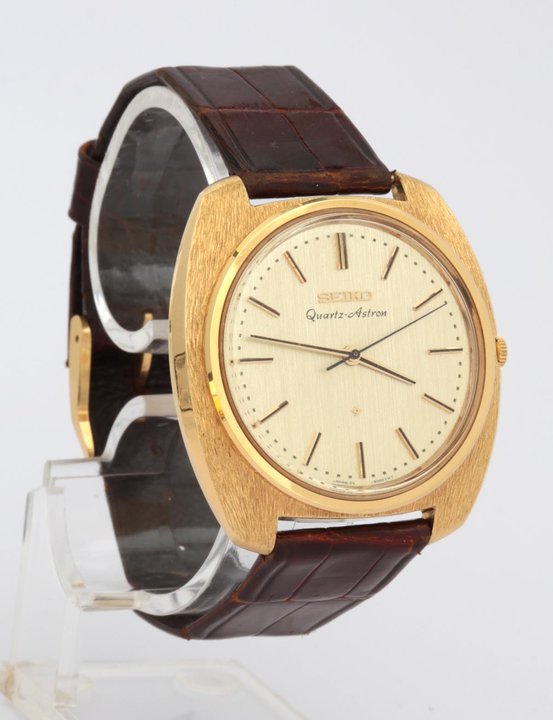
服部時計店, the Ginza store that trades today as 和光, is where Seiko sold the クオーツアストロン 35SQ.
The price was roughly what a mass-market Japanese car cost that year.
What it bought was accuracy of ±5 seconds a month, about a hundred times better than a good mechanical watch of the period.
Seiko's own wording keeps the qualifier — 世界初の量産型クオーツウオッチ, the first mass-produced quartz wristwatch — because a Swiss consortium was developing a rival quartz movement on nearly the same schedule.
The edition was small. The Deutsches Uhrenmuseum, which holds one, records a hundred sold that Christmas.
Inside was a compromise nobody planned. 諏訪精工舎 could not finish its own CMOS integrated circuit in time, so skilled workers hand-soldered a hybrid circuit onto a ceramic substrate a quarter of a millimetre thick: 76 transistors among 189 components.
The oscillator ran at 8,192 Hz, and a stepping motor advanced the second hand once per second, which is why quartz watches tick the way they do.
Then Seiko published the key patents instead of holding them.
That is the reason Seiko itself gives for how quickly analogue quartz spread afterwards.

The watch was recognised as an IEEE Milestone in 2004 and registered by Japan's National Museum of Nature and Science as 重要科学技術史資料 in 2018.
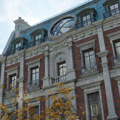
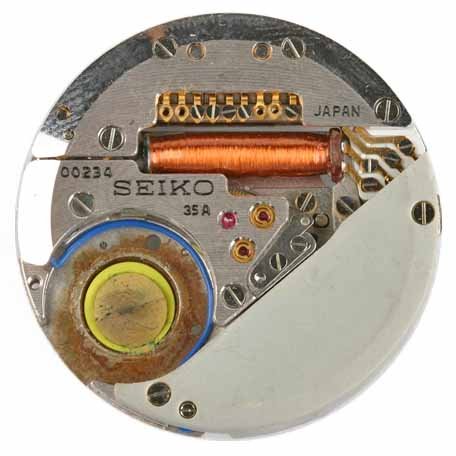
The shop is still under the clock tower at the 銀座四丁目 crossing and still sells watches. The Astron in the second photograph is not there; it is in the Deutsches Uhrenmuseum at Furtwangen, and the third photograph is its movement.
---
1969年12月25日、この角の店のケースに、45万円の腕時計が並んだ。
服部時計店——いまの和光——が、セイコー「クオーツアストロン 35SQ」を売り出した場所である。
45万円は、その年の大衆車が買えるくらいの額だった。
その代わりに手に入るのは精度だった。月差±5秒、当時の良質な機械式のおよそ100倍にあたる。
セイコー自身の表記は限定詞を落としていない。「世界初の量産型クオーツウオッチ」——スイスの共同研究機関がほぼ同じ時期に対抗するクオーツムーブメントを開発していたからである。
数は少なかった。実物を所蔵するドイツ時計博物館は、この年のクリスマスに売れたのは100本と記録している。
中身は、狙って生まれたわけではない妥協の産物だ。諏訪精工舎は自社のCMOS ICを間に合わせられず、厚さ0.25ミリのセラミック基板に熟練工が手作業でハイブリッド回路を半田づけした。トランジスタ76個を含む189個の素子である。
水晶振動子は8,192Hz。ステップモータが秒針を1秒に1回動かす。クオーツの秒針があの動き方をするのはこのためだ。
そしてセイコーは、鍵となる特許を抱え込まず公開した。
その後アナログクオーツが一気に広まった理由として、セイコー自身が挙げているのがこの判断である。
この時計は2004年にIEEEマイルストーンに認定され、2018年には国立科学博物館の重要科学技術史資料(未来技術遺産)に登録された。
店はいまも銀座四丁目交差点の時計塔の下にあり、いまも時計を売っている。二枚目の写真のアストロンはそこにはない。フルトヴァンゲンのドイツ時計博物館にあり、三枚目はその機械(キャリバー)である。
Photo: ITA-ATU, CC BY-SA 4.0, via Wikimedia Commons. Second image: Deutsches-uhrenmuseum, CC BY-SA 4.0. Third image: Museumsfoto, CC BY 3.0 de.
changes?
delete this memory?
We detected that you have a Blox in your crypto wallet! We will import the Blox into your account.
Click on done below to complete the import.
Welcome Back!
Sign in to preserve cherished moments
Don't have an account?
Welcome!!
Sign up and start preserving cherished moments
?
?
Choose your payment method
Buy with Metablox Credit
Do you want to mint Blox with Metablox Credit?
Which Crypto would you like to use?
Purchase Confirmed!
Your Blox is being minted on-chain and will appear in your profile shortly.
Log in or sign up to claim your Blox.
How many credits do you want to buy?
$100 USD = 1 Metablox Credit = 1 Blox.
Use Metablox Credit to mint any Blox you want on the map.
expand_more