NPB History | Utsunomiya Permanent Stadium Site — The Last Defeat That Built a League
volume_up
Listen
directions
Directions
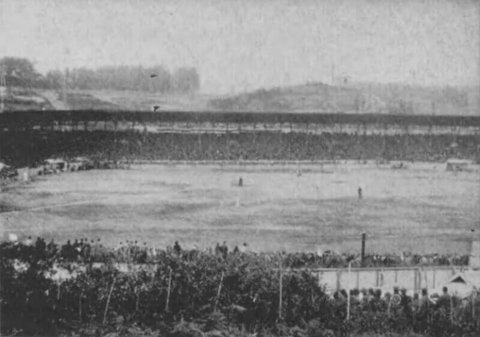
The temperature bottomed out at three below on the morning of 1 December 1934, and people began queuing at the ballpark before six. By the two o'clock start there were twenty thousand of them. Out in the cheap seats some spectators set fire to the outfield grass and watched the game round a bonfire while the cold north wind came down off Nikkō.
This was the sixteenth and final game of the American tour of Japan, and the all-Japan side had lost the first fifteen.
Utsunomiya Permanent Stadium had been built two years earlier by Ono Haruyoshi, chairman of the city's baseball association, who rallied his friends and took on heavy debt to do it. The argument was simple civic pride: Gunma next door had a ballpark, so Tochigi ought to have a better one. Fences and stands alike were built from Ōya stone, the pale volcanic tuff quarried locally, and the ground held twenty thousand. For a provincial city in 1932 it was one of the finest ballparks in Japan.
The visitors did not treat the last game as work. NPB's own account, drawing on the Tochigi edition of the Yomiuri published the following day, records that the Americans drank at lunch; that Babe Ruth, delighted by geisha waving both flags, seized handfuls of five-yen notes and fifty-sen coins and threw them into the stands; that a brazier meant for warming hands was used to heat beer, which at least one player drank off from a teacup. In the top of the first an outfielder in no condition to catch anything dropped a fly from Horio Fumito and Japan went three up.
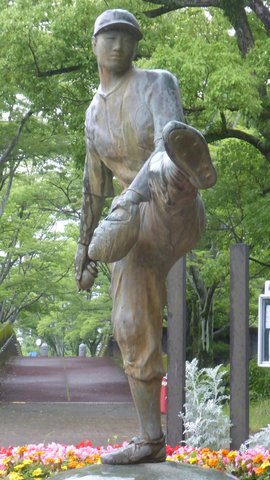
It did not hold. Eiji Sawamura started, eleven days after holding the same batting order to one run at Kusanagi, but his elbow had gone from throwing too many drops. He had no speed and no command: five strikeouts, nine walks, three home runs, nine runs, gone after four innings. Aoshiba Kenichi came in and was hit as well. Japan lost 5–14, and the tour finished nought and sixteen.
The lesson everyone drew was that Japan needed professional clubs. The all-Japan team became the basis of the Dai Nippon Tokyo Baseball Club — the Yomiuri Giants — founded on 26 December 1934, twenty-five days after this defeat. Japanese professional baseball is, in a real sense, the answer to what happened on this field.
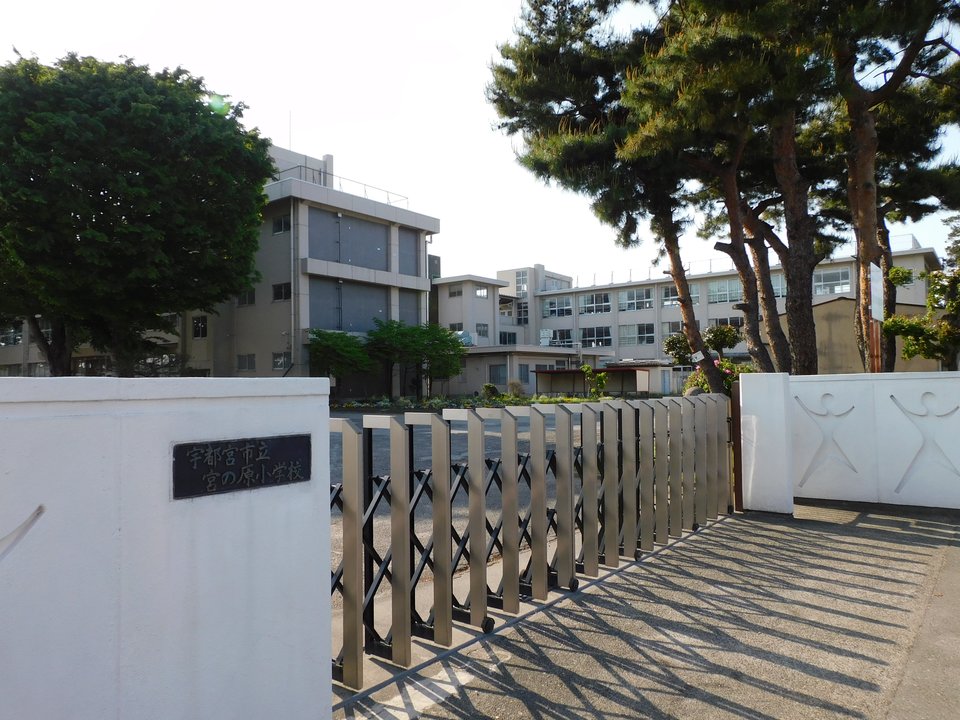
The city bought the ground from the association. In the war it held an anti-aircraft battery and was ploughed for food; afterwards it took amateur baseball and civic sports days until it closed in December 1960. Miyanohara Elementary School opened on the site in April 1970.
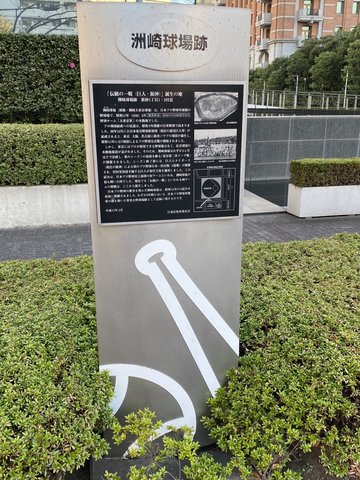
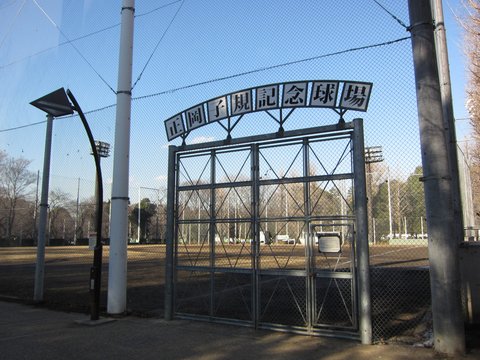
Beside the school's main gate stands a memorial with a baseball 35 centimetres across, carved from the same Ōya stone the ballpark was made of. The city's baseball association and the sports promotion section put it up in the spring of 2004.
View it from the street. This is a working primary school and the monument is at the gate for exactly that reason.
Coordinates 36.542176, 139.873381 — Miyanohara Elementary School; the memorial is beside the main gate. ±60 m, OSM map-verified, pending on-site check.
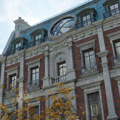
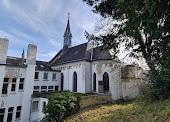
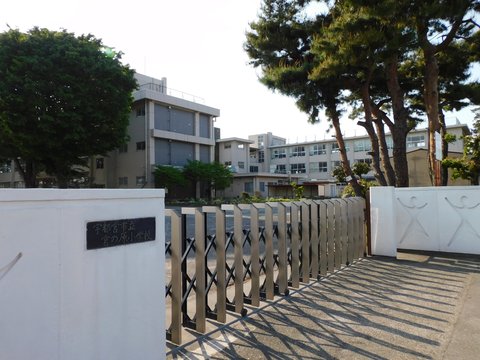
Cover: Miyanohara Elementary School, Utsunomiya, photographed 4 May 2022 by Miyuki Meinaka, CC BY-SA 4.0, via Wikimedia Commons. It shows the school that stands on the ballpark site.





























 expand_more