Finance History | Palazzo San Giorgio, Genoa, 1407 — The Creditors Took Over the Tax Collection
volume_up
Listen
directions
Directions
Genoa's creditors got tired of asking the Republic for their money, so they took over the tax collection themselves.
The Republic had borrowed heavily through the fourteenth century to fight Venice and Pisa, and it borrowed in a particular way. Lending at interest was awkward under canon law, so instead of a loan a subscriber made a compera, literally a purchase: he bought the right to collect a specified state revenue, usually a duty on some commodity, for the term of the debt.
By the early 1400s there were dozens of these arrangements, the Republic could not service them, and the creditors were furious.
In 1407 the whole tangle was consolidated into one institution, the Casa delle compere e dei banchi di San Giorgio. Sources give the founding day variously; the year is not in doubt.
The consolidated debt was divided into shares of 100 units of account called luoghi. They existed only as entries in the Casa's books, they paid roughly 7 per cent from the assigned tax revenues, and they could be sold to somebody else.
That last property is the one that matters. A creditor who needed cash no longer had to wait for the state to repay him; he sold his claim. Consolidating scattered debts into a single transferable security is what makes a government-debt market possible, and Genoa did it here.
The Casa also collected the taxes that serviced the luoghi, and its charters said the assigned duties could not be redirected without the creditors' consent.
Read that twice. A private consortium held the revenues, administered them, and could veto any attempt by the Republic to spend them elsewhere. Machiavelli, writing in the Discourses, treated the Casa as a government of creditors sitting inside the state and observed that it was the more durable of the two.
It behaved accordingly. San Giorgio administered Genoese colonies, kept fleets, and at times minted money.
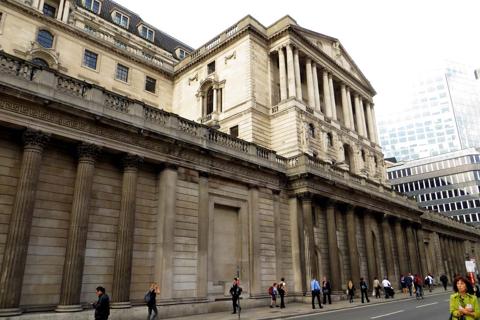
Compare this with the Bank of England, 287 years later. Both turned state debt into tradable shares, but a Bank of England subscriber received a fixed rate agreed with the Crown, while a holder of luoghi received whatever the assigned taxes actually yielded that year. The Genoese creditor took the revenue risk and the collection rights together.
The Casa took deposits from 1408 and had to suspend that side of the business in 1444 for want of capital, resuming only in 1531 with a new bank that dealt in coin.
Napoleon's reorganisation finished it in 1805.
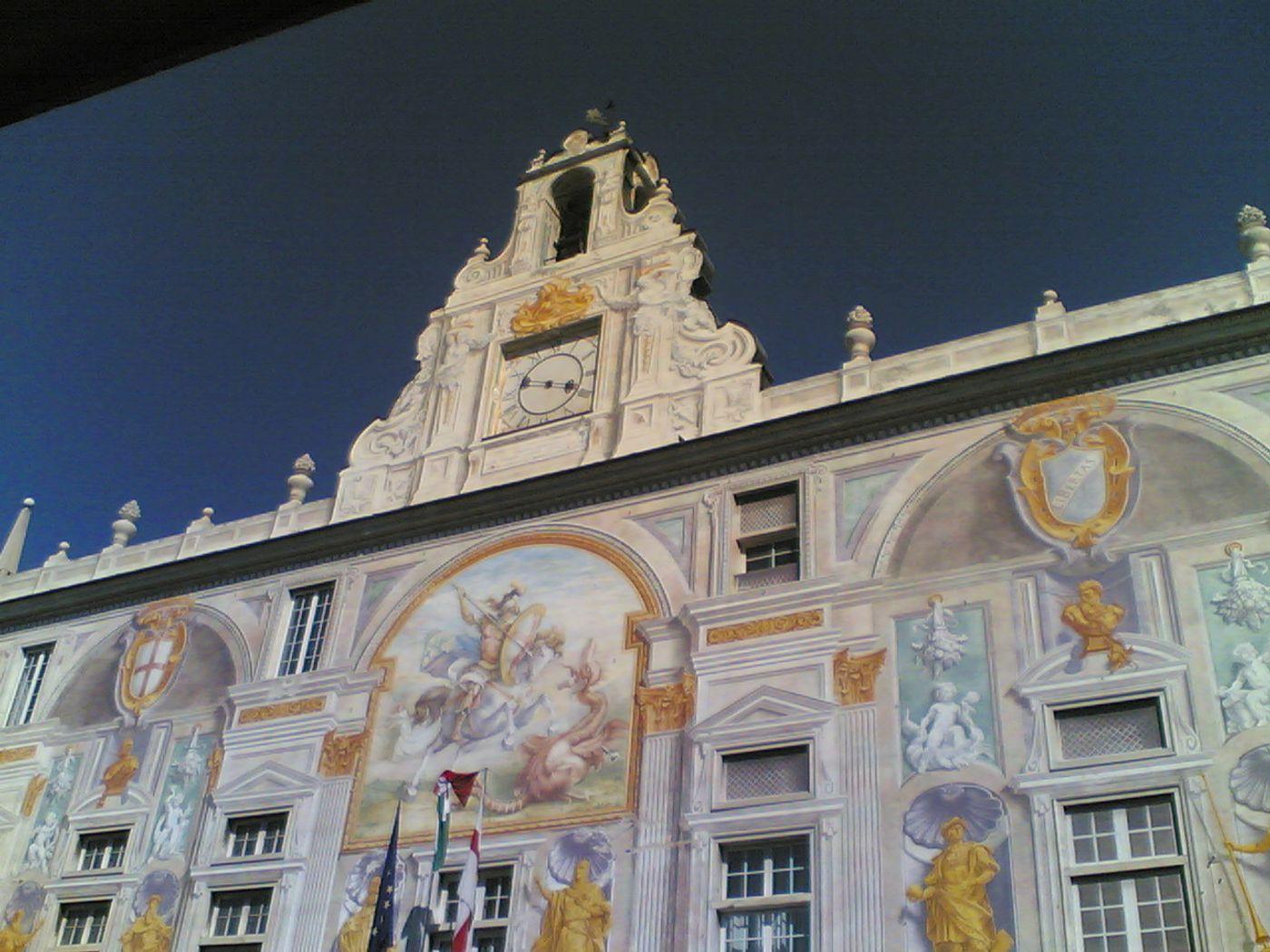
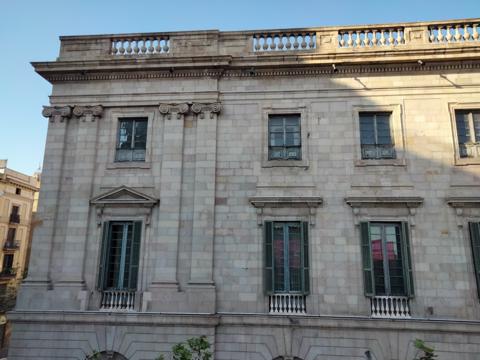
The Palazzo San Giorgio still stands on the harbour front at Piazza Caricamento, its façade frescoed with St George and the dragon.
Cover photo: via Wikimedia Commons.
Coordinates 44.409178, 8.928799, resolved by Nominatim for the Palazzo San Giorgio and agreeing with a cluster of Commons geotags within about 40 m.











 expand_more