Finance History | Carpenters’ Hall, 12 December 1791 — The United States Opened Its First National Bank
volume_up
Listen
directions
Directions
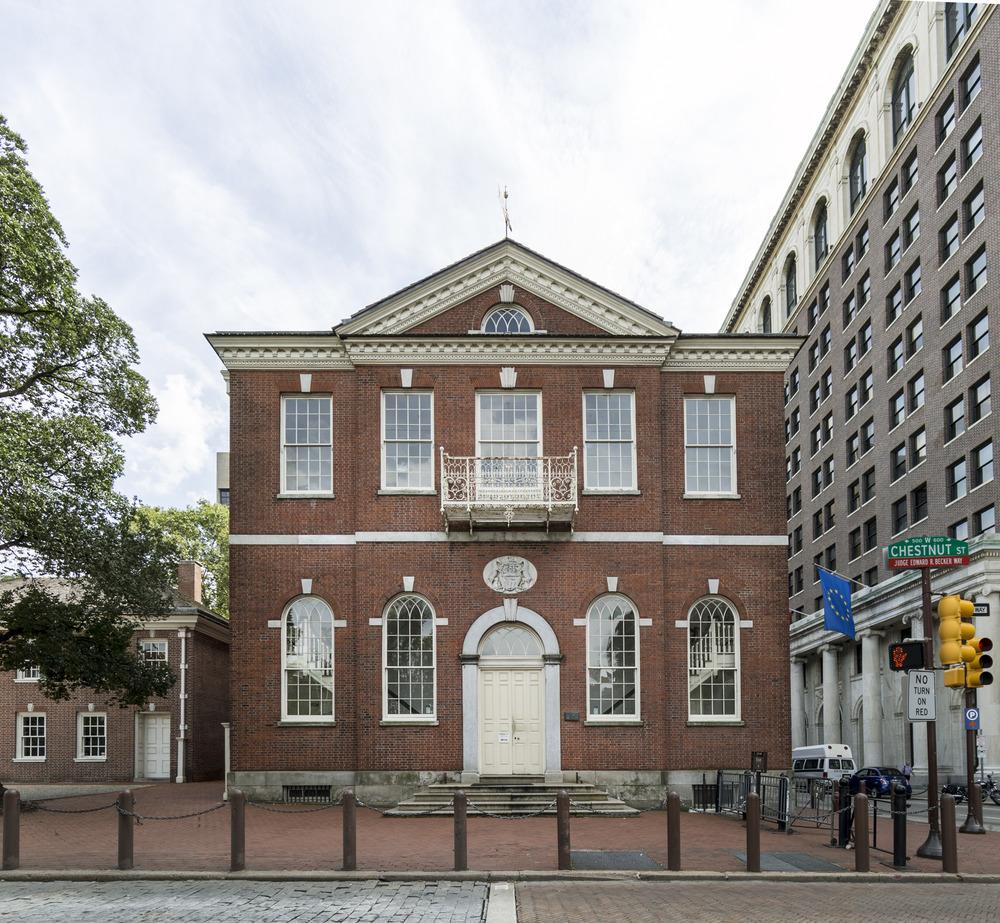
On 12 December 1791, the Bank of the United States opened for business in Carpenters’ Hall, then only a short walk from the federal government’s offices in Philadelphia. The bank began in the hall’s west room before moving into its own building nearby later in the decade.
Alexander Hamilton had proposed the institution as a way to join public credit to commercial banking. The new federal government needed to collect customs revenue, service Revolutionary War debt, transfer money between cities, and borrow when tax receipts did not arrive at the same time as its bills.
The scale was unprecedented in the young republic. The bank was capitalized at $10 million, with $2 million held by the federal government and $8 million subscribed by private investors, making it the country’s largest corporation as well as its largest financial institution.
Private subscribers paid one quarter in gold or silver and three quarters in federal securities. That design converted public debt into part of the bank’s capital base, aligning investors who wanted reliable interest payments with a government trying to establish that its promises would be honored.
The bank accepted deposits, made commercial loans, issued notes redeemable in specie, and acted as the Treasury’s fiscal agent. Its notes circulated more widely than those of most state banks and could be used to pay federal taxes, while branches in port cities helped move customs revenue and finance trade.
It was not a central bank in the modern sense. It did not formally set a policy interest rate, supervise all banks, or guarantee emergency liquidity, but its size and ability to demand specie for state-bank notes gave it influence over the quantity of credit in circulation.
That power was political from the beginning. Thomas Jefferson and James Madison argued that the Constitution did not authorize Congress to create the corporation and feared that concentrated finance would favor merchants and creditors over farmers and debtors.
Congress allowed the twenty-year charter to expire in 1811, yet the opening at Carpenters’ Hall established a durable model: a partly private balance sheet performing public financial work. The exact room survives as evidence that national banking began not in a purpose-built monetary palace, but inside a rented civic hall.
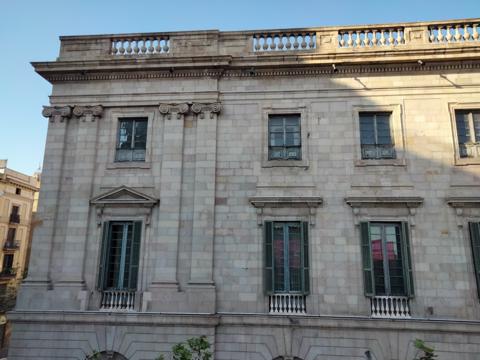
Image: Carpenters’ Hall, National Park Service, public domain.





_thumbnail.jpg)










 expand_more