Finance History | Palazzo Medici Riccardi, Florence, 1397 — A Bank Built So One Branch Could Fail Without the Rest
volume_up
Listen
directions
Directions
Giovanni di Bicci de' Medici had watched two of Florence's greatest banking houses die, and he built his own so that it could lose a limb without losing its life.
The Bardi and the Peruzzi had collapsed in the 1340s. They had lent enormously to Edward III of England, they were single firms, and when the king defaulted there was nothing between the bad debt and the whole enterprise.
Giovanni took over the Rome office of a relative's bank in 1393 and in 1397 separated from it, moving his own operation to Florence with 10,000 gold florins and a partner.
What he built was not one bank. It was a group of legally distinct partnerships, a central firm in Florence with separate partnerships in Rome, Venice, Geneva, Bruges, London and elsewhere, alongside wool and silk workshops.
Each branch had its own capital, its own partners and its own books, and a branch could be cut loose by rearranging the accounts. A disaster in London did not automatically reach Florence.
That structure is why the Medici bank belongs in a finance collection rather than only an art-history one. It is a holding company, several centuries before the phrase existed, and it was invented as a defence rather than as an ambition.
The other half of the business was the papacy. The Medici became bankers to the Roman curia at a moment when the Church was recovering from schism and needed people it could rely on, and the flow of ecclesiastical money through the branches paid for a great deal of what Florence now sells tickets to see.
A correction is due here, because the Medici are routinely credited with things they did not do. Double-entry bookkeeping was in use in Italian ledgers before this bank existed, and bills of exchange were older still. Raymond de Roover, whose 1963 study remains the standard account, credits the Medici with running these instruments better than anyone else, not with inventing them.
The structure that protected them also failed them, because insulation from a branch only works if somebody is watching the branch. The London office lent to English kings through the Wars of the Roses and was owed tens of thousands of florins it never collected; Bruges under Tommaso Portinari lost on the same scale.
Cosimo died in 1464 and the discipline went with him. When Charles VIII of France entered Italy and the Medici were expelled from Florence in 1494, the bank was already failing, and it was liquidated.
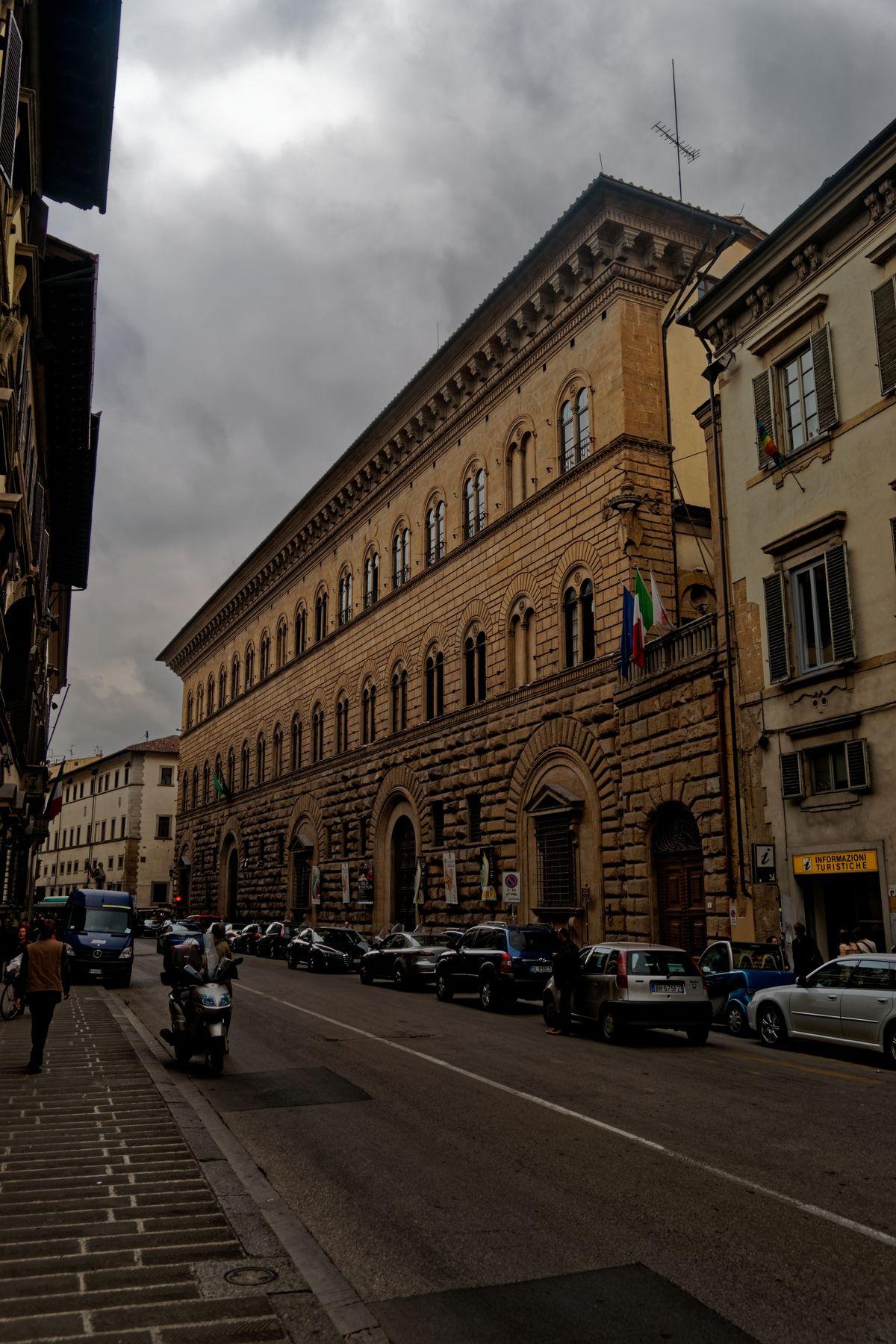
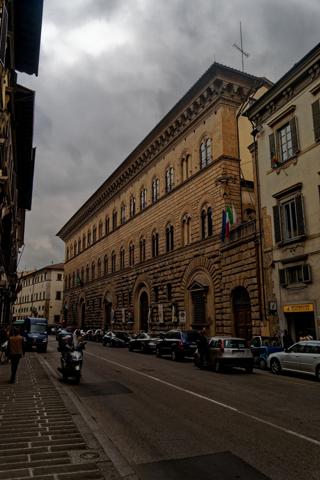
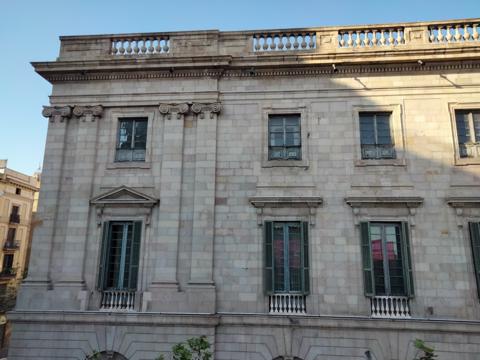
About the building. The bank was founded in 1397; this palace was begun for Cosimo in 1444 to Michelozzo's design, after Brunelleschi's was reportedly rejected as too showy.
So the palazzo postdates the bank by nearly fifty years and was never its counting house. It is the thing the bank paid for, on the street the family ran its Florentine business from, which is a different and more honest claim.
Cover photo: Txllxt TxllxT, CC BY-SA 4.0, via Wikimedia Commons, the rusticated façade seen down Via Cavour, the street called Via Larga when the Medici built here.
Coordinates 43.775267, 11.255661, resolved by Nominatim for the Palazzo Medici Riccardi and matching a cluster of Commons geotags on the building. Accurate to about 25 m.










 expand_more