Finance History | Change Alley, London, 1720 — The Company That Needed Its Own Share Price to Keep Rising
volume_up
Listen
directions
Directions
The South Sea Company's actual business was not trading with South America. It was converting government debt into its own shares, and that is why it needed its share price to keep rising.
The company was founded in 1711 and took on part of the national debt in exchange for a monopoly on British trade with South America. The trade never amounted to much, and much of what there was involved carrying enslaved Africans.
In 1720 the company won the right to convert a large tranche of government debt into its stock. A creditor holding an annuity would hand it over and receive shares in return, at a rate set against the market price.
This is the mechanism, and it is worth reading twice. The higher the share price, the fewer shares the company had to give away for each £100 of debt it absorbed, and the more stock was left over for it to sell.
The company therefore had a direct financial interest in the price of its own shares, and it acted on that interest. It lent money to investors against the security of its own stock, so the demand pushing the price up was substantially demand the company itself had financed.
Shares stood at about £128 in January 1720 and reached roughly £1,000 at the summer peak. By the end of the year they were back near where they had started.
Sources disagree over the exact peak month and the exact December figure, so those round numbers should be read as round.
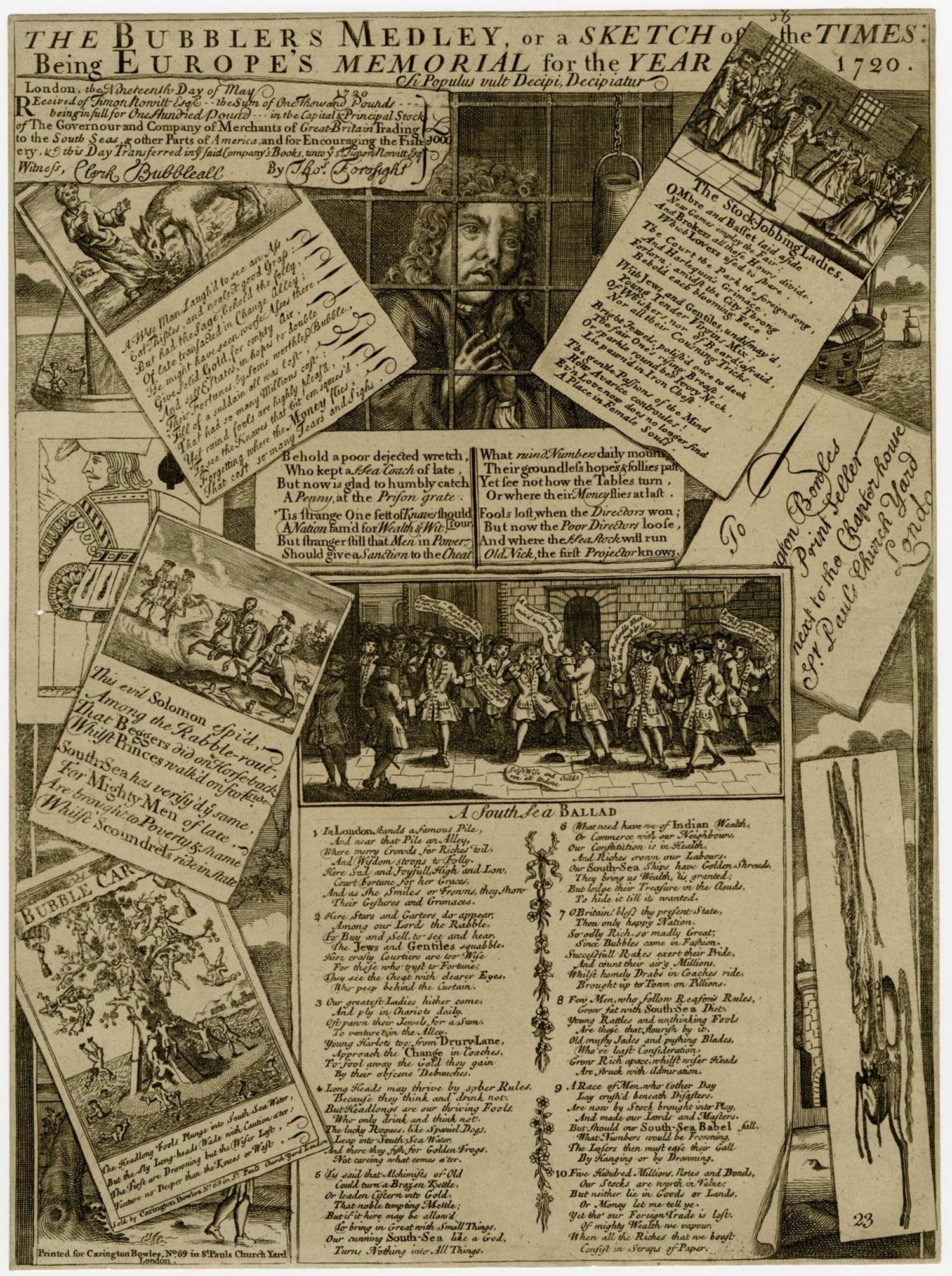
Parliament passed the Bubble Act in June 1720, requiring joint-stock companies to hold a royal charter. It was promoted by the South Sea Company to suppress the rival ventures competing for the same speculative money, and it did nothing to stop what followed.
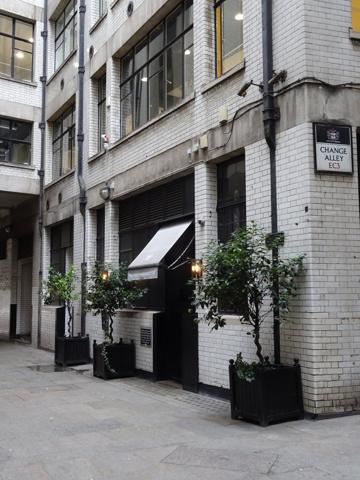
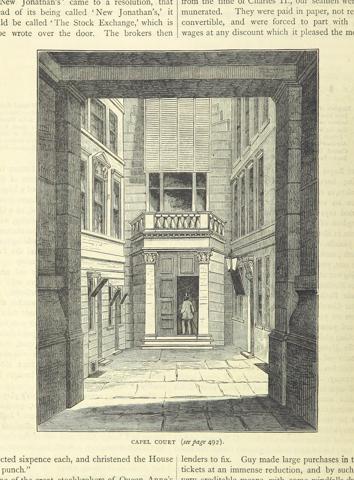
All of this was transacted in these few yards of alley and the coffee houses along it, the same ground where John Castaing had begun printing prices twenty-odd years earlier.
Two famous stories attach here and both need handling. The prospectus for a company carrying on an undertaking of great advantage, with nobody to know what it is, is repeated everywhere but traces largely to Charles Mackay's compilation of 1841, which is a source for what people believed rather than for what happened.
The remark about being able to calculate the motions of heavenly bodies but not the madness of people was reported of Isaac Newton secondhand, decades afterwards, and its wording shifts between retellings. He does appear to have lost heavily.
A parliamentary inquiry followed, and the estates of several directors were confiscated.
Cover image: The Bubblers Medley, or a Sketch of the Times, Being Europe's Memorial for the Year 1720, British Museum, public domain. It is a satirical print, and prints like it are themselves among the main reasons the legends of 1720 have outlived the arithmetic.
Coordinates 51.513042, -0.087298, the same verified point in Change Alley used for the 1698 price-list entry. One place, two moments, twenty-two years apart.










 expand_more