Finance History | New York Stock Exchange, 15 November 1867 — The Stock Ticker Put Prices on a Wire
volume_up
Listen
directions
Directions
On 15 November 1867, Edward A. Calahan’s stock ticker began transmitting last-sale prices from the New York Stock Exchange to a brokerage office. The exchange had moved into its first permanent home on part of the present Broad Street site two years earlier, making this block the source of a new stream of market data.
Before the ticker, messengers carried handwritten quotations from the trading room to nearby offices. That system made proximity valuable and left customers farther from Wall Street working with older prices, especially when trading grew busy.
Calahan adapted printing-telegraph technology so electrical signals turned a type wheel and printed abbreviated security names and prices on a narrow paper strip. Its mechanical sound supplied the name “ticker,” while the limited transmission speed encouraged the compact symbols still used to identify securities.
The machine did not create perfect or universal real-time information. Early tickers were slow, subscriptions cost money, and a surge in transactions could leave the tape running behind the market, but the system replaced repeated human delivery with a continuous standardized feed.
That changed the economics of the exchange. Quotations could reach many offices from one source, brokers could monitor transactions without standing on the floor, and investors outside the immediate Wall Street cluster gained faster evidence of what other participants had just paid.
It also turned price information into a commercial product. Telegraph companies and the exchange could control connections and terms of distribution, so broader access arrived through a new infrastructure gatekeeper rather than through information becoming free.
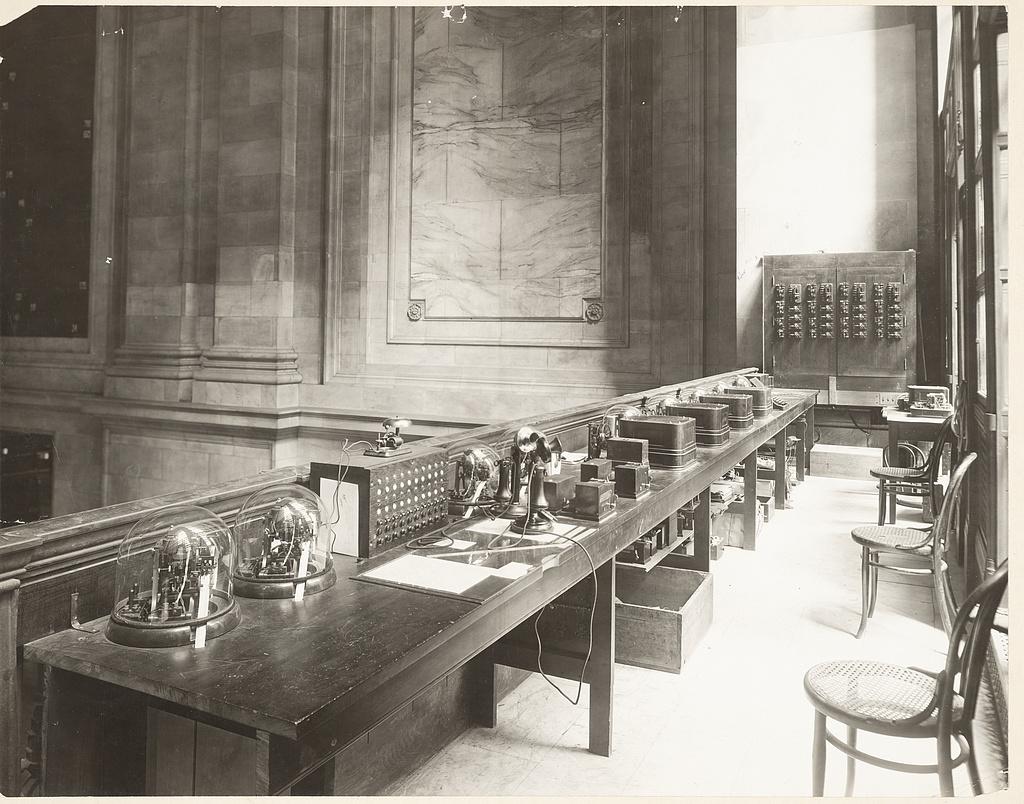
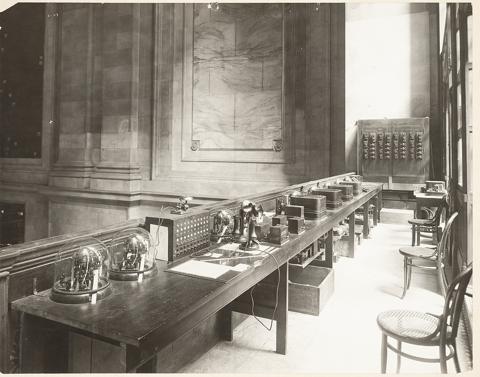
Thomas Edison and other inventors improved the machinery, and the exchange’s ticker system grew into rooms of synchronized equipment. Automation replaced the mechanical tape in December 1966, but electronic market feeds retained its essential structure: standardized identifiers, time-ordered trades, and distribution from a central market to remote users.
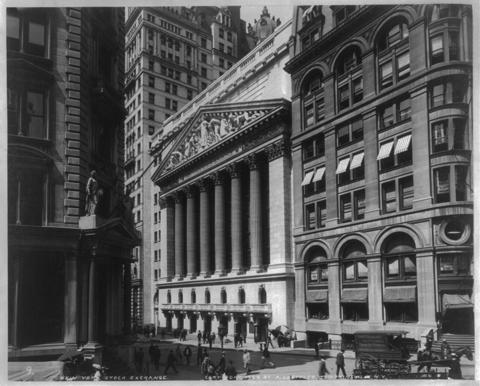
The present NYSE building opened in 1903, after Calahan’s debut, and the photographed control station dates from 1922. Both belong to the same lineage begun on this site in 1867, when a transaction on the floor became data that could travel by wire.
Image: “Automatic ticker apparatus, New York Stock Exchange. Central control station,” 1922, Library of Congress, public domain.










 expand_more