Finance History | New York Stock Exchange, 22 April 1903 — A Trading Floor Became Market Infrastructure
volume_up
Listen
directions
Directions
On 22 April 1903, the New York Stock Exchange dedicated its new George B. Post building on Broad Street. Trading began there the following day, moving the country's leading securities market into a room designed for far greater scale.
The Exchange had outgrown the structure that previously occupied the site. More listed companies, larger trading volumes, and faster communications meant that market capacity now depended on architecture as much as on membership rules.
Post's main room provided more space, natural light, and ventilation than its predecessor. Its high ceiling and broad windows were paired with an industrial cooling system built for a crowded floor where heat, noise, and physical movement could slow price discovery.
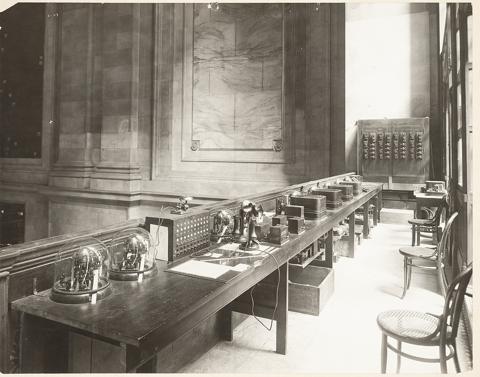
The building also integrated the communication technologies of its era. Tickers, telephones, and pneumatic tubes carried prices, orders, and reports between the floor and offices, turning the exchange into a network rather than a single crowd around trading posts.
Even the opening signal changed with the room. The Exchange replaced its older gong with an electrically operated brass bell loud enough to reach the expanded floor, creating a ritual that later became one of the most recognizable sounds in finance.
These improvements did not make the market transparent or safe by modern standards. Membership remained restricted, information moved unevenly, and the floor still depended on human brokers and specialists who combined formal rules with personal knowledge.
Yet the 1903 building showed that an exchange was becoming infrastructure. Reliable ventilation, communications, sightlines, clocks, posts, and controlled access all helped thousands of separate instructions become a sequence of public prices.
That distinction matters because financial markets are often described as abstractions. On Broad Street, the market had walls, wires, tubes, bells, and a limited amount of floor space, and every one of those physical choices affected how quickly orders could meet.
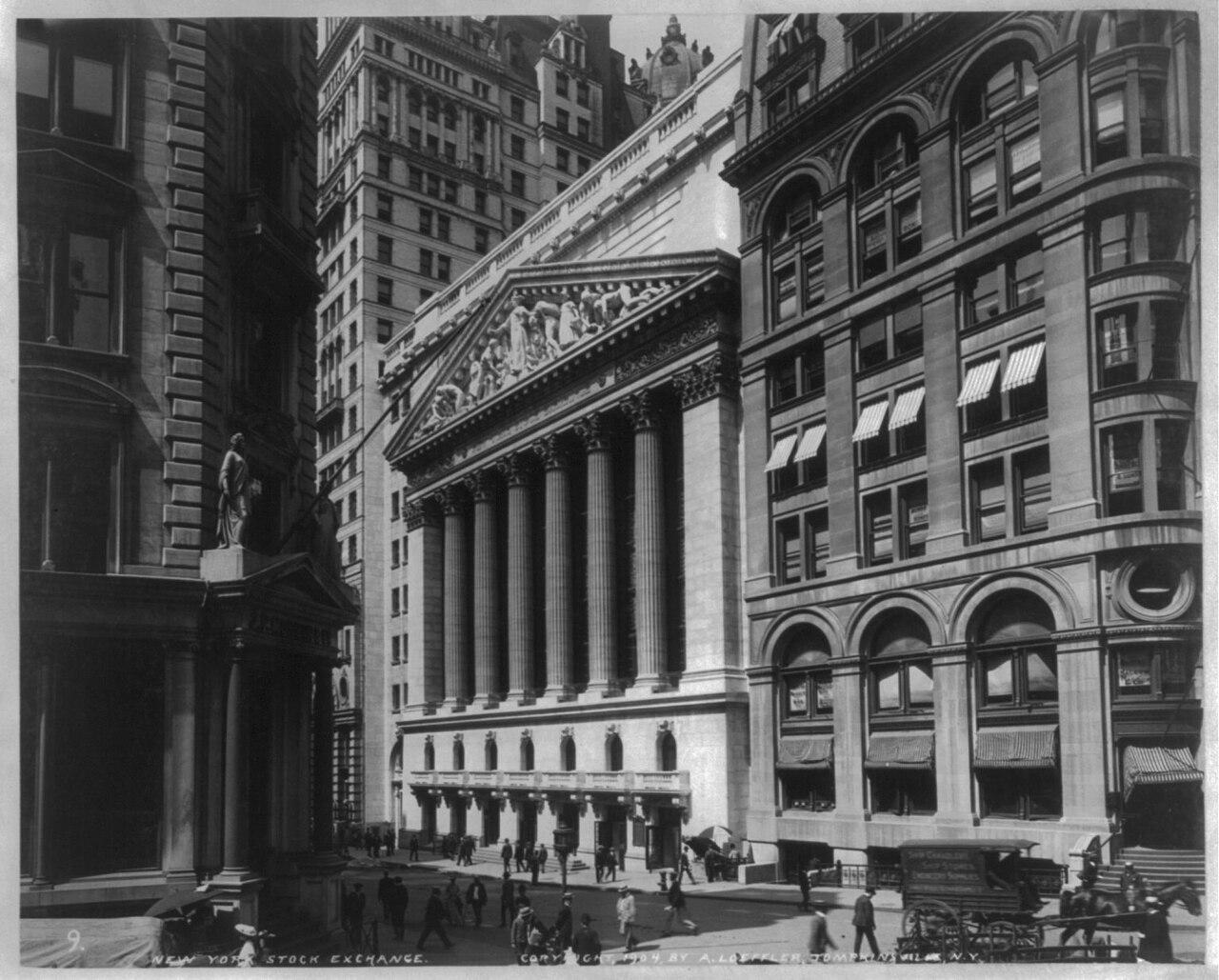
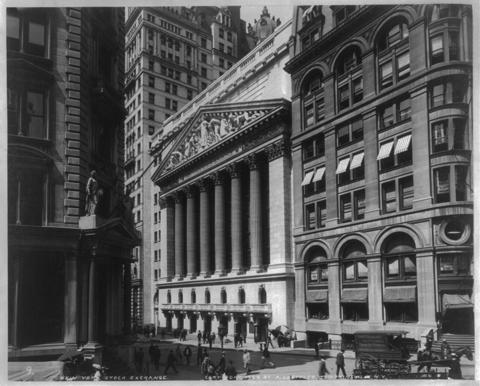
The façade photographed in 1904 still represents Wall Street, but its deeper historical importance lies inside. The building converted a brokers' association into a purpose-built machine for organizing attention, information, and trust at industrial scale.
The accompanying 1904 photograph comes from the Library of Congress and is in the public domain via Wikimedia Commons.







 expand_more