Finance History | Rokin Exchange, 1611 — Amsterdam Gathered Trade Under One Clock
volume_up
Listen
directions
Directions
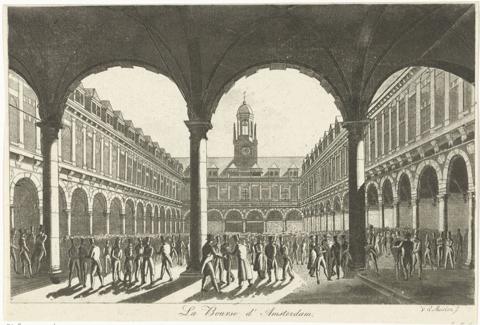
In 1611, Amsterdam opened a new exchange designed by Hendrick de Keyser over the Rokin, giving the city’s merchants a purpose-built setting for a concentrated daily market.
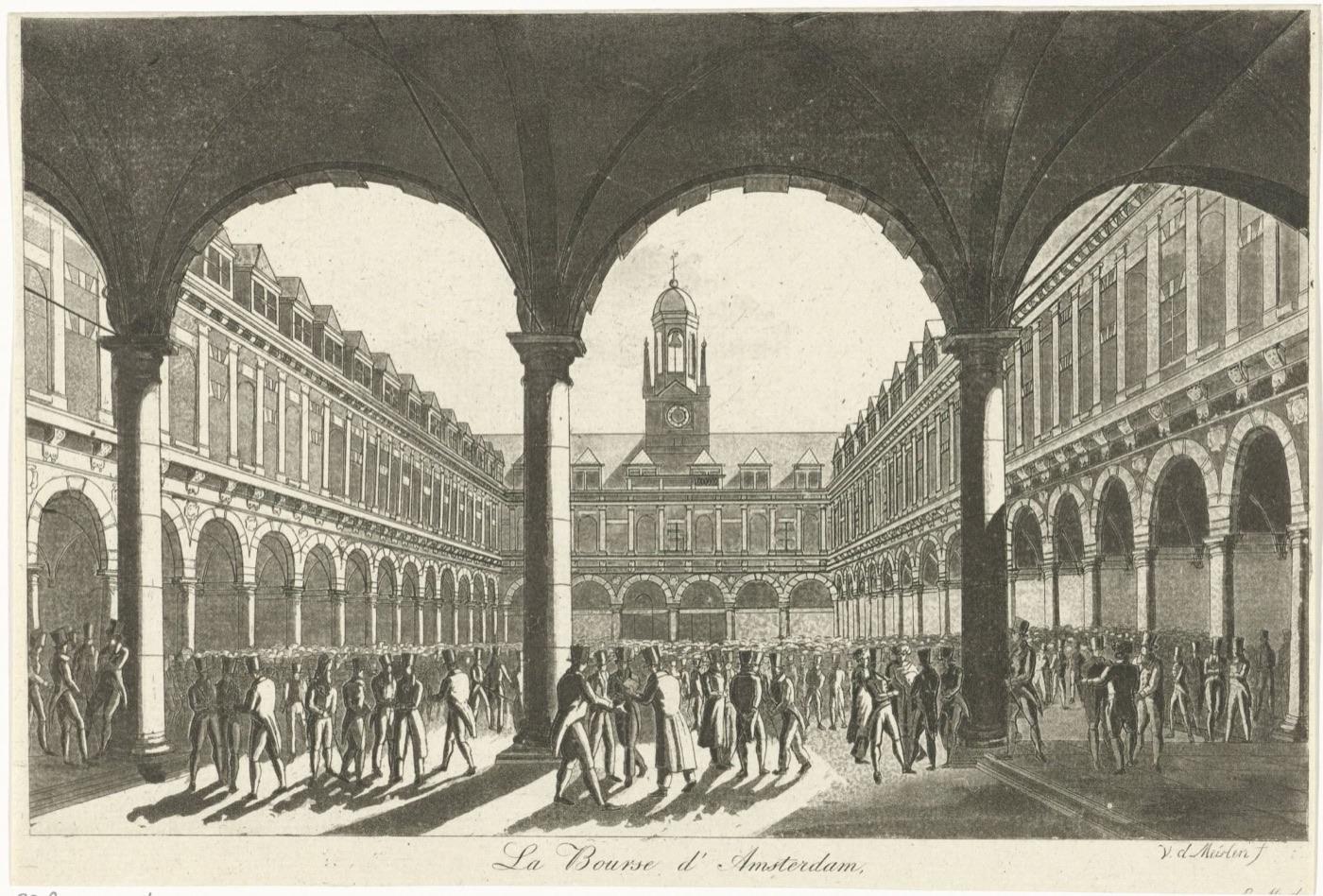
The rectangular courtyard was surrounded by covered galleries whose numbered pillars helped different groups and trades find their customary meeting points.
At the appointed exchange hour, merchants, brokers, shipowners, insurers, and money dealers could gather news and negotiate commodities, freight, bills, credit, and investment claims.
The clock and the courtyard imposed a shared rhythm, creating a brief interval in which a large part of the market became visible in one place.
That concentration lowered search costs because a participant did not need to visit every warehouse, counting house, or inn to discover potential counterparties and current terms.
It also accelerated the social processing of information, as reports from ships and correspondence could be tested against other merchants’ knowledge and reflected in changing offers.
Shares in the Dutch East India Company had already been issued in 1602, before this building opened, and they later traded among the many instruments and contracts associated with Amsterdam’s financial market.
The exchange therefore did not invent the share, but it supplied physical infrastructure for a market that was becoming broader, more continuous, and more specialized.
Its activity included insurance and colonial commerce as well as securities, tying financial innovation to the Dutch Republic’s overseas expansion, monopoly companies, warfare, and exploitation.
Access was also structured by formal rules and social standing, so the apparent openness of the courtyard did not imply equal participation in the wealth or power coordinated there.
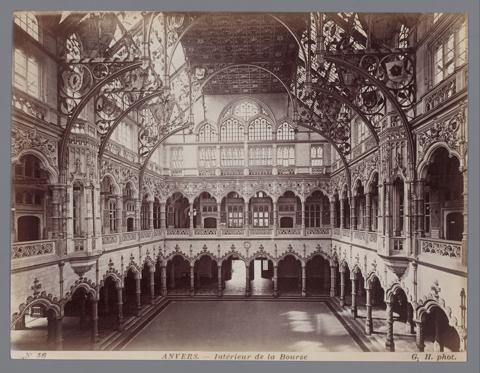
The building influenced later exchange architecture, just as Antwerp’s earlier bourse had helped shape Amsterdam’s model.
De Keyser’s exchange was demolished in 1838 after commercial growth and structural problems made it obsolete, and no original exchange building now stands at this exact point on the Rokin.
The pin marks its vanished footprint, while the historical print preserves the courtyard form that made a dispersed network of trade temporarily behave like a single market under one clock.
Image: Roelof van der Meulen/Rijksmuseum, CC0, via Wikimedia Commons.










 expand_more