Finance History | Change Alley, London, 1698 — The Coffee House Where Prices Were First Printed
volume_up
Listen
directions
Directions
The London Stock Exchange began because brokers were thrown out of somewhere better.
Jonathan Miles opened his coffee house in Change Alley, behind the Royal Exchange, around 1680. By 1694 it was one of a handful of places in the City where a stockbroker could reliably be found and a price obtained.
In 1698 dealers expelled from the Royal Exchange — the standard account gives rowdiness as the reason — moved into Jonathan's and into Garraway's nearby.
A broker named John Castaing, a Huguenot who had come over from France in the 1680s, was already chalking prices on the walls of Jonathan's. He turned that into a printed sheet, The Course of the Exchange, and Other Things, issued twice a week on Tuesdays and Fridays.
That sheet is the thing worth crossing London for. Before it, a price was something you learned by being in the room; after it, a price was a document that could be carried out of the room, dated, cited and compared with last week's.
It carried exchange rates on sixteen European cities, the price of gold, some commodities, and the prices of stocks, bonds and annuities. Courts treated it as authoritative, and it became in time the Stock Exchange Daily Official List.
The start date is genuinely unsettled. The exchange's own history and most standard references give 1698; other accounts put the first issue at 26 March 1697, and no copy from the first year has ever been located, which is the likeliest reason the disagreement has survived.
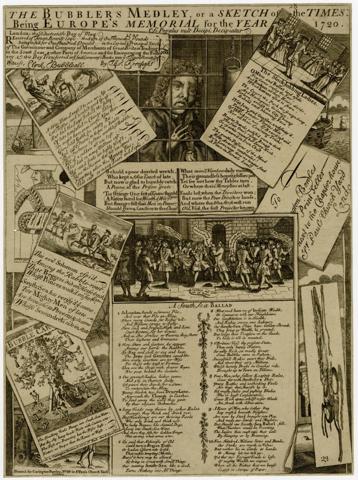
What happened here afterwards is why the alley deserves its plaque. The South Sea Bubble inflated in these few yards in 1720, and the panic of 1745 ran through them.
By 1748 the London securities market was centred on Jonathan's. That year it burned down and was rebuilt.
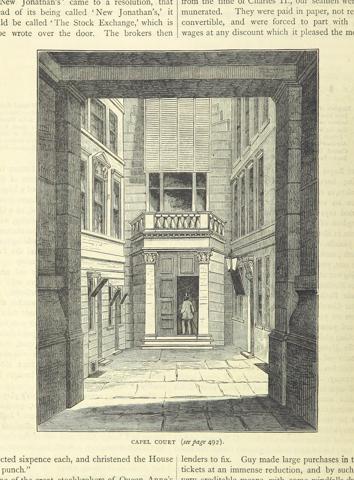
In 1761 a group of about 150 brokers and jobbers formed a club to control who could come in. In 1773 they put up their own building in Sweeting's Alley, along the eastern edge of the Royal Exchange, known as New Jonathan's before it was known as the Stock Exchange.
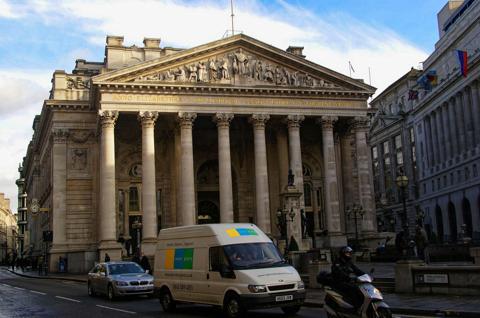
From there the institution moved to Capel Court in 1802, to a tower on Old Broad Street in 1972, and to Paternoster Square in 2004, leaving the neighbourhood of the Royal Exchange after more than three centuries.
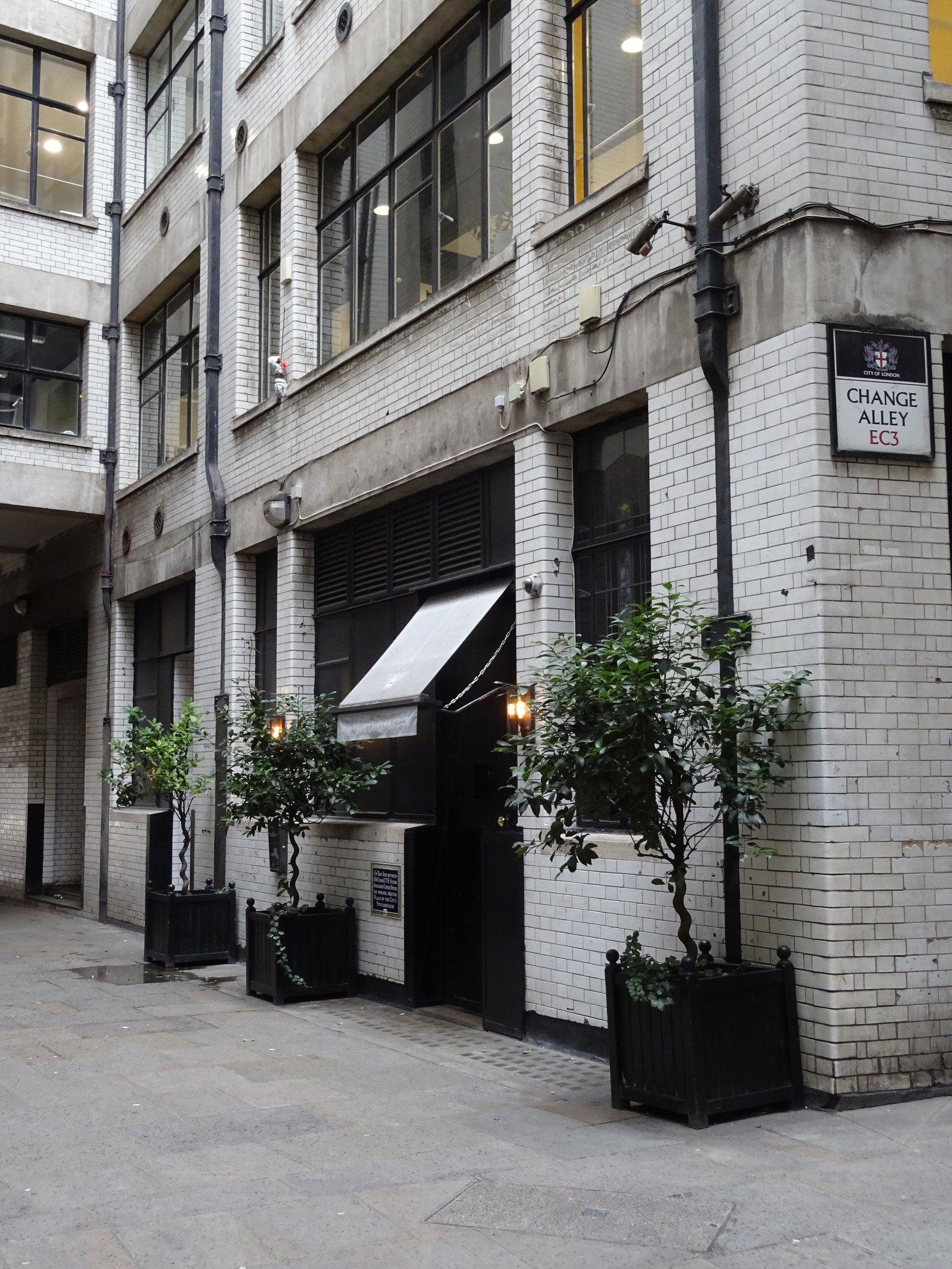
The alley survives as a narrow footway running between Cornhill and Lombard Street, and a plaque on the wall marks the site of the coffee house.
Cover photo: Spudgun67, CC BY-SA 4.0, via Wikimedia Commons, showing the alley, the City of London street sign and the site plaque. Nothing of the coffee house itself remains.
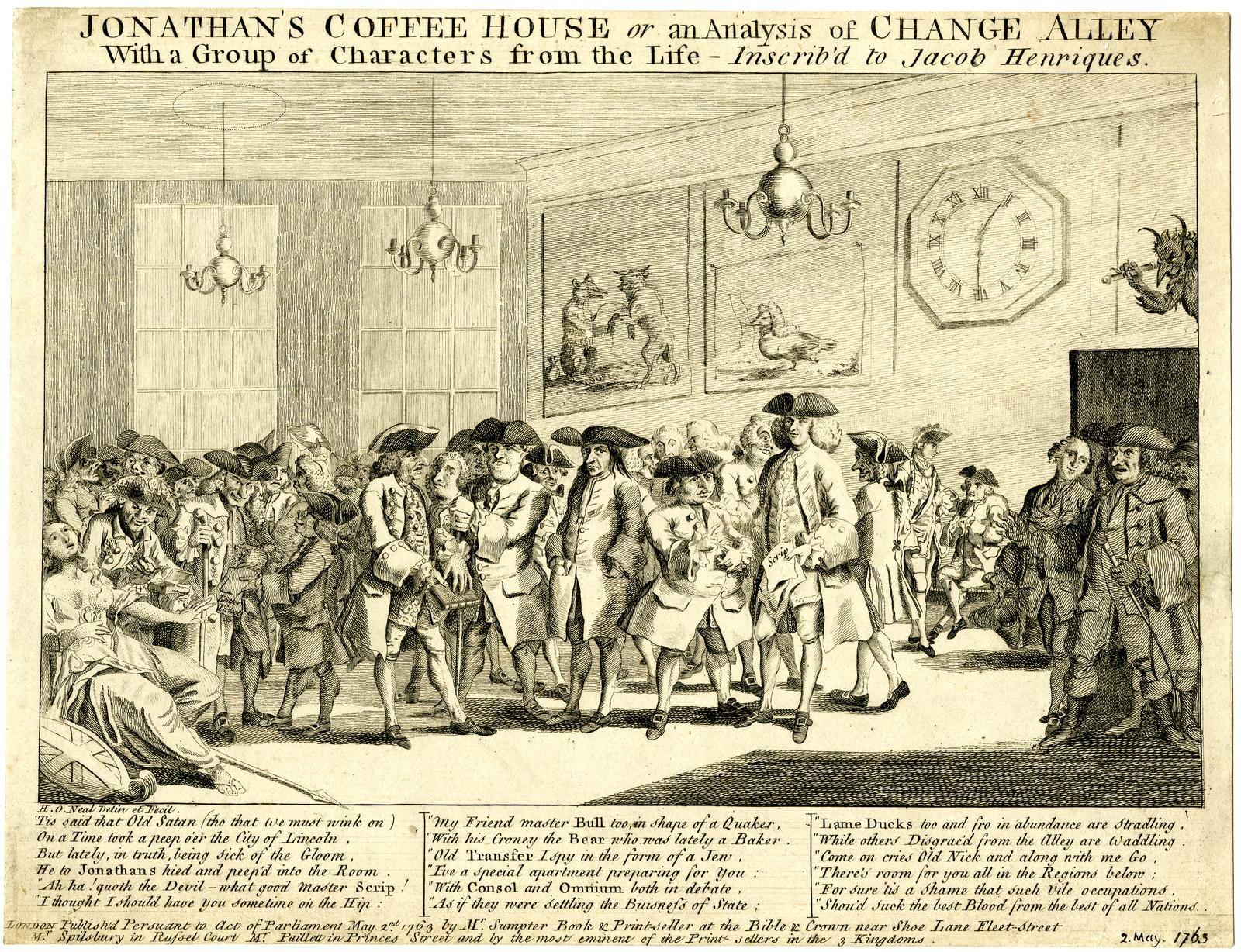
Second image: Jonathan's Coffee House, or an Analysis of Change Alley, an engraving of 1763 after Jefferyes Hamett O'Neale, British Museum, public domain. It is a caricature of the room rather than a record of it, complete with a devil looking in at the right-hand side, and should be read that way.
Coordinates 51.513042, -0.087298, taken from the geotag on the plaque photograph and matching Nominatim's line for Change Alley to within about five metres.








 expand_more