


Dynastic History | Samanid Mausoleum — The Only Building the Dynasty Left
· 943
Personal memoryBy kevin · · Report an issue







.JPG)



































Find memories left by people near you.
Distribute Bounty
This will distribute the bounty equally among all qualifying memories. This action cannot be undone.
Cancel Bounty
Are you sure you want to cancel this bounty? The remaining amount will be refunded to your account.
Success!
Operation completed successfully.
Error
Something went wrong.
Dynastic History | Samanid Mausoleum — The Only Building the Dynasty Left
kevin
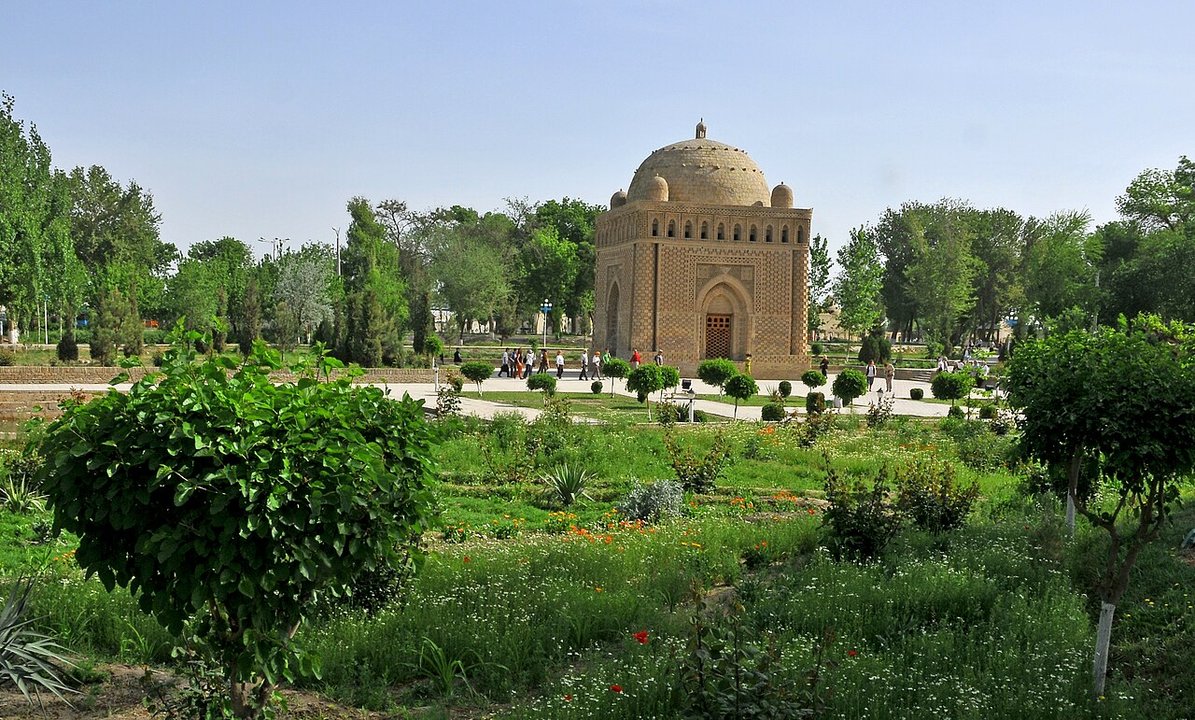
Nothing else the Samanids built in Bukhara is still standing. The brick cube in the park north-west of the old city is the whole surviving architectural record of a house that ran Transoxiana and much of Khurasan from here for roughly a century, and it carries no construction date.
The single inscription sits on a wooden lintel over the east door and was found during work in the 1930s. A Soviet scholar read it as Nasr b. Ahmad b. Ismail: Nasr II, who died in 943. That death is the one firm point — the building stood by then. Who it was raised for is still argued. Archnet's record dates it only to before 943 and leaves the patron open. The case for Ismail Samani, who ruled from 892 to 907, rests partly on a sixteenth-century copy of a tenth-century waqf deed in which he assigns the Naukanda burial ground for a funerary building for his father Ahmad. The case for Nasr rests on the lintel. Three male burials were found inside; one is identified and two are not.
Sunni legal opinion of the period ran against monuments over graves, and this one was built anyway. Its brick is laid as structure and ornament at once, by a court converting Sogdian and Sasanian building habits to its own purposes. The masons and brickmakers are unnamed; the record keeps patrons, not workforces.
By the time it was cleared in the twentieth century the building lay under silt inside a later cemetery. That it was buried is documented. That the burial is why it survived the sack of 1220 is an inference later writers have drawn, not something a contemporary source says. UNESCO, inscribing Bukhara's historic centre in 1993, called it the best surviving example of tenth-century architecture in the Muslim world. The cemetery is paved over and the mausoleum stands in a public park.
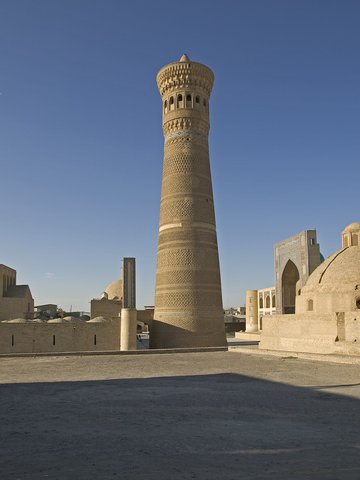
📸 Cover: The mausoleum seen from the park, LBM1948, CC BY-SA 4.0 via Wikimedia Commons


changes?
delete this memory?
We detected that you have a Blox in your crypto wallet! We will import the Blox into your account.
Click on done below to complete the import.
Welcome Back!
Sign in to preserve cherished moments
Don't have an account?
Welcome!!
Sign up and start preserving cherished moments
?
?


Choose your payment method
Buy with Metablox Credit
Do you want to mint Blox with Metablox Credit?
Which Crypto would you like to use?
Purchase Confirmed!
Your Blox is being minted on-chain and will appear in your profile shortly.
Log in or sign up to claim your Blox.
How many credits do you want to buy?
$100 USD = 1 Metablox Credit = 1 Blox.
Use Metablox Credit to mint any Blox you want on the map.
 expand_more