- Home
- Technology History | The First Machines and the First Networks | Berlin, Manchester, Los Angeles and Geneva
- Technology History | Coupland Building, Manchester — The Machine Whose Memory Was a Television Tube
Technology History | Coupland Building, Manchester — The Machine Whose Memory Was a Television Tube
· 1948-6
Personal memoryBy kevin · · updated · Report an issue
Find memories left by people near you.
Distribute Bounty
This will distribute the bounty equally among all qualifying memories. This action cannot be undone.
Cancel Bounty
Are you sure you want to cancel this bounty? The remaining amount will be refunded to your account.
Success!
Operation completed successfully.
Error
Something went wrong.
Technology History | Coupland Building, Manchester — The Machine Whose Memory Was a Television Tube
kevin
The program was seventeen instructions long and it looked for the highest factor of a number.
It ran on the morning of 21 June 1948, in a laboratory behind what is now the Coupland 1 building, and it was the first time a computer executed a program held in its own memory rather than in wiring, switches or tape.
That memory was a television tube. Freddie Williams and Tom Kilburn had worked out how to store bits as charge spots on the phosphor screen of a cathode ray tube, refreshed faster than they faded, giving a grid of 32 by 32 that a machine could read and write at electronic speed.
The machine existed to prove the tube worked. Its name says so: the Small-Scale Experimental Machine, universally the Baby, a testbed rather than a working computer anyone could book time on.
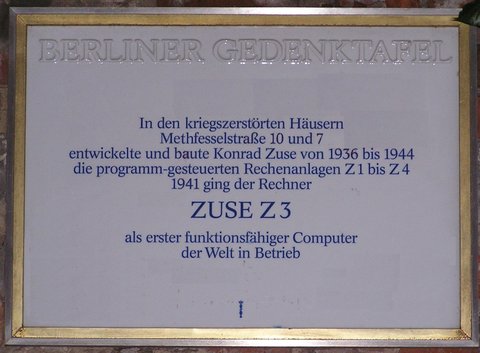
The qualifier is the fact here. Zuse's Z3 was programmable and automatic seven years earlier but electromechanical and fed from tape; Colossus was electronic but built for one cryptographic job; ENIAC was general-purpose and electronic but rewired by hand for each problem.
The Baby was the one that read its instructions out of the same memory that held its data, which is how every computer has worked since.
The famous run is not quite the famous run. Manchester's own fiftieth-anniversary history is clear that the celebrated long calculation, searching the factors of 2 to the 18th and grinding away for the better part of an hour, came within days of 21 June rather than on the day itself.
Even the numbers are contested: accounts variously give 52 minutes and about 2.1 million operations, or 53 minutes and about 3.5 million. Anyone quoting one pair as settled fact is overstating the record.
Kilburn's own recollection of that first success carried a hedge that has survived into the record: so far as could be ascertained, it worked the first time it was tried.
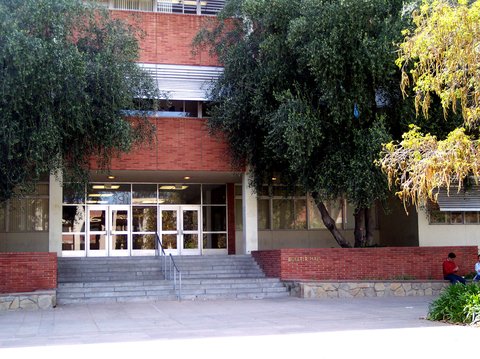
What stands on Bridgeford Street today is university buildings. A blue plaque to Williams and Kilburn is fixed to the Coupland 1 wall, and an IEEE Milestone was dedicated here in 2022.

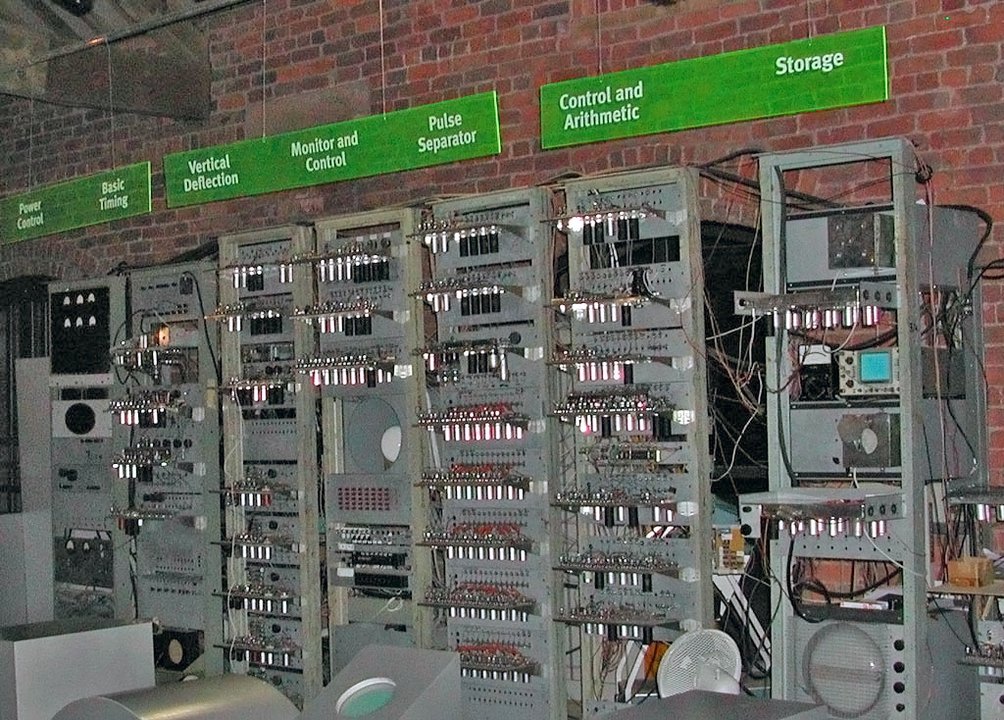
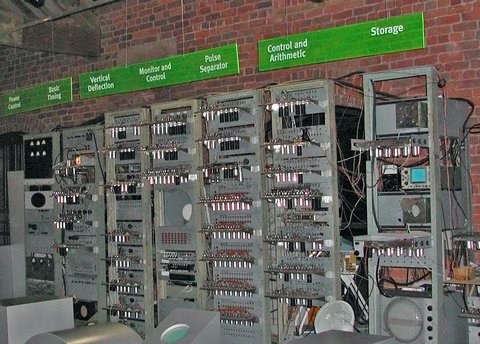
The machine is elsewhere and it runs. A working replica built by the Computer Conservation Society lives at the Science and Industry Museum, a little over a mile north-west of here, switched on regularly by volunteers, valves glowing in open racks labelled Storage, Control and Arithmetic.
Cover: photo by Ian Dunster and Racklever, public domain, via Wikimedia Commons, showing the museum replica rather than the original, which was dismantled long ago.
changes?
delete this memory?
We detected that you have a Blox in your crypto wallet! We will import the Blox into your account.
Click on done below to complete the import.
Welcome Back!
Sign in to preserve cherished moments
Don't have an account?
Welcome!!
Sign up and start preserving cherished moments
?
?
Choose your payment method
Buy with Metablox Credit
Do you want to mint Blox with Metablox Credit?
Which Crypto would you like to use?
Purchase Confirmed!
Your Blox is being minted on-chain and will appear in your profile shortly.
Log in or sign up to claim your Blox.
How many credits do you want to buy?
$100 USD = 1 Metablox Credit = 1 Blox.
Use Metablox Credit to mint any Blox you want on the map.
expand_more