- Home
- Technology History | The Social Platform Era | Cambridge, Palo Alto, Prineville and Washington
- Technology History | Prineville — The Data Center Whose Blueprints Were Given Away
Technology History | Prineville — The Data Center Whose Blueprints Were Given Away
· 2011-4
Personal memoryBy kevin · · updated · Report an issue
Find memories left by people near you.

Distribute Bounty
This will distribute the bounty equally among all qualifying memories. This action cannot be undone.
Cancel Bounty
Are you sure you want to cancel this bounty? The remaining amount will be refunded to your account.
Success!
Operation completed successfully.
Error
Something went wrong.
Technology History | Prineville — The Data Center Whose Blueprints Were Given Away
kevin
Eight days before the building opened, Facebook published the mechanical CAD files for its own servers, racks, power supplies and battery cabinets.
Hardware design is usually the part a company keeps.
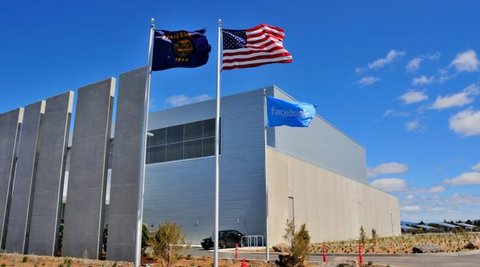
The Open Compute Project was announced on 7 April 2011, and the data center it described went into service in Prineville, Oregon on 15 April, with Mark Zuckerberg and Governor John Kitzhaber among the people under the tent beside it.
Until then the company had rented space in other operators' facilities.
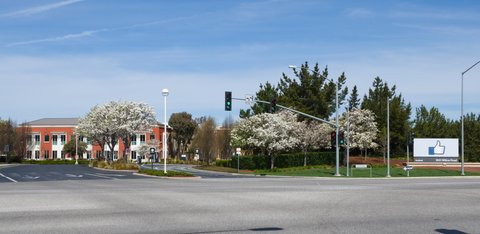
The design work began with three people in an electronics lab in the basement of the Palo Alto headquarters, which is a modest origin for a site that kept expanding for the next decade.
Their method was subtraction.
They stripped the servers of anything that did not contribute to efficiency, ran 480-volt distribution to cut conversion losses, replaced the central uninterruptible power supply with battery cabinets beside the racks, and pushed warm exhaust air back into the offices in winter.
Facebook reported an initial power usage effectiveness of 1.07, against 1.5 for the leased facilities it was already using, with the building drawing 38 percent less energy for the same work at 24 percent lower cost.
A PUE of 1.00 would mean every watt entering the site reached a server, so the distance between 1.07 and 1.5 is most of the overhead of a conventional data center.
Publishing the drawings was not pure generosity.
Any manufacturer could now build to the specification, which pushed margin out of the hardware while leaving the operating knowledge, the part that does not travel with a CAD file, where Facebook already had it.
The announcement also arrived under pressure. Greenpeace had spent months attacking the decision to buy power from Pacific Power, whose generation was heavily coal-fired, and had challenged the company to commit to renewables by that year's Earth Day.
Crook County had lost timber work and wanted the investment.
An academic study of the arrangement records a fifteen-year property-tax abatement against an initial commitment of 35 permanent jobs; Oregon Business reported at the opening that more than 1,300 people had worked the construction site.
The campus is a working facility and not open to visitors.
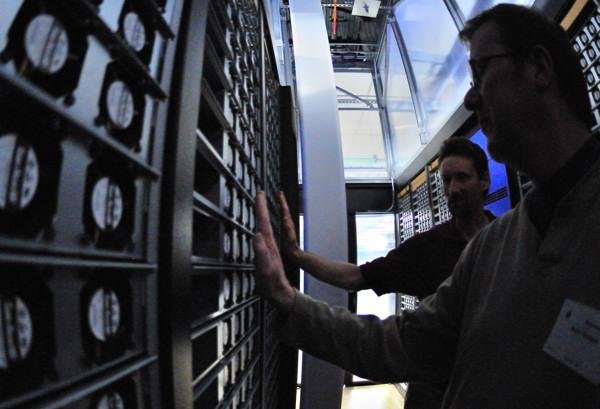
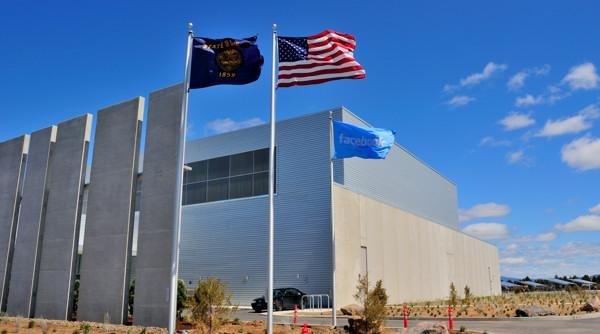
Both photographs here were taken by Intel staff during a press visit: the exterior of the original building, and two engineers standing in a hot aisle with their hands against the rack fans.
Photo: Intel Free Press, CC BY 2.0, via Wikimedia Commons
changes?
delete this memory?
We detected that you have a Blox in your crypto wallet! We will import the Blox into your account.
Click on done below to complete the import.
Welcome Back!
Sign in to preserve cherished moments
Don't have an account?
Welcome!!
Sign up and start preserving cherished moments
?
?
Choose your payment method
Buy with Metablox Credit
Do you want to mint Blox with Metablox Credit?
Which Crypto would you like to use?
Purchase Confirmed!
Your Blox is being minted on-chain and will appear in your profile shortly.
Log in or sign up to claim your Blox.
How many credits do you want to buy?
$100 USD = 1 Metablox Credit = 1 Blox.
Use Metablox Credit to mint any Blox you want on the map.
expand_more