
- Home
- Semiconductor History | The Bell Era | New Jersey and New York
- Semiconductor History | Murray Hill, 1959 — The Most Manufactured Object Ever Made, and the Men Nobody Credits
Semiconductor History | Murray Hill, 1959 — The Most Manufactured Object Ever Made, and the Men Nobody Credits
· 1960
Personal memoryBy kevin · · updated · Report an issue
Find memories left by people near you.
Distribute Bounty
This will distribute the bounty equally among all qualifying memories. This action cannot be undone.
Cancel Bounty
Are you sure you want to cancel this bounty? The remaining amount will be refunded to your account.
Success!
Operation completed successfully.
Error
Something went wrong.
Semiconductor History | Murray Hill, 1959 — The Most Manufactured Object Ever Made, and the Men Nobody Credits
kevin
Something like a sextillion of them have been built. It is, by a wide margin, the most manufactured artifact in human history, and most people who use one every second of the day could not name its inventors.
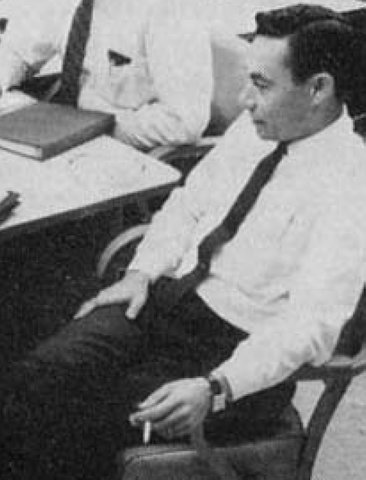
Mohamed Atalla (محمد عطا الله) and Dawon Kahng (강대원) built the first working metal-oxide-semiconductor field-effect transistor at Bell Labs in 1959, and reported it the following year.
The idea underneath it was not new. Julius Lilienfeld had patented the field effect in the 1920s, and Shockley had tried and failed to build an amplifier on the principle in 1945, which is what pushed Bardeen and Brattain toward the point-contact device instead.
What Atalla had was the fix for why it kept failing.
Silicon's surface was full of states that trapped charge and screened the field out of the material, and Atalla's work showed that a carefully grown layer of silicon dioxide on top of the silicon would passivate that surface.
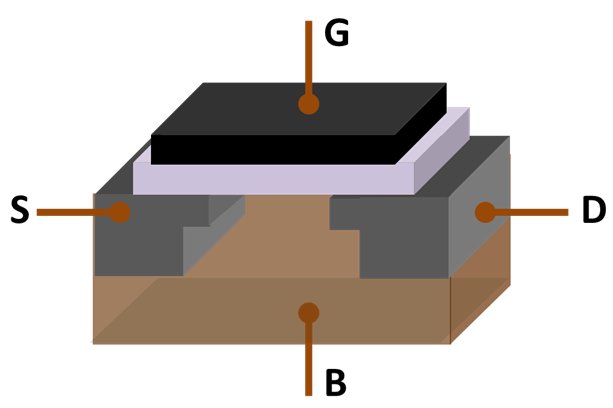
Grow the oxide, lay a metal gate over it, and the field finally reaches through to switch the channel underneath. That structure is the transistor in every processor and memory chip made since.
The credit history here is worse than the Kilby and Noyce fight, because there was no fight — the invention was simply absorbed.
Bell Labs did not push the MOSFET commercially; the company's business was built on the bipolar junction transistor, and the MOS device was seen for years as slow and unreliable. Popular accounts have credited "Bell Labs," or Shockley, or nobody at all.
Kahng was Korean, educated at Seoul National University before Ohio State, and he is the human link between the New Jersey laboratory in this collection and the memory fabs at Giheung.
There does not appear to be a single freely licensed photograph of him anywhere. That absence is not a gap in this memory so much as the point of it.
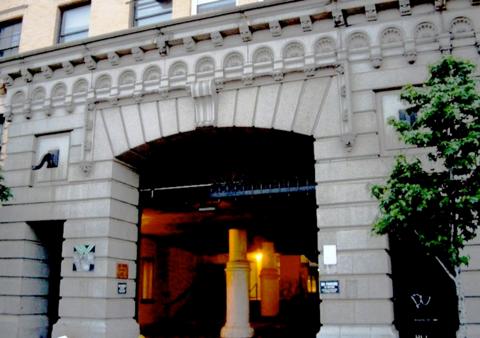
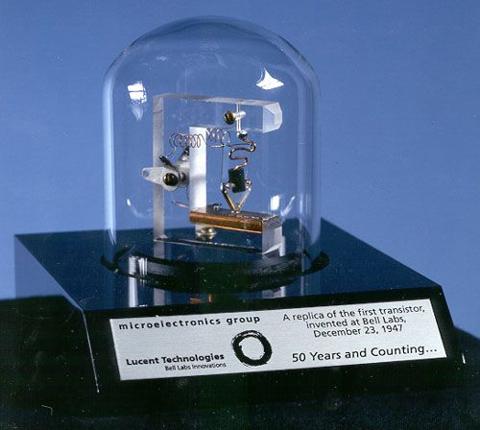
The campus is the same one where the transistor was demonstrated in 1947, still working, still closed to visitors, on Mountain Avenue in New Providence.

Nothing on the site marks this particular room or this particular year, which is a strange thing to be able to say about the object that the modern world is physically made of.

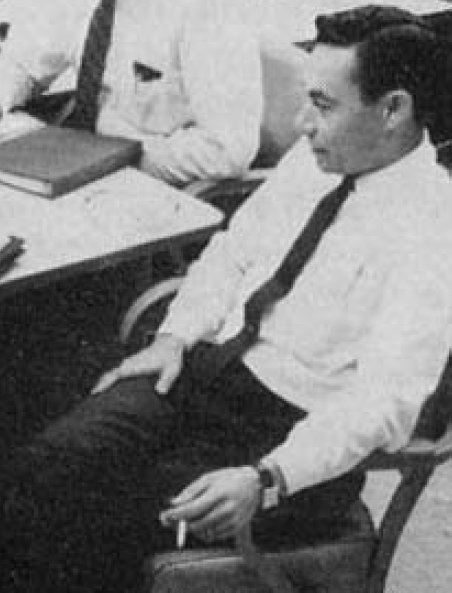
Photo: unknown, public domain, via Wikimedia Commons (Mohamed Atalla, 1963).
Diagram: Brews ohare, CC BY-SA 3.0, via Wikimedia Commons (the structure of a MOSFET — an explanatory diagram, not a photograph of the 1959 device).
changes?
delete this memory?
We detected that you have a Blox in your crypto wallet! We will import the Blox into your account.
Click on done below to complete the import.
Welcome Back!
Sign in to preserve cherished moments
Don't have an account?
Welcome!!
Sign up and start preserving cherished moments
?
?
Choose your payment method
Buy with Metablox Credit
Do you want to mint Blox with Metablox Credit?
Which Crypto would you like to use?
Purchase Confirmed!
Your Blox is being minted on-chain and will appear in your profile shortly.
Log in or sign up to claim your Blox.
How many credits do you want to buy?
$100 USD = 1 Metablox Credit = 1 Blox.
Use Metablox Credit to mint any Blox you want on the map.
expand_more