NPB History | Heiwadai Stadium Site — The Ballpark Removed for a Ninth-Century Ruin
volume_up
Listen
directions
Directions
In December 1987 a contractor renovating the ballpark put a trench into the ground behind the outfield and found the Kōrokan. Not a ballpark fitting — a Heian-period diplomatic reception hall, one of three the court maintained, at Heian-kyō, at Naniwa and here at Tsukushi, the place foreign missions were received when they arrived from the continent. The excavation is still going. Everything above it had to come off, and eventually it did.
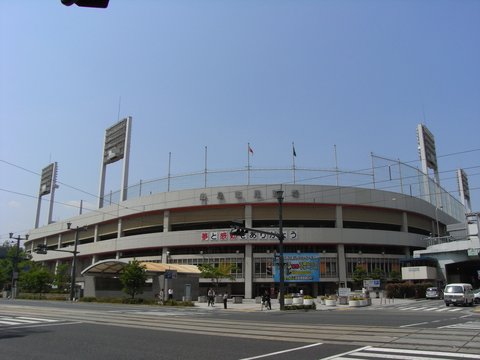
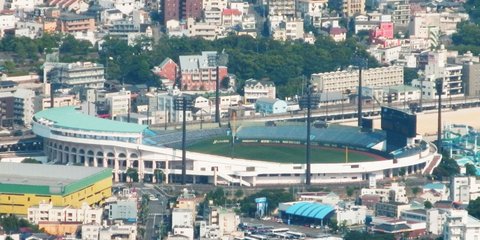
Heiwadai Baseball Stadium sat inside Maizuru Park, on the Fukuoka Castle grounds, under a thousand cherry trees. It opened in 1949, and on 10 March 1950 it staged one of the two games — Shimonoseki had the other — that opened the newly formed Central League. In 1951 Nishitetsu and Nishinippon merged into the Pacific League's Nishitetsu Lions, who moved their home here from Kasugabaru.
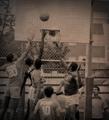
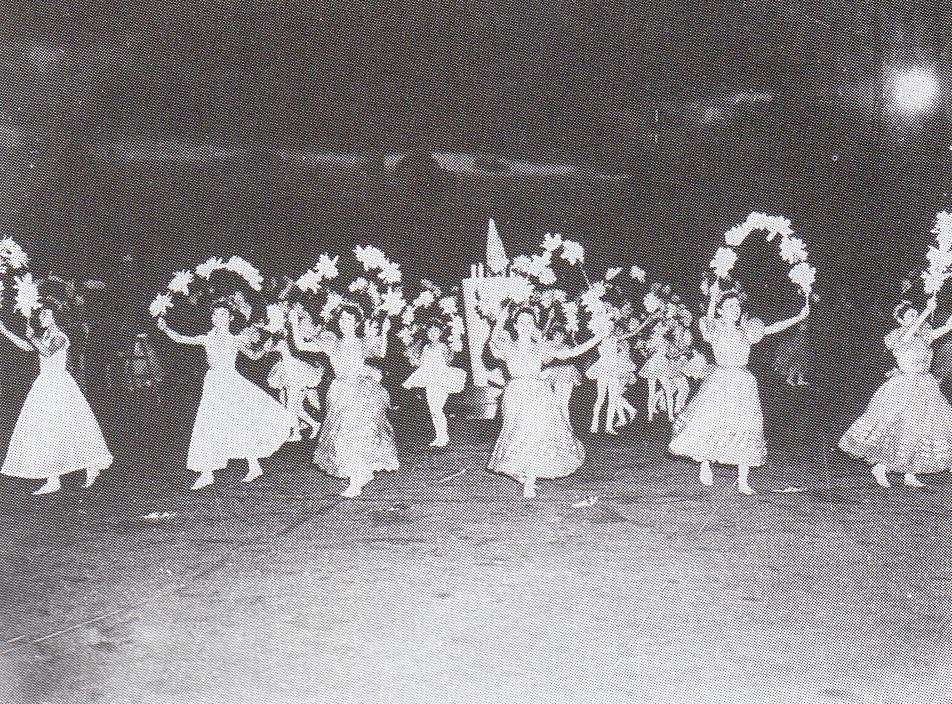
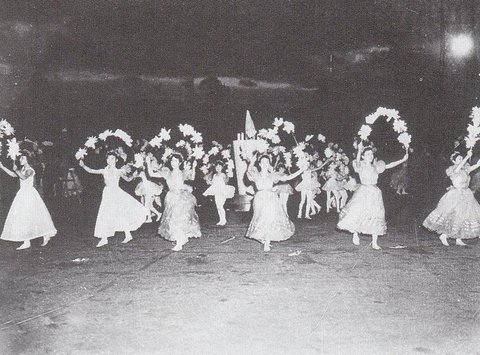
It opened without floodlights, so a game running into dusk was simply stopped when the umpire decided it had, which produced the forfeited match remembered as the Heiwadai Incident and finally forced the issue. The lights were switched on for the first time on the evening of 2 June 1954, with dancers laid on across the outfield to mark it.
The golden decade followed. From 1956 the Lions won the Japan Series three years running, beating the Giants every time, behind Inao Kazuhisa — the pitcher Kyushu described as god, buddha, and Inao — with Nakanishi Futoshi and Toyoda Yasumitsu in the order.
Then the long unravelling. The club was sold on and renamed twice, and in 1979 the Lions left for Tokorozawa in Saitama. First-team fixtures kept coming to Heiwadai anyway. In September 1988 the Nankai Hawks were sold to Daiei and moved from Osaka Stadium to Fukuoka, and this became a proper home ground again after ten years without one. That lasted until 1992. The last professional game here was on 1 October that year, a Daiei–Kintetsu pitchers' duel in which the rookie Wakatabe Kenichi beat Nomo Hideo 1–0 for his tenth win of the season. The Fukuoka Dome was going up across town, and the ruin underneath the outfield had made the argument anyway.
Demolition left the outfield stands and part of the outer wall standing for years. The Fukuoka earthquake of 20 March 2005 cracked the wall badly enough to make it a hazard, and the remains were cleared between December 2007 and April 2008. A fence went up, and Fukuoka City's board of education installed panels explaining the Kōrokan site.
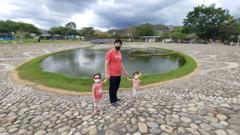
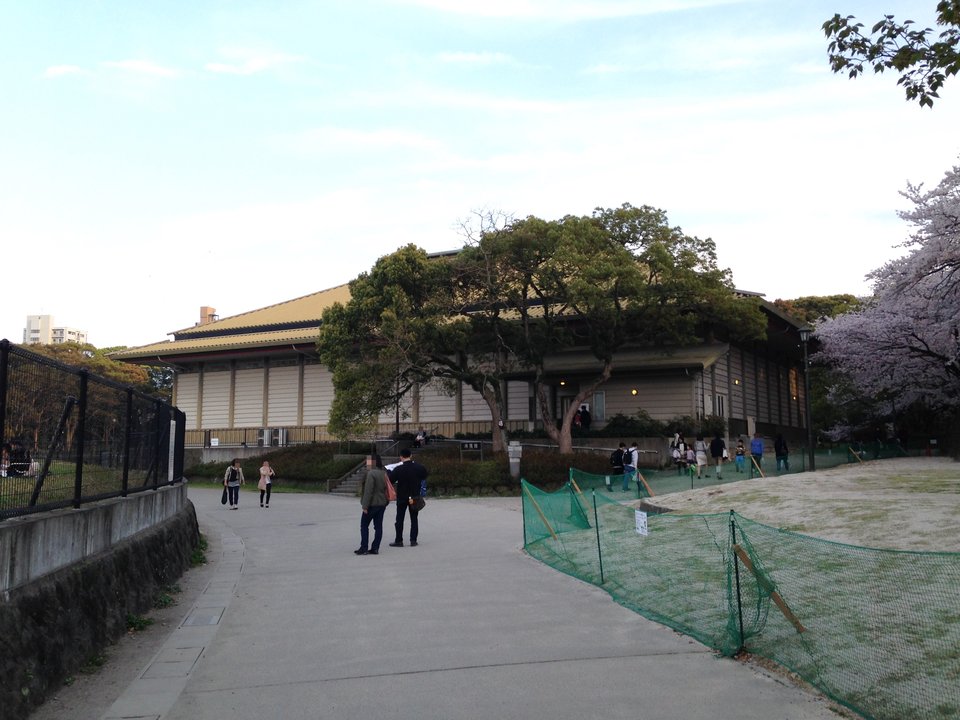
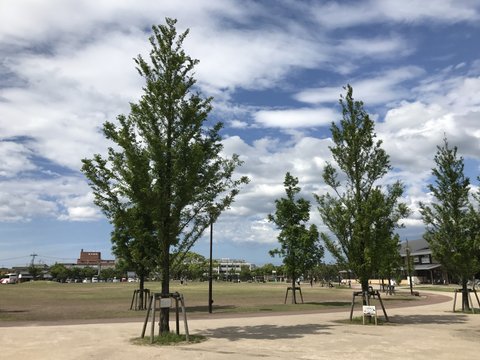
So the ballpark is now the Kōrokan plaza, with the excavation museum on it and a rubber-ball ground called Maizuru Park Baseball Field nearby. The memorial that former Nishitetsu Lions players raised in 2002 stands across the moat, on the left just before the Kaminohashi gate ruins, where in summer it is set against the lotus.
Come in cherry-blossom season, when there are more people on this ground than most games ever drew.
Coordinates 33.58600, 130.38500 — the Kōrokan plaza, the ballpark footprint; ±120 m, OSM-derived from the excavation museum next to it, pending on-site check. The players' memorial is a separate point across the moat.
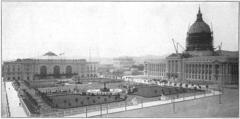
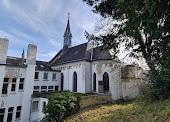
Cover: the display staged on the field at Heiwadai's first night game, 2 June 1954, photograph by the Nishinippon Shimbun, public domain. Second image: the Kōrokan site museum, which stands on the ballpark footprint today, photographed 2 April 2016 by そらみみ, CC BY-SA 4.0. Both via Wikimedia Commons.




































 expand_more