NPB History | Hagi Municipal Stadium Site — Two Home Runs in the Town of the Restoration
volume_up
Listen
directions
Directions
Five days of rain had finally stopped, the temperature reached sixteen degrees, and the stands at Hagi Municipal Stadium — six thousand seats counting the outfield — were nearly full before anyone threw a pitch. The ceremonial first ball was thrown by the town's deputy mayor, whose hair hung to his shoulders in a way that suited a castle town that had produced a great many loyalist samurai.
It was 23 April 1957, and it was the only top-flight professional game ever played in northern Yamaguchi.
The home club, on paper, was Hiroshima. The Carp were making a last tour of the provinces before moving into the new Hiroshima Municipal Stadium that July, and inside a month of the season opening they had played Fukuyama, Miyoshi, Ube and Beppu before arriving here to face the Giants.
Horiuchi Shō started for the Giants and Kawamoto Tokuzō for Hiroshima. On the second pitch of the bottom of the first, the Carp leadoff man Hirayama Satoshi drove one down the left-field line and out. Each side added a run. Then, in the top of the sixth, trailing 2–1 with one out and runners on first and second — Kawakami Tetsuharu having just been walked intentionally ahead of him — Miyamoto Toshio hit a three-run home run clean out of the ground to left-centre. The Giants went on to win 7–2.
The detail that makes this game worth a marker is who hit those two home runs. Hirayama was a nisei born in California. Miyamoto was a Japanese-American from the Territory of Hawaii, who the previous season, his second in Japan, had led the league with 69 runs batted in. Of the ten players registered as foreign nationals in Japanese baseball that year, eight were Japanese-Americans; the other two were Cuban and Taiwanese. In the town where the Meiji Restoration was argued into being — the town that knew exactly what the arrival of foreign ships had meant a century earlier — both home runs in its one professional game were struck by Americans of Japanese descent.
Tegura Susumu, a third-year middle-school student living nearby, had no idea a game was on. He walked past, saw it happening, bought a ticket at the gate and went in alone, arriving around the third inning to find the stands already packed; he sat on the first-base side as far toward the outfield as he could. He was a Nishitetsu supporter and no friend of the Giants. Nearly seventy years later what he remembers is the silence breaking — the whole ground coming up at once when Miyamoto's ball left.
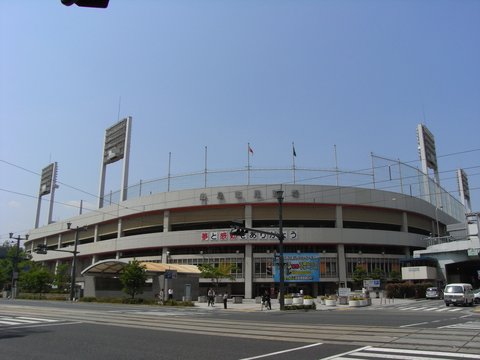
The ballpark was completed in the autumn of 1956, next to Meirin Elementary School in the middle of town, and served northern Yamaguchi for decades. Its perimeter was a 480-metre running course; the high school across the road used it as a home ground. In 1963 it was the main softball venue for the Yamaguchi national sports festival, attended by the Emperor and Empress. The outfield wall was bare concrete with no padding, and toward the end the outfield turf had been stripped.
Hagi Stadium opened in the Tsubaki district in 1998 and this ground was retired. NPB's account, citing the Yomiuri, dates the demolition to the summer and autumn of 2005.
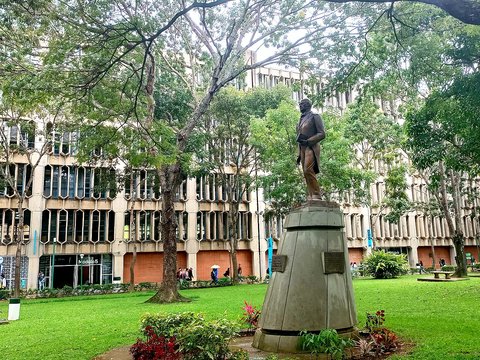
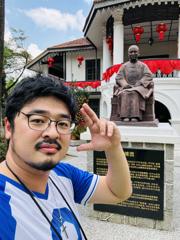
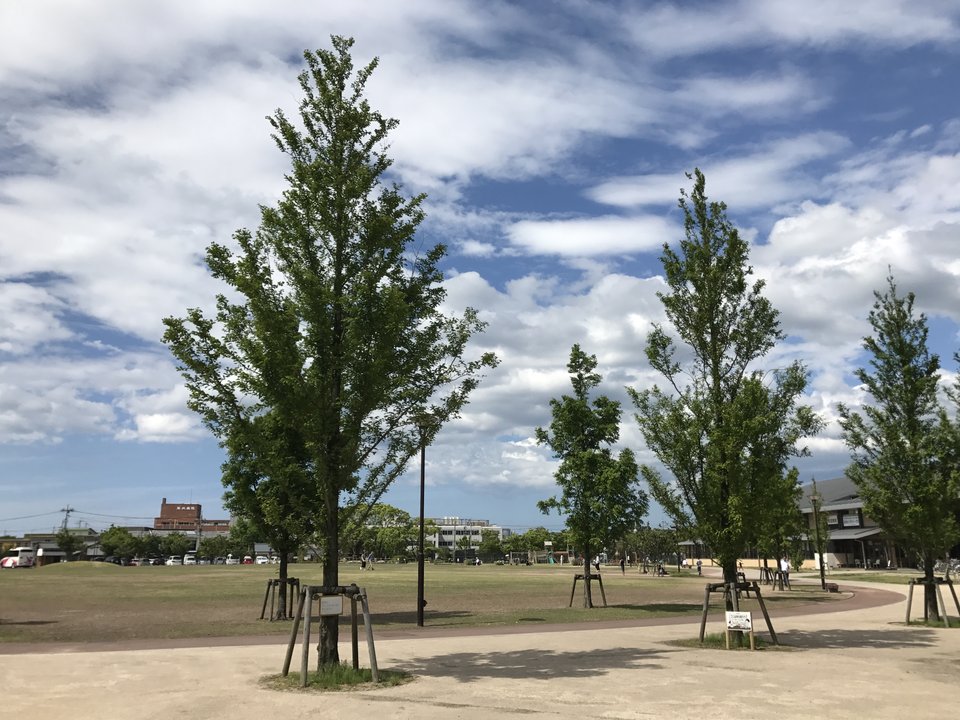
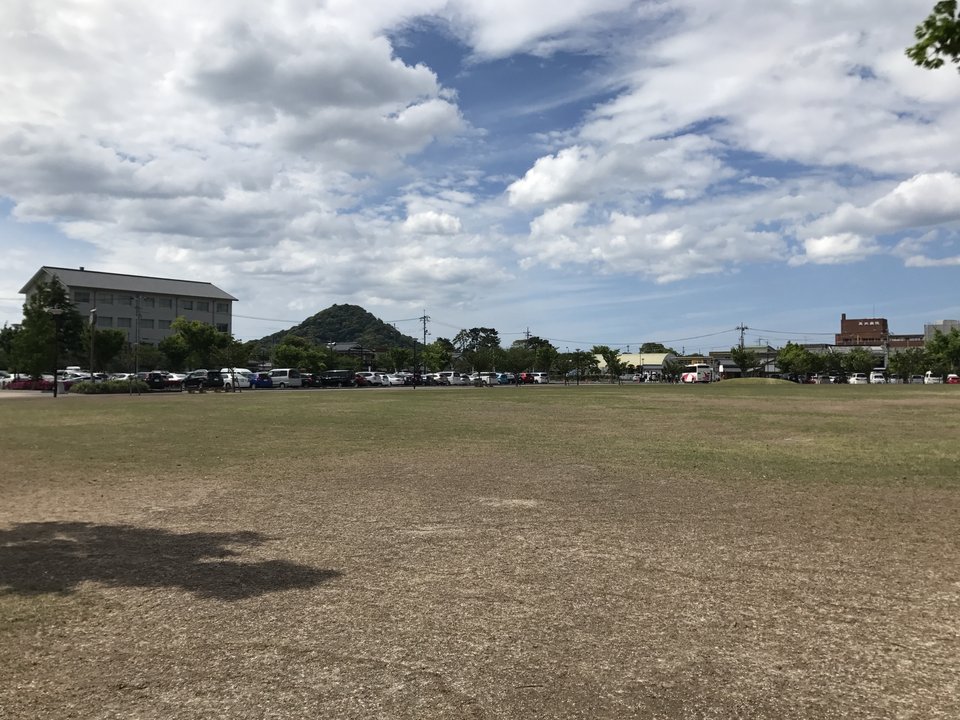
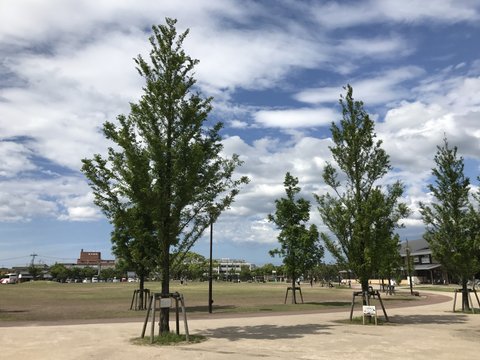
The site is Hagi Central Park now: a broad lawn, young trees, a light-sports ground, people sitting about. At the entrance stands a bronze of Yamagata Aritomo on horseback, put up in 1930, honouring the Hagi man who built the modern Japanese army.
Stand on the lawn with the statue behind you. The two men who hit home runs into this space had crossed the Pacific in the other direction from everything the statue commemorates.
Coordinates 34.409811, 131.396201 — Hagi Central Park, the ballpark site; ±80 m, OSM map-verified, pending on-site check.
Cover: Hagi Central Park, photographed 4 May 2017 by そらみみ, CC BY-SA 4.0, via Wikimedia Commons. It shows the site as it is now; nothing of the ballpark stands.


































 expand_more