Finance History | Ronald Reagan Building, 21 July 2010 — Dodd-Frank Rewrote the Rules after the Financial Crisis
volume_up
Listen
directions
Directions
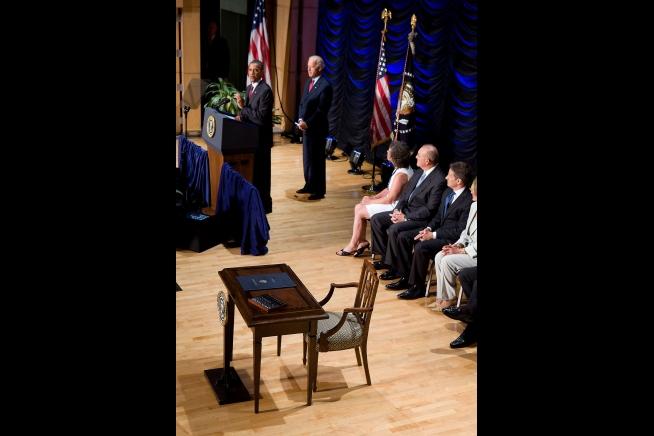
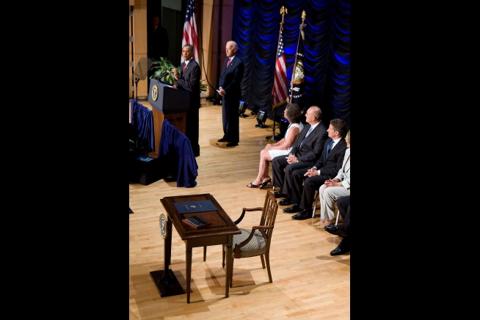
On 21 July 2010, President Barack Obama signed the Dodd-Frank Wall Street Reform and Consumer Protection Act at the Ronald Reagan Building in Washington. The ceremony turned Congress's response to the 2007–09 financial crisis into law and began the largest reorganization of U.S. financial regulation since the reforms that followed the Great Depression.
The statute created the Consumer Financial Protection Bureau to consolidate oversight of mortgages, credit cards, and other consumer products. It also created the Financial Stability Oversight Council to monitor risks spanning agencies and markets, and an Orderly Liquidation Authority intended to wind down a failing systemically important financial company without relying on ordinary bankruptcy alone.
Dodd-Frank pushed much of the previously opaque swaps market toward central clearing, trade reporting, and regulated trading venues, while requiring large banks to hold more robust capital and liquidity and prepare resolution plans. The Volcker Rule restricted proprietary trading and certain fund investments by banking entities, though years of agency rulemaking were required to turn the statute's broad commands into operating rules.
The law did not simply end “too big to fail,” and its scale created continuing arguments about compliance costs, regulatory complexity, and whether risk migrated outside the most closely supervised institutions. Its importance lies in changing the machinery through which regulators identify systemic firms, protect consumers, oversee derivatives, and prepare for failure—not in guaranteeing that another crisis cannot occur.
The law responded to a crisis that had crossed the boundaries between mortgage lending, securitization, derivatives, investment banks, insurers, and deposit-taking institutions. Its architecture was correspondingly broad because the old division of responsibility among specialized regulators had failed to reveal the system-wide accumulation of risk.
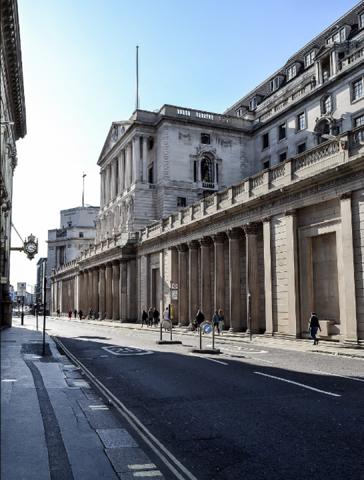
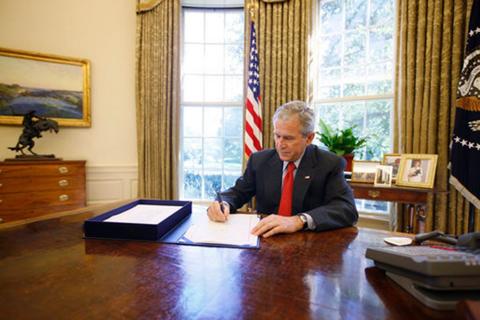
This photograph captures the signing venue before Obama took the chair and put pen to the enrolled bill. The empty table is an unusually direct image of a legal threshold: after the signature, hundreds of provisions began transferring authority, creating institutions, and instructing regulators to redesign the rules of American finance.
Sources: Public Law 111-203, GovInfo; White House, “Signing the Wall Street Reform and Consumer Protection Act,” 21 July 2010; White House, “Background on the President's Bill Signing Ceremony Today.” Photo: Chuck Kennedy, Official White House Photo, public domain as a work of the U.S. federal government.












 expand_more