Finance History | White House East Room, 30 July 2002 — Auditing Became a Supervised Public Trust
volume_up
Listen
directions
Directions
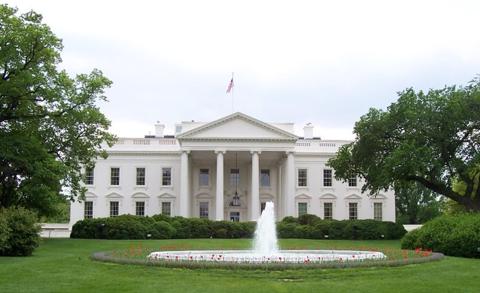
On 30 July 2002, President George W. Bush signed the Sarbanes-Oxley Act in the White House East Room. Enron had entered bankruptcy the previous December, WorldCom had disclosed a massive accounting fraud in June, and failures of boards, executives, auditors, and market gatekeepers had damaged confidence in published corporate accounts.
The law created the Public Company Accounting Oversight Board to register and inspect audit firms, set standards, and discipline misconduct. Auditing public companies was no longer left primarily to professional self-regulation; firms now answered to a regulator operating under Securities and Exchange Commission oversight.
Sarbanes-Oxley also required chief executives and chief financial officers to certify periodic reports and strengthened criminal penalties for securities fraud, false certifications, and document destruction. Audit committees gained direct responsibility for appointing and overseeing the external auditor, while restrictions on consulting work aimed to reduce conflicts between independent assurance and lucrative advisory relationships.
Section 404 became the law's most operationally demanding provision. Management had to assess internal control over financial reporting, and the external auditor initially had to attest to that assessment, forcing companies to document how transactions became ledger entries, estimates, disclosures, and ultimately financial statements.
Supporters argued that these costs were the price of rebuilding trustworthy markets after spectacular governance failures. Critics answered that compliance fell heavily on smaller issuers and encouraged some companies to avoid or leave U.S. public markets, prompting later exemptions, guidance, and scaled requirements without removing the core control framework.
The law did not guarantee honest management or eliminate accounting judgment. It changed accountability by attaching named executives, independent audit committees, inspected audit firms, and documented internal controls to the statements investors rely on when pricing shares and lending money.
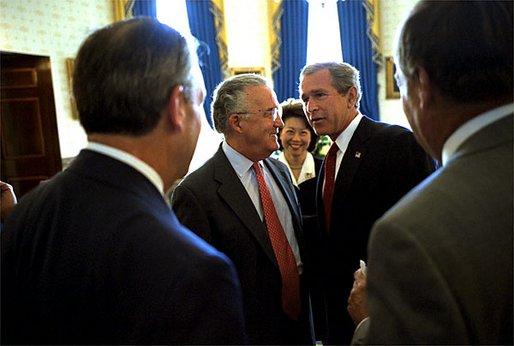
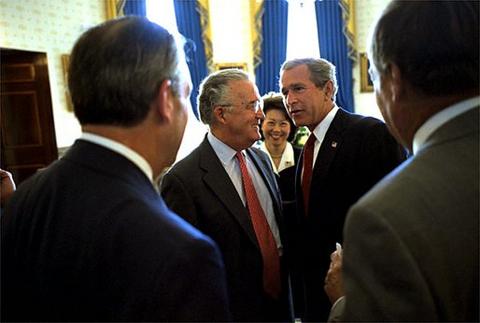
The photograph was taken in the Blue Room shortly before the East Room signing and shows Bush meeting Senator Paul Sarbanes and other participants. It records the people and place immediately surrounding the moment when corporate financial reporting acquired a new federal supervisory layer.
Sources: Sarbanes-Oxley Act of 2002, Public Law 107-204; U.S. Securities and Exchange Commission, “Study and Recommendations on Section 404(b)”; White House, “President Bush Signs Corporate Corruption Bill,” 30 July 2002. Photo: Official White House photograph, U.S. federal government work, public domain.














 expand_more