Finance History | Bank of Japan, 21 September 2016 — Policy Moved From Buying Bonds to Shaping the Yield Curve
volume_up
Listen
directions
Directions
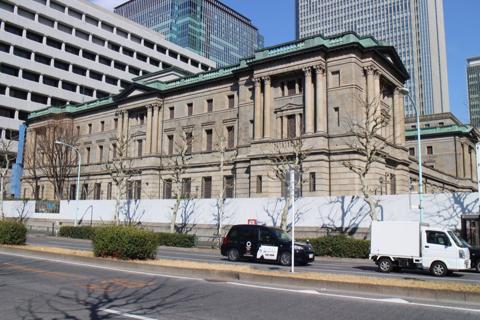
On 21 September 2016, the Bank of Japan concluded a two-day policy meeting at its Nihonbashi head office by introducing “Quantitative and Qualitative Monetary Easing with Yield Curve Control.” The framework redirected attention from the quantity of bonds purchased toward the short- and long-term interest rates those operations were meant to produce.
At the short end, the Bank continued applying a negative rate of minus 0.1 percent to policy-rate balances held by financial institutions. At the long end, it would buy Japanese government bonds so that the ten-year yield remained more or less around zero percent.
This was a two-point guide for a whole curve of borrowing costs. The overnight policy rate influenced very short maturities, while bond purchases and expectations around the ten-year target reached mortgages, corporate finance, portfolio valuations, and the government’s cost of borrowing over longer horizons.
The Bank retained an approximate annual purchase pace of ¥80 trillion at introduction, but the amount could vary to achieve the yield objective. It also added fixed-rate purchase operations, allowing it to offer to buy eligible bonds at a stated yield when market rates moved away from the desired shape.
Yield curve control addressed a problem created partly by prolonged easing. Lower long-term rates could support spending and investment, but an excessively flat or distorted curve could squeeze financial intermediaries and impair the market functions through which monetary policy travels.
The second component was an inflation-overshooting commitment. The Bank said it would keep expanding the monetary base until observed consumer-price inflation exceeded its 2 percent target and remained above it in a stable manner, trying to influence expectations as well as current financing conditions.
No central bank can command every maturity without consequence. Defending a yield can require large purchases, reduce market liquidity, alter risk pricing, and expand the central bank’s balance sheet; the framework exchanged uncertainty about rates for uncertainty about the quantity of intervention.
The targets and operating details later evolved, so the original parameters belong specifically to September 2016. At Nihonbashi, the Bank made the government-bond yield curve itself an explicit policy instrument, turning bond purchases from a headline quantity into the means for maintaining a chosen configuration of interest rates.
Image: “Bank of Japan 20190223” by Suicasmo, licensed CC BY-SA 4.0, via Wikimedia Commons.






_thumbnail.jpg)










 expand_more